
Nikunjaleela
Apr
Nikunjaleela
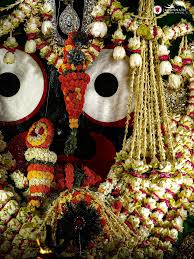
Nikunjaleela in the Radha-Krishna Devotional Tradition
Nikunjaleela belongs to the intimate grove-pastimes of Rādhā and Kṛṣṇa. The nikuñja is not merely a physical bower; devotional poetry treats it as an interior space of tenderness, secrecy, beauty and loving service. The observance helps connect Śrī Jagannātha’s public majesty with the deeply personal bhāva of Kṛṣṇa devotion.
Nikunjaleela literally evokes a secluded grove or bower. In Rādhā-Kṛṣṇa devotional literature, the grove is a sacred interior landscape shaped by fragrance, flowers, moonlight, secrecy and the selfless assistance of the sakhīs. Theologically, the nikuñja protects intimacy from spectacle. What is most sacred is not always public. This gives the observance a subtle contrast with Jagannātha’s vast public identity: the Lord of the Universe is simultaneously accessible through the smallest, most inward movement of love.
Rādhā-Kṛṣṇa traditions reveal a different dimension of divinity from royal majesty. Rādhā is remembered as the highest intensity of devotional feeling, while the sakhīs embody intelligent, active sevā that exists for the joy of the Divine Couple. Nikunjaleela, meeting, separation and playful exchange are therefore symbols of inward states of devotion rather than ordinary romance. In Jagannātha culture this intimate theology sits beside the grandeur of the Ratna Siṁhāsana without contradiction. The Lord who receives royal service is also Kṛṣṇa whose heart responds to love. The hidden teaching is that closeness to the Divine is measured less by external position than by the quality of attention, surrender and service. Beauty becomes sacred when it dissolves possessiveness and awakens tenderness.
In the Jagannātha tradition, līlā is not treated as a story that has ended. Sacred narrative is allowed to enter ritual time, so a remembered episode of Kṛṣṇa can become an event with sequence, mood and dramatic movement. This is why the Bhādra period contains so many compact names connected with Kṛṣṇa’s childhood and youth. The temple preserves not only the final victory or miracle but also proposals, journeys, meetings, playful exchanges and moments of danger. At a deeper level, divine life is relational. Kṛṣṇa is known through the people, animals, landscapes and emotions around Him. Fear, friendship, tenderness, mischief and protection become theological languages. Jagannātha, though worshipped as the Lord of the Universe, therefore remains inseparable from the intimate Kṛṣṇa who enters the vulnerability of ordinary life. The līlā cycle joins cosmic divinity with remembered human feeling and turns time itself into a medium of sacred memory.
A defining feature of Jagannātha sevā is the treatment of the Deities as living, beloved persons. They wake, bathe, dress, eat, rest, travel and respond to seasons. Winter clothing, summer water-play, early-morning food and festival adornment arise from this devotional intimacy. Theologically, this does not reduce the Divine to human limitation; it makes transcendence relational. The infinite Lord accepts care. Sevā therefore trains attention to another’s comfort, timing and dignity. Inwardly, love is expressed through detail. A change of cloth, a carefully timed meal or a particular seasonal offering becomes sacred because care has been made concrete. Jagannātha’s personhood teaches that devotion is not only emotion or philosophy but disciplined hospitality toward the Divine Presence.
Vraja-bhakti often uses the tension between meeting and separation to describe the intensity of remembrance. When Kṛṣṇa is visibly near, love serves Him directly; when He is absent, remembrance becomes so concentrated that absence itself is filled with presence. Rādhā and the sakhīs represent devotion that does not seek ownership of Kṛṣṇa. Their intelligence, emotion and action are organised around sevā. The hidden lesson is demanding: love becomes sacred when it gives up the urge to possess. In Jagannātha’s world, this theology helps explain why intimate Kṛṣṇa moods can coexist with the Lord’s enormous public and royal identity.
A repeated līlā does not claim that history is literally happening again. Its purpose is anubhava—renewed participation in meaning. Recitation gives the narrative words, iconography gives it form, and ritual sequence gives it time. Repetition also protects details that a single annual celebration might lose. A proposal can be remembered before a confrontation, a journey before an arrival, and a playful episode before a solemn one. The devotee therefore encounters Kṛṣṇa not as an abstract doctrine but through a sequence of relationships.
Jagannātha sevā is deeply shaped by personal relationship. The Deities are approached through rhythms of waking, bathing, dressing, food, rest, journeys and seasonal comfort. Such service does not reduce the Divine to an ordinary human being; rather, it gives devotion a language of intimacy. Love becomes practical. A change of cloth in winter, an early offering, a cooling practice or a festive adornment says that care must notice conditions. The hidden teaching is that bhakti is attentive rather than merely emotional. To love is to observe, prepare and serve appropriately. Ritual detail becomes the grammar through which affection learns discipline.
Jagannātha tradition repeatedly teaches through embodied signs: movement gives theology a route, food gives gratitude a taste, adornment gives scripture a visible form, and lunar or solar timing gives remembrance a place in the cosmos. In Nikunjaleela, these signs do not function as decoration around belief; they are the way belief is enacted. The sacred meaning therefore rests in disciplined relationship—between the Deity and sevaka, memory and performance, inherited form and living devotion. What appears outwardly as a festival becomes inwardly a training in attention: to recognise dependence, honour order, restrain ego and receive divine presence through the concrete language of ritual.
Nikunjaleela protects the mystery of intimate devotion from becoming spectacle. The grove is meaningful precisely because it is secluded: fragrance, moonlight, flowers and the service of the sakhīs create a space where love is free from public display. Inwardly, the nikuñja can be read as the purified heart, a place made fit for remembrance by reducing noise, possession and self-importance. The Lord of the Universe is thus approached not only through royal grandeur, but through tenderness, secrecy, attentive service and the humility to let love remain sacred.
Nikunjaleela evokes the sacred grove as an interior space of tenderness, beauty and selfless service. In Nikunjaleela, intimacy is protected from spectacle, allowing devotion to be understood through quiet attention rather than public grandeur alone. The theology of Nikunjaleela therefore complements Jagannath’s royal identity with Krishna’s inward devotional world. Remembering Nikunjaleela also highlights the service of the sakhis, whose care is directed completely toward the joy of the Divine Couple. Nikunjaleela becomes a meditation on loving service, remembrance and the hidden depth of bhakti. The memory of Nikunjaleela remains a gentle reminder that sacred intimacy can be as meaningful as public ritual grandeur.
For another Radha-Krishna observance in the Puri calendar, explore Radhashtami & Sudarshan Ashrama Bije.


