
Badinrushingha Bije in Shreemandira (Chaitra Sukla Chaturthi)

Sep
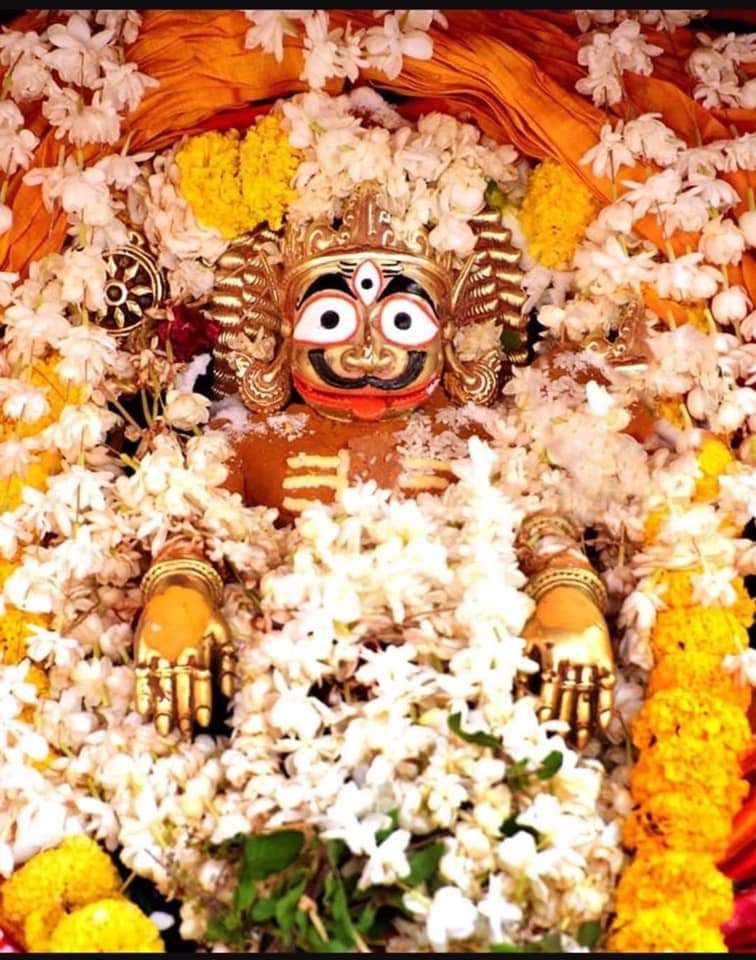
Badinrushingha Bije in Shreemandira (Chaitra Sukla Chaturthi)
Chaitra Nrusingha Tradition in Puri
Chaitra gives this protective Bije its distinct place in the annual temple cycle.
Chaitra places this Nrusingha observance within the spring ritual calendar of Puri. Chaitra is a season of renewal, and the Chaitra cycle gives this protective Bije a clear sacred context. In Chaitra, temple time links seasonal change with remembrance of divine protection. Chaitra therefore becomes more than a date marker; Chaitra frames the observance within a wider devotional rhythm. The Chaitra setting also helps devotees understand how Jagannath tradition organizes sacred memory through lunar time. Remembering Chaitra keeps the festival connected to its proper seasonal place. Chaitra ritual time joins calendar, temple and theology. The Bije is thus read through the sacred atmosphere of Chaitra, while Chaitra itself becomes part of the meaning of the observance.
Badi Nrusingha Bije in Shree Mandira
Badi Nrusingha Bije belongs to the protective Nrusingha tradition of Puri. Badi expresses a local ritual identity within the wider sacred geography of Shreekshetra. Through Badi, the fierce protection of Nrusingha is remembered in a living temple context. Badi therefore connects Purana, place and ritual movement. The observance of Badi also shows how Jagannath culture preserves protective forms through seasonal temple service. Remembering Badi invites reflection on courage, faith and divine shelter. In the Chaitra cycle, Badi becomes a distinct marker of protective devotion. The presence of Badi within Shree Mandira tradition keeps the memory of Nrusingha close to Jagannath worship.
Badi Nṛsiṁha Bije is a named Nṛsiṁha observance in the Śrī Mandira ritual cycle. Nṛsiṁha represents immediate divine protection, the defence of Prahlāda’s faith and the destruction of arrogant oppression. Puri has a particularly rich Nṛsiṁha network connected with Jagannātha, so the festival is best understood within that larger protective theology while the exact service sequence remains governed by temple tradition.
Badi Nṛsiṁha Bije occurs in Chaitra and belongs to the rich Nṛsiṁha network of Śrīkṣetra. A local Bije tradition gives this Purāṇic truth a geographical body. The protective Lord is not only remembered in scripture; His presence moves within the sacred field of Puri.
The avatāra appears at the threshold between categories—neither simply man nor animal, neither indoors nor outdoors, neither day nor night in the famous Purāṇic logic—and destroys the arrogance that believed divine justice could be defeated by technical conditions. Prahlāda’s faith stands at the centre of the story. At a deeper level, truth exceeds the clever structures built to deny it. In Śrīkṣetra, Nṛsiṁha traditions are woven into Jagannātha’s ritual and sacred geography, so protective theology appears not as a separate cult but as one expression of Mahāprabhu’s encompassing identity. Nṛsiṁha’s fierceness protects devotion; in the presence of Lakṣmī, that fierce power is visibly joined with grace and reassurance.
Bije signifies ceremonial movement of a deity or representative image. It reveals a crucial feature of Śrīkṣetra: sacred presence is not imprisoned inside one architectural centre. A Bije links the principal temple with maṭhas, āśramas, subsidiary shrines, neighbourhoods, gardens, tanks or the sea, depending on the observance. The route is therefore theological geography. When a deity moves, relationships between places become visible and the city is experienced as a sacred field rather than as ordinary urban space surrounding a shrine. Procession also changes the relationship between deity and community. The Divine crosses thresholds and enters shared space, while sevakas, sound, offerings and local institutions participate in a moving network of service. The hidden meaning of Bije is extension: grace radiates from the centre and returns, binding multiple sacred nodes into one living body.
The demon-subduing and danger-resolving episodes of Kṛṣṇa-līlā carry more than the memory of a supernatural victory. Each disturbance represents a force that breaks right relationship: arrogance, violence, uncontrolled appetite, fear, deceit or the desire to dominate. Kṛṣṇa’s intervention restores order without making the vulnerable responsible for overcoming what is beyond their strength. In the theology of Jagannātha, this becomes a language of śaraṇāgati, refuge. Divine protection does not mean that danger never appears; it means that danger is not the final authority. The ‘asura’ can be understood as a condition of consciousness that consumes harmony from within. Its defeat points toward the recovery of clarity and dharma. The protective līlās are therefore remembered not as spectacles of force but as assurances that compassion, courage and right order possess a deeper foundation than chaos.
Royal imagery in Śrī Mandira reverses ordinary political hierarchy. Jagannātha is Rājādhirāja, the King of kings, so earthly authority is meaningful only when understood as service beneath a higher sovereignty. Royal beshas, ceremonial commands and abhiṣeka imagery do not merely glorify power; they relativise it. Crown, weapon, throne and procession point beyond human rulers toward divine order. The hidden teaching is responsibility. True sovereignty protects, nourishes and upholds dharma rather than demanding worship for itself. This principle has shaped the historical relationship between the Gajapati king and Jagannātha, where royal dignity is repeatedly expressed through acts of sevā. Majesty and humility thus meet in the same ritual language.
Nṛsiṁha appears at a threshold—neither fully human nor animal, neither inside nor outside, neither day nor night in the classic narrative framework. This liminality answers Hiraṇyakaśipu’s attempt to make himself invulnerable through categories. The deeper lesson is that arrogance cannot imprison reality inside its own definitions. Prahlāda’s unwavering remembrance stands opposite the king’s obsession with control. Nṛsiṁha’s fierceness is directed toward oppression, while the same form becomes tender before the devotee. In Jagannātha culture this double quality makes Nṛsiṁha a powerful guardian: protection is not softness alone but the capacity to break the structures that threaten refuge.
Every Bije joins a point of departure, a route and a destination. These are not incidental logistics. They reveal relationships between sacred institutions and places. A temple, āśrama, sea-shore, garden or subsidiary shrine becomes part of one ritual network because divine movement connects them. Sound, carriers, sevakas and offerings give the movement a ceremonial body. Theologically, Bije prevents sacred geography from becoming static. Holiness moves through streets and thresholds; central and peripheral spaces answer one another. The return journey is equally meaningful because movement completes a circuit rather than simply leaving the sanctum behind.
Purāṇic narratives speak about real mythic opponents, yet devotional interpretation has long recognised an inward dimension as well. A demon may embody pride, violent impulse, greed, deception, uncontrolled speed or fear. Kṛṣṇa’s victory then becomes a pattern of spiritual re-ordering. The point is not to label ordinary people as demons; it is to notice how destructive tendencies distort relationship and judgment. Protection begins when those forces no longer dictate action. In this way the victory of the Lord can be contemplated simultaneously as sacred story, assurance of divine refuge and a mirror for inner discipline.
Jagannātha’s royal imagery places earthly sovereignty beneath divine sovereignty. The Lord can be dressed as Rājādhirāja, honoured through ceremonial authority and connected with royal rites, yet the theological centre remains clear: the true ruler is Mahāprabhu. Human kingship, administration and power gain legitimacy only when they serve dharma. Odisha’s history of the Gajapati as first servant dramatically expresses this inversion. Royal symbols therefore need not celebrate domination.
Badi Nṛsiṁha Bije places the fierce protector within the lived geography of Śrīkṣetra. Nṛsiṁha appears in scripture at a threshold—neither fully inside nor outside, neither day nor night—to defeat an arrogance that tried to make itself invulnerable through conditions. The local Bije carries that theology into place and movement. Its deeper lesson is that dharma cannot be permanently trapped by cleverness. When ordinary categories are manipulated to protect injustice, divine intelligence can act beyond those categories, while Prahlāda’s unwavering remembrance remains the model of fearless refuge.
Explore more Jagannath traditions from Puri.