Articles
।। Ratha Yatra or Ghosha Yatra in Srimandir Part – 5 ।।
Apr
Jay Jagannath, Om Namo Bhagavate Vasudevaya. This part explains why Ratha Yatra is also known as Ghosha Yatra.
The second name of this Ratha Yatra is:-
Ghosha Yatra: Proclamation and Sacred Sound
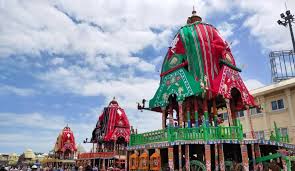
It is named Ghosha Yatra because Jagat ra Nath Shri Jagannath Mahaprabhu, the Lord of the Universe, travels seated on the Nandighosha chariot with the purpose of proclaiming (ghoshana) the welfare (mangal) of the world.
Additionally, because the journey on Nandighosha during the Pahandi (procession) of the deities (Shri Jiumana) is performed amidst the combination (sanjojana) of the unique sound (apurba dhwani) of bells (ghanta) and deep, resonant, proclaiming sounds (ghora gharghara ghosha shabda), it is named Ghosha Yatra.
Ghosha Yatra carries two connected ideas in this account. First, the word ghosha points to proclamation. Shri Jagannath travels on Nandighosha as the Lord of the Universe, and the journey is presented as a declaration of mangal, or welfare, for the world. The name therefore connects the movement of the chariot with a message of well-being that reaches beyond any single person.
The explanation also emphasizes sound. During the Pahandi and the movement toward the Nandighosha chariot, bells and deep resonant sounds combine into a powerful proclamation. The article describes these ringing and rumbling sounds as part of the identity of the journey. In this sense, Ghosha Yatra is not only something devotees see; its sacred soundscape also gives the procession its distinctive character.
Nandighosha is central to this meaning because it is the chariot on which Shri Jagannath travels. The proclamation of welfare, the Pahandi procession, the bells and the deep sounds are presented together as parts of one experience. Ghosha Yatra thus expresses both the message carried by the journey and the audible ghosha that accompanies it.
Jay Jagannath, Om Namo Bhagavate Vasudevaya Namah.