Articles
The Festival of Eyes: A Vision of Youthfulness
Jun
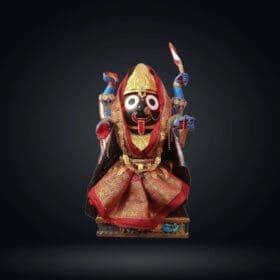
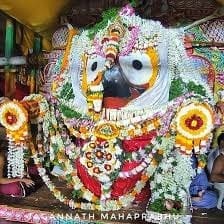
Lord Jagannath never succumbs to old age. He is youthful from birth. Every year, we experience this vision of youthfulness before the Rath Yatra (chariot festival). From Ashadha Krishna Chaturdashi to Ashadha Shukla Navami, the white Abhisheka (ritual bathing) and other adornments are performed on the Shree Anga (body) of the new idols. On the Amavasya (new moon day), the idols are presented for darshan (auspicious viewing) to the general public and devotees. This is celebrated as the “Netrotsav” or Festival of Eyes.
Youthfulness and the Festival of Eyes
This sequence presents youthfulness as a renewed vision of Lord Jagannath before Ratha Yatra. After the ritual bathing and adornment of the Shree Anga, devotees receive darshan on Amavasya. The article then describes how Datt Mahapatra and the other artisans prepare the forms, the Puja Pandra applies the Shree Netra, and the Festival of Eyes is completed before the chariot journey. In this account, youthfulness is connected with the Lord’s renewed appearance, the divine eye ritual and the public return of darshan. The transition leads directly toward Ratha Yatra in Shree Kshetra.
Three artisans, led by Datt Mahapatra, create three black forms on three different Bota (a type of wood carving). These are then offered to the Puja Pandra (priest). The Puja Pandra then applies the Shree Netra (divine eye) for the idol. This is called the “Netrotsav.” Following the Netrotsav, the Rath Yatra of Lord Jagannath is organized. In this way, the celebration of Lord Jagannath, the wooden deity of Shree Kshetra (Jagannath Puri), concludes with the completion of the Navkalebar Purb (nine incarnations festival).