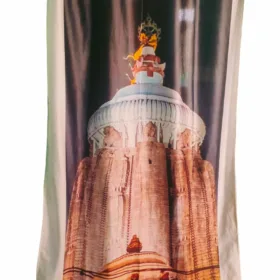
A Devotional Journey Through the Sacred Spaces of Shri Mandira
🙏 The divine play of Mahaprabhu Shri Jagannath is limitless and beyond complete description. In Jagannath devotion, Shri Kshetra Puri is not seen merely as a temple town. It is revered as Martya Vaikuntha — Vaikuntha experienced here in the mortal world.
For generations, devotees have approached Shri Jagannath Temple with this feeling.
They do not see the temple only as a magnificent structure of stone.
They see it as a sacred world.
Every gate carries meaning.
Every pathway has memory.
Every shrine is connected with worship.
Every step draws the pilgrim closer to Mahaprabhu.
Traditional devotional descriptions speak of several sacred zones within and around Shri Mandira as forms of Vaikuntha.
These teachings are not simply about geography.
They help the devotee understand the inner journey from the outer world towards the presence of Mahaprabhu Shri Jagannath.
What Is Vaikuntha?
In Vaishnava theology, Vaikuntha is understood as the eternal divine abode of Bhagavan, especially associated with Shri Narayana and Mahalakshmi.
The word points towards a state beyond ordinary fear, limitation and worldly disturbance.
Devotional tradition describes Vaikuntha as the realm where divine qualities such as:
Knowledge
Divine splendour
Strength
Power
Courage
Radiance
are fully present.
For a Jagannath devotee, Purushottama Kshetra carries this sacred feeling into the earthly world.
This is why Puri is lovingly called:
Martya Vaikuntha — Vaikuntha on Earth.
It expresses the devotional belief that a pilgrim entering Shri Kshetra is entering a place where the distance between the human and the Divine becomes very small.
Mahaprabhu’s Lila Is Beyond Measure
Mahaprabhu Shri Jagannath is affectionately called Kalia Saanta, the dark Lord of Nilachala.
His Lila cannot be fully measured by human understanding.
Jagannath tradition celebrates Him as the Lord whose compassion reaches beyond ordinary social divisions.
Rich and poor come before Him.
Kings and ordinary pilgrims bow before Him.
Scholars and simple devotees chant the same sacred name:
Jai Jagannath.
For the devotee, this is what makes Shri Kshetra extraordinary.
The pilgrim does not simply visit a building.
The pilgrim enters the sacred field of Mahaprabhu’s Lila.
Purushottama Kshetra as Martya Vaikuntha
Traditional devotional language sometimes says that even Yamaraja’s authority does not operate in Shri Kshetra in the ordinary way.
Such expressions should be understood through their devotional meaning.
They express the extraordinary sanctity attributed to Purushottama Kshetra and the belief that remembrance of Mahaprabhu leads the devotee towards liberation and divine shelter.
The deeper teaching is not to become careless about life or death.
It is to remember that the final refuge of the devotee is the Lord.
Mahaprabhu is therefore remembered as:
Bhakta-vatsala — the Lord affectionate towards His devotees.
Patita-pavana — the purifier and uplifter of the fallen.
Jagannath — Lord of the Universe.
1. Purva Vaikuntha — The Eastern Vaikuntha
The principal entrance of Shri Jagannath Temple is the famous Singhadwara, the Lion Gate.
In traditional devotional descriptions, this eastern entrance is associated with Purva Vaikuntha, or the Eastern Vaikuntha.
This is where the pilgrim’s sacred movement begins.
Before entering deeply into Shri Mandira, one first stands before Singhadwara.
For many devotees, simply reaching this place is emotionally powerful.
The noise of the road begins to fade.
The mind turns towards Mahaprabhu.
Folded hands rise naturally.
The heart begins to say:
Jai Jagannath.
Mahalakshmi and Patita Pavana
Traditional accounts associate the upper portion of Singhadwara with Mahalakshmi.
Near the entrance, devotees also receive Darshan of Patita Pavana Jagannath.
Patita Pavana is especially meaningful in Jagannath devotion.
The very name means:
The Lord who uplifts the fallen.
For devotees who cannot proceed further into the temple, Patita Pavana carries deep emotional importance.
His presence at the entrance communicates a powerful message:
Divine compassion comes towards the devotee.
The Lord is not only waiting in the innermost sanctum.
His grace begins at the threshold.
The Meaning of the Threshold
A doorway separates two spaces.
Spiritually, it may also represent a change in awareness.
Outside, the mind may be occupied with:
Travel
Business
Noise
Worry
Family matters
Everyday responsibilities
At the sacred threshold, the devotee pauses.
The inner question becomes:
“What am I carrying into this holy place?”
Pride?
Anger?
Anxiety?
Or surrender?
The Eastern Vaikuntha therefore teaches preparation.
Before seeking Darshan, prepare the heart.
The Sacred Baishi Pahacha
After entering through Singhadwara, devotees encounter the famous Baishi Pahacha, the twenty-two steps.
These steps occupy a special place in Jagannath tradition.
For many devotees, climbing them is not simply physical movement.
Each step brings the heart closer to Mahaprabhu.
Traditional beliefs also connect this area with sacred ideas concerning liberation and the passage beyond worldly bondage.
Some devotional accounts refer to a sacred stone here by names such as Preta Shila or Yama Shila and associate it with beliefs concerning liberation.
Such traditions should be approached with reverence rather than mechanical superstition.
The important spiritual lesson is that pilgrimage reminds us of mortality.
Every step says:
“Life is temporary.”
“Pride is temporary.”
“Possession is temporary.”
“Remember the Lord.”
2. Ananta Vaikuntha
Within the inner temple area, traditional descriptions identify another sacred zone as Ananta Vaikuntha.
It is associated with Ananta, the endless divine principle and the sacred imagery of the Lord resting upon Ananta Shesha.
The word Ananta means:
Endless. Infinite. Without limit.
This gives the pilgrim a beautiful teaching.
Human worries often feel enormous because we see only a small part of life.
But before the Infinite, our sense of control becomes smaller.
Ananta Vaikuntha reminds us:
The Lord is greater than our fear.
Grace is greater than our calculations.
Divine reality cannot be limited by human understanding.
3. Brahma Vaikuntha
Traditional temple narratives also refer to Brahma Vaikuntha.
This sacred association is connected in devotional memory with the establishment and consecration of the great temple tradition and the sacred form of Daru Brahman.
King Indradyumna is central to these sacred narratives.
Traditional Puranic accounts describe him as the king who devoted his authority, wealth and effort to establishing worship of the Lord at Purushottama Kshetra.
Brahma, Bharadvaja and other sacred figures appear in different traditional accounts connected with consecration and ritual establishment.
The important devotional meaning is clear:
Divine inspiration must become disciplined worship.
A sacred vision must be supported by:
Proper ritual
Responsible administration
Skilled service
Daily continuity
Community participation
This is how inspiration becomes tradition.
4. Paschima Vaikuntha — The Western Vaikuntha
The western side of the sacred complex is traditionally associated with Paschima Vaikuntha, the Western Vaikuntha, especially in connection with Mahalakshmi.
Jagannath tradition gives Mahalakshmi an essential place within the life of Shri Mandira.
She is not a distant decorative presence.
She represents:
Grace
Prosperity
Order
Nourishment
Sacred household balance
Without Lakshmi, prosperity has no sacred centre.
Without responsibility, wealth becomes ego.
The Western Vaikuntha reminds the devotee that spiritual life needs both devotion and order.
The Peace of Sacred Space
Traditional descriptions speak lovingly of peaceful places associated with Mahalakshmi where devotees experience calmness.
Whether one is in a large temple complex or a small home mandira, this principle remains relevant.
Sacred space should create:
Calm
Cleanliness
Attention
Gratitude
Restraint
A temple is not sacred only because of architecture.
It becomes meaningful through the quality of worship maintained there.
5. Patala Vaikuntha
The area extending in the traditional description from the front of Mahalakshmi’s shrine towards the Anand Bazaar side is associated with Patala Vaikuntha.
The word Patala refers to the subterranean or lower realm in sacred cosmology.
Nearby sacred associations also include Pataleshvara.
Devotional narratives connect this symbolic world with stories such as the sending of King Bali to Patala by Bhagavan in the Vamana tradition.
The spiritual meaning is important.
Humility often requires going down before rising.
The ego wants elevation.
Spiritual practice teaches surrender.
Patala Vaikuntha therefore becomes a reminder:
True greatness begins where pride becomes smaller.
King Bali and Surrender
The story of Mahabali is remembered in Vaishnava tradition as one of surrender.
Bali possessed power, wealth and authority.
Yet before Bhagavan, all worldly possession became secondary.
The devotee learns:
“You may possess many things, but nothing is absolutely yours.”
We receive.
We serve.
We eventually leave.
This is why surrender is not weakness.
It is freedom from the illusion of total ownership.
6. Koili Vaikuntha
One of the most deeply revered sacred spaces associated with Shri Jagannath Temple is Koili Vaikuntha.
It is especially important in the tradition of Nabakalebara and the sacred wooden forms, the periodic renewal of the wooden bodies of the deities.
Koili Vaikuntha carries profound theological meaning.
The forms change.
The sacred continuity remains.
The body is renewed.
The divine identity continues.
This is one of the most remarkable teachings of Jagannath tradition.
Renewal Without Loss of Continuity
Nabakalebara teaches something that every human being can understand.
Life changes.
Bodies change.
Generations change.
Institutions change.
But sacred continuity can remain.
The devotee learns not to confuse eternal presence with one temporary form.
Koili Vaikuntha therefore speaks about:
Renewal
Mortality
Continuity
Mystery
Divine presence
It reminds us that change does not always mean destruction.
Sometimes change protects continuity.
7. Kaivalya Vaikuntha
Traditional devotional descriptions also speak of Kaivalya Vaikuntha, connected with areas around Anand Bazaar and the Snana Mandapa.
The word Kaivalya carries the idea of liberation and ultimate spiritual fulfilment.
Jagannath culture gives extraordinary importance to Mahaprasada.
Food offered to the Lord returns to devotees as grace.
It is no longer seen as ordinary food alone.
It becomes something received.
Mahaprasada and Shared Grace
Mahaprasada teaches humility.
A person may be wealthy.
Another may be poor.
One may be highly educated.
Another may not be.
Yet all stand as receivers before grace.
The food does not come to the devotee merely as a commercial product.
It is received with reverence.
This changes the meaning of eating.
Instead of saying:
“This is mine.”
The devotee learns to say:
“This has been received.”
That simple change can transform the heart.
Anand Bazaar
Anand Bazaar is deeply associated with the distribution and sharing of Mahaprasada.
Its spiritual meaning goes far beyond food.
It represents:
Grace shared
Community
Gratitude
Dependence on the Lord
The sacred dignity of nourishment
Jagannath devotion repeatedly brings theology down into everyday life.
People must eat.
The Lord’s grace meets them there.
8. Lila Vaikuntha
The Jagamohana and areas associated in traditional descriptions with the movement of the Lord’s representative or festival forms are referred to as Lila Vaikuntha.
The word Lila means divine play.
This is central to Jagannath devotion.
Mahaprabhu is not understood as a motionless theological idea.
His tradition is alive with movement.
He comes out.
He travels.
He bathes.
He rides the chariot.
He rests.
He returns.
He receives offerings.
He participates in festivals.
This is Lila.
Why Divine Lila Matters
Lila brings the Lord into relationship with devotees.
During Ratha Yatra, Mahaprabhu leaves the sanctum and comes among people.
During other festivals, different forms of sacred movement take place according to established temple tradition.
The deeper message is:
The Lord is not distant from life.
He enters celebration.
He enters food.
He enters music.
He enters community.
He enters memory.
Lila Vaikuntha reminds the devotee that devotion should be alive.
Niladri Vaikuntha and the Ratna Singhasana
After passing through the sacred spaces described in traditional accounts, the pilgrim finally approaches the heart of the temple.
There, on the revered Ratna Singhasana, are the sacred forms of the Chaturdha Murti:
Mahaprabhu Shri Jagannath
Mahaprabhu Shri Balabhadra
Devi Subhadra
Shri Sudarshana
This innermost sacred destination is associated with Niladri Vaikuntha.
The journey reaches its devotional centre.
Everything points here.
The gates.
The steps.
The sacred spaces.
The shrines.
The offerings.
The seva.
The pilgrim finally stands before Mahaprabhu.
The Meaning of the Eight Vaikunthas
Whether understood through ritual geography, local temple tradition or devotional symbolism, the teaching of the Vaikunthas communicates a beautiful spiritual journey.
The devotee moves:
From the outer world towards sacred awareness.
From noise towards attention.
From pride towards humility.
From possession towards prasada.
From fear towards surrender.
From change towards continuity.
From ordinary movement towards Lila.
And finally towards Darshan.
The temple becomes a map of the inner heart.
Mahaprabhu’s “Dori”
A beautiful saying in Jagannath devotion is that one reaches Puri when Mahaprabhu’s dori — His divine pull — catches the devotee.
A person may have money.
A person may have a comfortable vehicle.
A person may have plans.
Yet circumstances may prevent the pilgrimage.
Another person may live far away, possess very little, and somehow receive the opportunity to come.
Devotees describe this lovingly as Mahaprabhu’s call.
This should not be understood as a reason to judge people who cannot travel.
Its devotional meaning is simply:
Darshan is grace, not personal achievement.
Wealth Alone Cannot Buy Darshan
A person may possess great wealth, but wealth cannot purchase genuine devotion.
One may stand close to a sacred image and still remain mentally distant.
Another person may live hundreds of kilometres away and remember Mahaprabhu with tears.
Who is closer?
Only the Lord knows the heart.
This is why Jagannath devotion gives such importance to bhava, sincere devotional feeling.
The true pilgrimage begins inwardly.
The Lord of the Devotee
Mahaprabhu is called the Lord of the Universe.
Yet devotees also describe Him with extraordinary intimacy.
For some He is:
A father.
For some:
A friend.
For some:
A brother.
For some:
A child.
For some:
The only refuge.
This is why people say:
Mahaprabhu is Bhaktara Bhagaban — the God of His devotees.
He allows the devotee to approach through relationship.
A Practical Inner Pilgrimage
Even when we cannot physically visit Puri, the teaching can enter daily life.
Begin at the Threshold
Pause before starting prayer.
Leave unnecessary anger outside.
Climb the Inner Steps
Let each step reduce one attachment.
Remember Ananta
Your problem is not greater than the Infinite.
Remember Brahma Vaikuntha
Turn inspiration into disciplined practice.
Remember Lakshmi
Use wealth responsibly.
Remember Patala
Allow pride to become smaller.
Remember Koili Vaikuntha
Accept necessary change without losing faith.
Remember Kaivalya
Receive food with gratitude.
Remember Lila
Allow devotion to carry joy.
Remember Niladri
Keep Mahaprabhu at the centre.
This is an inner Shri Mandira.
Do Not Turn Sacred Belief Into Mechanical Magic
Devotional tradition should be approached with reverence and understanding.
A sacred stone, shrine or pathway should not be treated like a machine that automatically guarantees liberation.
The deeper teaching is transformation.
Does pilgrimage increase humility?
Does Mahaprasada increase gratitude?
Does Darshan soften pride?
Does temple worship improve conduct?
If not, the outer journey has not yet reached the inner heart.
Respect Living Temple Tradition
Shri Jagannath Temple has complex, living systems of seva and ritual continuity.
Written descriptions can help devotees understand broad meanings.
But they do not replace:
Authorised seva procedures
Qualified ritual knowledge
Temple custom
Hereditary service traditions
Proper local guidance
The temple is not merely a subject to be read about.
It is a living sacred institution.
Respect includes accepting what we do not fully know.
Central Teaching
The central teaching can be expressed simply:
Shri Jagannath Temple is understood in devotional tradition as Martya Vaikuntha, a sacred world in which every threshold, shrine, pathway, offering and act of seva draws the pilgrim towards Mahaprabhu. The journey through the sacred Vaikunthas becomes both an outer pilgrimage and an inner movement from pride towards surrender.
The pilgrim reaches Singhadwara.
Patita Pavana welcomes the heart.
The Baishi Pahacha teaches mortality.
Ananta speaks of the Infinite.
Brahma Vaikuntha remembers sacred establishment.
Mahalakshmi teaches order and grace.
Patala teaches humility.
Koili Vaikuntha teaches renewal.
Kaivalya teaches the grace of Mahaprasada.
Lila Vaikuntha reveals the moving, living Lord.
Niladri Vaikuntha brings the devotee before the Ratna Singhasana.
🙏 Sacred space prepares the heart.
🙏 Patita Pavana represents compassionate welcome.
🙏 The steps remind us that life and pride are temporary.
🙏 Mahaprasada teaches receiving rather than possessing.
🙏 Koili Vaikuntha reminds us that sacred continuity can survive change.
🙏 Divine Lila makes devotion living and relational.
🙏 Wealth does not guarantee Darshan.
🙏 Sincere bhakti cannot be measured through social status.
🙏 Temple tradition should be approached with humility.
🙏 Mahaprabhu remains the centre of the entire journey.
A pilgrim may travel thousands of kilometres to reach Puri.
Yet the deepest distance is only from ego to surrender.
From distraction to remembrance.
From possession to gratitude.
From fear to faith.
And from the restless mind to the lotus feet of Mahaprabhu.
❤️ When Mahaprabhu’s call reaches the heart, every step towards Him becomes part of the pilgrimage.
🙏 Jai Jagannath Swami Nayana Pathagami Bhavatu Me