Articles
Nava Yauvana Darshan: Mahaprabhu’s First Darshan After Anasara

Jul
At Nava Yauvana Darshan, after fifteen long days of separation, Mahaprabhu Shri Jagannath, Badathakura Shri Balabhadra, Devi Subhadra, and Shri Sudarshana appear before devotees in their renewed and youthful form.
This sacred occasion is known as Nava Yauvana Darshan, also called Ubha Yatra.
It is observed on the holy day of Ashadha Shukla Pratipada, just before the world-famous Ratha Yatra of Puri.
For devotees, this is one of the most emotional moments in the annual ritual cycle of Shri Jagannath Temple.
After Snana Purnima, the deities remain inside the Anasara Ghara for nearly fifteen days. During this period, public darshan is suspended, and the divine siblings are cared for through confidential healing rituals.
When the sacred treatment, body restoration, facial decoration, and eye rituals are completed, Mahaprabhu appears again in a fresh, radiant, and youthful form.
This first darshan is called Nava Yauvana Darshan.
What Does Nava Yauvana Darshan Mean?
The word Nava means new, and Yauvana means youth.
Nava Yauvana therefore means:
“New youthfulness” or “renewed divine beauty.”
The four sacred deities of Shri Mandira are carefully restored and freshly decorated before they proceed to their chariots.
The appearance they assume after this restoration and before Ratha Yatra is known as the Nava Yauvana Besha.
Mahaprabhu does not become old or young in the ordinary human sense.
However, Jagannath culture lovingly presents Him as a living member of the family.
He bathes, becomes unwell, rests, receives treatment, recovers, dresses again, and returns before His devotees.
This human-like closeness makes the tradition of Mahaprabhu deeply personal and emotional.
The Fifteen-Day Separation Before Nava Yauvana Darshan
After the grand bath on Snana Purnima, Shri Jagannath, Shri Balabhadra, Devi Subhadra, and Shri Sudarshana retire to the Anasara Ghara.
According to devotional tradition, the deities become unwell after receiving the ceremonial bath.
For about fifteen days, they remain away from public view.
During this period, special healing and restorative rituals are performed, including:
- Phuluri Tela Lagi
- Osha Lagi
- Dasamula Lagi
- Sarvanga Chandana
- Rajaprasada Bije
- Ghanalagi
- Khali Lagi
- Khadi Lagi
- Banaka Lagi
- Netrotsava
Each ritual prepares the divine forms for their return.
The devotees wait with deep longing because they cannot receive regular darshan during Anasara.
When the Lord finally appears again, the joy becomes even greater.
The pain of separation makes the darshan more meaningful.
Banaka Lagi Before Nava Yauvana Darshan
On Anasara Chaturdashi, which falls on Ashadha Amavasya, the sacred Banaka Lagi Niti is performed.
Banaka Lagi means the traditional decoration of the divine faces.
The Dutta Mahapatra Sevayats perform this confidential service according to hereditary temple tradition.
They carefully apply the sacred colours to the faces of Shri Jagannath, Shri Balabhadra, and Devi Subhadra.
The eyes, lips, facial outlines, and other sacred features are restored with great devotion and skill.
This is not treated as ordinary painting.
It is known as Shrimukha Shringara, the sacred decoration of the divine face.
Only after Banaka Lagi is completed do the final preparations for Nava Yauvana Darshan begin.
The renewed faces become bright, beautiful, and full of divine energy.
The Early-Morning Rituals of Nava Yauvana Darshan
On Ashadha Shukla Pratipada, the sacred services begin in the early morning.
Mangala Arati is performed first.
It is followed by Abakasha and the prescribed dressing rituals.
After these services are completed, the Dashavatara and representative deities who received worship during the Anasara period begin their ceremonial return.
This return is known as Bahuda Bije.
The movement of these representative forms marks the end of their temporary role during Anasara.
The principal deities are now ready to appear again.
Return of the Deities to Dakshina Ghara
Among the Dashavatara deities, the following forms are ceremonially taken to the Dakshina Ghara:
From the side of Shri Balabhadra:
- Shri Narasimha
- Shri Rama
- Shri Krishna
From the side of Shri Jagannath:
- Shri Dolagovinda
- Shri Madanamohana
These are movable or representative deities known as Chalanti Pratimas.
During the Anasara period, they receive special worship because the main deities remain hidden.
Once Mahaprabhu is ready for public darshan, these forms return to their usual places.
Their Bahuda Bije announces that the special period of separation is ending.
Return of the Three Pati Dian
Among the remaining representative forms are the three sacred Pati Dian:
- Vasudeva, representing Shri Balabhadra
- Bhuvaneshwari, representing Devi Subhadra
- Narayana, representing Shri Jagannath
These painted representative deities are taken to the Mandani Ghara, located near the temple of Devi Vimala.
During Anasara, these forms allow devotees to maintain a spiritual connection with the divine siblings.
Their return to the Mandani Ghara means that the main wooden deities are once again ready to receive worship and darshan.
Shri Devi and Bhu Devi Return
Shri Devi and Bhu Devi, associated with Devi Subhadra’s side, are ceremonially taken to the Khataseja Ghara.
Shri Devi represents divine prosperity and grace.
Bhu Devi represents the Earth and the sustaining power of creation.
Their return forms another important part of the transition from Anasara to Nava Yauvana Darshan.
Every divine form is respectfully taken back to its prescribed location.
Nothing is done casually.
Each movement follows the sacred discipline of Shri Mandira.
Removal of the Anasara Tati Before Nava Yauvana Darshan
After the representative deities have returned to their proper places, the Kotha Suansia Sevayats enter the inner area.
They remove the Anasara Tati, the temporary screen or barrier that protected the privacy of the deities during the healing period.
They also remove the cot or sacred arrangement used during Anasara.
The removal of the Tati has deep spiritual meaning.
For fifteen days, the barrier separated the devotees from Mahaprabhu.
It protected the confidential healing and restoration of the divine bodies.
When it is finally opened, the long period of waiting comes to an end.
The Lord is no longer hidden.
The path to darshan is opened again.
Cleaning the Sacred Area
After the Tati is removed, the area in front of the deities is carefully washed and purified.
This is not ordinary cleaning.
The Anasara Ghara was the place where confidential healing rituals took place.
Before public darshan begins, the area must be made clean and ready according to temple tradition.
Water represents purification, freshness, and a new beginning.
The physical cleaning reflects the spiritual transition from illness to health, from seclusion to darshan, and from silence to celebration.
Once this purification is completed, devotees are allowed to receive the first darshan of the renewed deities.
The First Darshan After Anasara
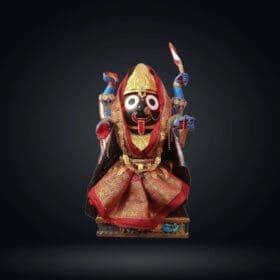
The first public appearance of Shri Jagannath, Shri Balabhadra, Devi Subhadra, and Shri Sudarshana after Anasara is known as Nava Yauvana Darshan.
The divine siblings appear freshly painted, beautifully dressed, and full of youthful radiance.
For devotees, the experience is deeply emotional.
They have waited for fifteen days without seeing Mahaprabhu.
Now, the Lord stands before them again with renewed beauty.
His large eyes look upon the world.
His smiling face brings comfort.
His presence ends the pain of separation.
This is why Nava Yauvana Darshan is not simply another temple viewing.
It is a reunion between Mahaprabhu and His devotees.
Nava Yauvana Darshan in a Nabakalebara Year
In an ordinary year, the devotees wait for about fifteen days during Anasara.
However, in a Nabakalebara year, the period of separation may extend for nearly one and a half months.
During Nabakalebara, the old wooden forms are replaced with newly carved sacred bodies.
Many confidential rituals are performed before the new deities are ready for public darshan.
Therefore, the first Nava Yauvana Darshan in a Nabakalebara year becomes even more rare, emotional, and spiritually powerful.
Devotees wait for a much longer period to see Mahaprabhu in His new form.
The darshan becomes a historic and unforgettable moment.
Description in Niladri Mahodaya
The fifteenth chapter of the sacred text Niladri Mahodaya describes the rituals connected with this occasion.
According to the tradition, after three Ghadis of the Amavasya night have passed, the Acharya completes his ritual bath.
The deities invoked upon the painted Pati images are then ceremonially released.
After this, the cot is removed and the Tati is opened.
The front area of the deities is washed and purified.
Two ceremonial umbrellas are held before the deities.
The atmosphere becomes filled with:
- Bells
- Ghantas
- Sacred music
- Devotional singing
- Dance
- Traditional instruments
This creates an auspicious celebration around the renewed appearance of Mahaprabhu.
The Lord who remained hidden in silence is now welcomed with sound, music, movement, and devotion.
Why Is It Called Ubha Yatra?
Nava Yauvana Darshan is also popularly known as Ubha Yatra.
The term is connected with the deities being prepared and standing ready for their forthcoming journey.
Ratha Yatra is very close.
Taladhwaja, Darpadalana, and Nandighosha wait on the Bada Danda.
The divine siblings are now fully restored, dressed, and ready to leave Shri Mandira.
Ubha Yatra therefore represents the sacred moment of readiness before the great journey.
Mahaprabhu has recovered.
His eyes have been completed.
His face has been decorated.
His clothes and ornaments are ready.
His chariot awaits Him.
The Lord is prepared to come outside and meet the world.
From Netrotsava to Nava Yauvana
Netrotsava Niti and Nava Yauvana Darshan are closely connected.
During Netrotsava, the divine eyes are ceremonially completed.
During Nava Yauvana Darshan, the devotees receive the first sight of the fully restored divine forms.
The sequence is spiritually beautiful.
First, Mahaprabhu’s eyes are completed.
Then He looks upon His devotees.
The devotees look upon Him.
This meeting of vision is the essence of darshan.
It is not only the devotee seeing God.
It is also the devotee standing within the loving gaze of Mahaprabhu.
The Meaning of Mahaprabhu’s Renewed Form
The renewed appearance of Mahaprabhu carries a deep message for human life.
Every person passes through periods of weakness, illness, sadness, silence, or separation.
Sometimes life forces us to stop and rest.
Sometimes healing happens away from public attention.
Sometimes old layers must be removed before a new beginning is possible.
Mahaprabhu’s Anasara journey teaches that recovery takes time.
His Nava Yauvana form teaches that renewal is always possible.
The Lord returns brighter after seclusion.
His beauty becomes more meaningful after separation.
His first darshan gives hope to every devotee.
The Spiritual Meaning of the Removed Tati
The Anasara Tati can also be understood as a symbol of the barriers inside the human heart.
Pride, fear, anger, jealousy, and ignorance often stand like screens between the individual and the Divine.
When these barriers are removed, inner darshan begins.
The cleaning of the area in front of the deities teaches that the heart must also be purified.
The return of light, music, and worship reflects the awakening of devotion after inner darkness.
Nava Yauvana Darshan therefore invites us to remove the Tati within ourselves.
Only then can we see Mahaprabhu clearly.
Many Sevayats, One Sacred Service
The entire Nava Yauvana ritual depends upon the coordinated service of many hereditary Sevayat communities.
The Dutta Mahapatra Sevayats perform Banaka Lagi.
The Pati Mahapatra and Daitapati Sevayats participate in confidential services.
The Kotha Suansia Sevayats remove the Tati and sacred cot.
Other Sevayats clean the area, perform Arati, dress the deities, offer Bhoga, and maintain ritual order.
No single person completes the tradition alone.
The ritual becomes possible through teamwork, discipline, and inherited responsibility.
This expresses the heart of Jagannath culture:
Many hands perform one seva.
Many families preserve one tradition.
Many devotees worship one Mahaprabhu.
The Joy Before Ratha Yatra
Nava Yauvana Darshan takes place just before Ratha Yatra.
Soon, Shri Balabhadra will ascend Taladhwaja.
Devi Subhadra and Shri Sudarshana will ascend Darpadalana.
Mahaprabhu Shri Jagannath will sit upon Nandighosha.
The Lord who remained hidden for fifteen days will come onto the Bada Danda before countless devotees.
The transition is deeply meaningful.
First, He withdraws.
Then He heals.
Then He opens His divine eyes.
Then He gives Nava Yauvana Darshan.
Finally, He leaves the temple and travels towards His devotees.
This is the journey from silence to celebration.
The Eternal Message of Nava Yauvana Darshan
Nava Yauvana Darshan teaches several simple and powerful lessons:
Healing requires patience.
Rest is not weakness.
Separation can deepen love.
Renewal begins after old layers are removed.
The Lord never abandons His devotees.
After darkness comes darshan.
After Anasara comes Ratha Yatra.
When Mahaprabhu appears in His Nava Yauvana form, devotees do not see only fresh colours and new clothing.
They see hope.
They see recovery.
They see the end of waiting.
They see the compassionate Lord preparing to come closer to the world.
🙏 Nava Yauvana is the return of divine youthfulness.
🙏 Ubha Yatra is Mahaprabhu’s sacred readiness for Ratha Yatra.
🙏 The removal of the Tati ends the pain of separation.
🙏 The first darshan fills every devotee with joy.
🙏 Mahaprabhu returns so that every heart may receive His grace.
❤️ Jai Jagannath!