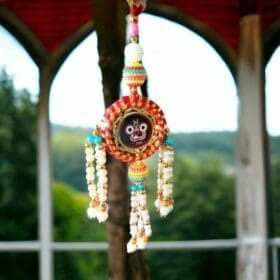
Shreejew’s Radhadamodar Besha & Baladhupa begins

Apr

Shreejew’s Radhadamodar Besha & Baladhupa begins
Baladhupa begins as a special Kartika offering rhythm in the Jagannath temple calendar. Baladhupa connects nourishment, seva and seasonal devotion through a carefully ordered bhoga tradition.
Baladhupa and Radhadamodar Besha in Kartika
Radhadamodar Besha is one of the beloved Kārttika adornments of the deities. Traditional account places the besha on the Ratna Siṁhāsana and connects it with the devotional memory of Rādhā and Damodara-Kṛṣṇa. The besha transforms darśana into a meditation on intimate bhakti during one of the holiest months of the Jagannātha year. Baladhupa is a special offering phase associated with the Kārttika season. The beginning of an offering cycle matters because food in Jagannātha tradition is not merely sustenance; bhoga becomes prasāda through relationship, service and divine acceptance. The ritual cycle thus marks changes in offering rhythm as major events.
Damodara is the name of Kṛṣṇa bound around the waist by Yaśodā’s rope, a story in which the infinite Lord allows Himself to be constrained by maternal love. When Rādhā is joined with Damodara in Kārttika devotion, intimate love and loving discipline meet. Baladhupa adds the language of nourishment. The day therefore presents a Lord who can be adorned, bound by affection and fed with seasonal care—a powerful contrast to purely abstract ideas of divinity.
Traditional story identifies Radhadamodar Besha as a Ratna Siṁhāsana observance. This gives a firm centre to the festival: the theology of Rādhā and Damodara is expressed through the visual language of darśana on the principal throne rather than through an invented external route.
A besha of Śrī Jagannātha is visual theology. Garments, flowers, ornaments, crowns, colours and symbolic attributes allow the same Divine Presence to reveal different scriptural identities without ceasing to be Jagannātha. The principle is profound: unity does not require sameness of appearance. Vāmana, Trivikrama, Nṛsiṁha, Lakṣmī-Nārāyaṇa, Rāja and lotus-centred forms disclose different aspects of the one Lord through darśana. The craftsmanship involved is itself a form of sevā. Tailoring, flower work, ornament making and careful dressing become acts of interpretation in material form. Because many beshas are temporary, they also teach the sacredness of impermanence. Beauty is prepared with great care, offered, seen and then released. The devotee learns to receive form deeply without mistaking a single form for the whole mystery of the Divine.
Rādhā-Kṛṣṇa traditions reveal a different dimension of divinity from royal majesty. Rādhā is remembered as the highest intensity of devotional feeling, while the sakhīs embody intelligent, active sevā that exists for the joy of the Divine Couple. Nikuñja, meeting, separation and playful exchange are therefore symbols of inward states of devotion rather than ordinary romance. In Jagannātha culture this intimate theology sits beside the grandeur of the Ratna Siṁhāsana without contradiction. The Lord who receives royal service is also Kṛṣṇa whose heart responds to love. The hidden teaching is that closeness to the Divine is measured less by external position than by the quality of attention, surrender and service. Beauty becomes sacred when it dissolves possessiveness and awakens tenderness.
Bhoga is one of the deepest theological languages of Jagannātha culture. Food is grown, gathered, prepared, carried, offered and transformed into prasāda through relationship with the Divine. The process joins farmer, artisan, cook, sevaka, vessel, fire, water and sacred timing. Seasonal bhogas are especially revealing because they show that the Lord is served according to climate, harvest and local taste. Pithas, milk preparations, early-morning winter offerings or new-season produce are not merely menu changes; they express affection toward the Deities as living persons. At a deeper level, reciprocity. Human beings offer the best of material life to the Lord, and the returned prasāda dissolves the boundary between sacred worship and nourishment. Eating becomes connected with gratitude, community and grace.
A defining feature of Jagannātha sevā is the treatment of the Deities as living, beloved persons. They wake, bathe, dress, eat, rest, travel and respond to seasons. Winter clothing, summer water-play, early-morning food and festival adornment arise from this devotional intimacy. Theologically, this does not reduce the Divine to human limitation; it makes transcendence relational. The infinite Lord accepts care. Sevā therefore trains attention to another’s comfort, timing and dignity. Inwardly, love is expressed through detail. A change of cloth, a carefully timed meal or a particular seasonal offering becomes sacred because care has been made concrete. Jagannātha’s personhood teaches that devotion is not only emotion or philosophy but disciplined hospitality toward the Divine Presence.
A besha lasts for a limited period, yet enormous care may go into preparing it. That tension is part of its theology. The form is temporary; the Presence receiving the form is enduring. Devotees learn to honour the moment without trying to freeze it. Iconographic references—lotus, royal ornaments, avatāra attributes, seasonal flowers or particular textiles—allow scriptural memory to become visible. Darśana therefore becomes interpretive seeing: one recognises a theological idea through colour, material and arrangement. Jagannātha’s changing beshas proclaim that divine identity is inexhaustible; no single visual language can contain the whole of Mahāprabhu.
Vraja-bhakti often uses the tension between meeting and separation to describe the intensity of remembrance. When Kṛṣṇa is visibly near, love serves Him directly; when He is absent, remembrance becomes so concentrated that absence itself is filled with presence. Rādhā and the sakhīs represent devotion that does not seek ownership of Kṛṣṇa. Their intelligence, emotion and action are organised around sevā. The hidden lesson is demanding: love becomes sacred when it gives up the urge to possess. In Jagannātha’s world, this theology helps explain why intimate Kṛṣṇa moods can coexist with the Lord’s enormous public and royal identity.
Ritual action preserves memory through the body, materials and sacred time, while symbolism turns those actions into a language of dharma.
Radhadamodar Besha and the beginning of Baladhupa bring intimate Kṛṣṇa devotion together with a seasonal change in service. The besha evokes Rādhā and Damodara, linking Jagannātha’s form with the loving theology of Vraja, while Baladhupa introduces an early offering rhythm associated with the changing season. The deeper meaning lies in care shaped by time. Love is not abstract; it notices when food should be offered, how the Lord should be dressed and which bhāva the season invites. Devotion becomes attentive hospitality.
Baladhupa gives the Kartika season a distinctive language of offering and care. Through Baladhupa, food becomes more than sustenance because bhoga is shaped by relationship, discipline and divine acceptance. The beginning of Baladhupa therefore marks a change in ritual rhythm, while Baladhupa also complements the intimate devotional mood of Radhadamodar Besha. Remembering Baladhupa helps devotees see how seasonal worship is carried through both adornment and nourishment.
For another Kartika observance, explore Kartika Purnima & Rajadhiraj Besha.