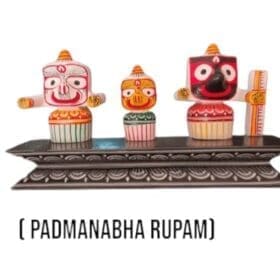
Ananta Brata

Apr

Ananta Brata
Ananta Brata and the Meaning of Ananta
Ananta Brata is dedicated to Ananta, the endless form associated with Viṣṇu and the cosmic serpent Śeṣa. The vrata is traditionally connected with vows for stability, protection and restoration of order. Its symbolism is especially suited to Jagannātha devotion, where the finite rhythms of daily life are repeatedly placed within the immeasurable continuity of the Divine.
Ananta means endless, without limit. In Vaiṣṇava imagery Ananta-Śeṣa is the cosmic serpent upon whom Nārāyaṇa reclines and who symbolises the stable infinity beneath changing worlds. A vow directed toward Ananta therefore naturally carries themes of continuity, support and restoration. The knot, thread or repeated numerical symbolism associated with Ananta traditions expresses a desire to bind daily life to what is not exhausted by change.
A vrata is a sacred commitment expressed through restraint, worship, memory and ethical intention. Its power lies in continuity between vow and conduct. Traditional vrata literature often speaks of blessings such as protection, family welfare, children, health or restoration of prosperity, yet the deeper logic is the training of desire. A wish is placed before the Divine and simultaneously disciplined. The practitioner is asked to become more truthful, restrained, charitable and attentive. Women, elders, children, foods, seasonal plants and domestic spaces carry inherited religious memory. When such a vrata appears beside Śrī Mandira observances, the relationship between household and temple becomes visible. At a deeper level, devotion becomes durable when it enters ordinary patterns of food, family responsibility, memory and self-control.
The Vāmana-Trivikrama narrative is a theology of scale, surrender and rightful sovereignty. Viṣṇu approaches King Bali in the unthreatening form of a dwarf brāhmaṇa and asks only for three steps of land. Once the promise is given, Vāmana expands into Trivikrama and encompasses the worlds. Bali’s greatness is revealed not by retaining possession but by keeping his word when the full meaning of the gift becomes clear. The hidden teaching is that ego measures reality according to what it thinks it controls, while the Divine reveals a scale that cannot be possessed. In Jagannātha besha and festival tradition, the story becomes visible through dress, ritual memory and the language of royal generosity. Smallness conceals infinity; apparent loss becomes the doorway to surrender and grace.
A defining feature of Jagannātha sevā is the treatment of the Deities as living, beloved persons. They wake, bathe, dress, eat, rest, travel and respond to seasons. Winter clothing, summer water-play, early-morning food and festival adornment arise from this devotional intimacy. Theologically, this does not reduce the Divine to human limitation; it makes transcendence relational. The infinite Lord accepts care. Sevā therefore trains attention to another’s comfort, timing and dignity. Inwardly, love is expressed through detail. A change of cloth, a carefully timed meal or a particular seasonal offering becomes sacred because care has been made concrete. Jagannātha’s personhood teaches that devotion is not only emotion or philosophy but disciplined hospitality toward the Divine Presence.
The heart of vrata is saṅkalpa, a consciously held sacred intention. A person may begin with a human need—health, family welfare, freedom from difficulty, remembrance of ancestors or spiritual progress—but the vow asks that desire be placed inside discipline. Fasting or regulated food, truthfulness, charity, worship and restraint make the wish answerable to dharma. This is why a vrata can change the devotee even before any hoped-for result appears. Its hidden movement is from demand to dedication. The person does not merely ask the Divine to alter circumstances; the person agrees to become more ordered, grateful and responsible.
The Vāmana narrative begins with apparent inequality: the mighty king Bali faces a small brāhmaṇa boy asking for only three steps of land. When Vāmana becomes Trivikrama, scale is reversed. The one who seemed to possess everything discovers that the cosmos itself belongs to the Divine. Yet Bali’s greatness is not erased; it is revealed through surrender. When no land remains for the third step, he offers himself. The hidden meaning therefore concerns ownership. Spiritual maturity begins when possession is recognised as stewardship. Humility is not humiliation; it is accurate vision of one’s place within a reality greater than the ego.
Jagannātha sevā is deeply shaped by personal relationship. The Deities are approached through rhythms of waking, bathing, dressing, food, rest, journeys and seasonal comfort. Such service does not reduce the Divine to an ordinary human being; rather, it gives devotion a language of intimacy. Love becomes practical. A change of cloth in winter, an early offering, a cooling practice or a festive adornment says that care must notice conditions. The hidden teaching is that bhakti is attentive rather than merely emotional. To love is to observe, prepare and serve appropriately. Ritual detail becomes the grammar through which affection learns discipline.
Jagannātha tradition repeatedly teaches through embodied signs: movement gives theology a route, food gives gratitude a taste, adornment gives scripture a visible form, and lunar or solar timing gives remembrance a place in the cosmos. In Ananta Brata, these signs do not function as decoration around belief; they are the way belief is enacted. The sacred meaning therefore rests in disciplined relationship—between the Deity and sevaka, memory and performance, inherited form and living devotion. What appears outwardly as a festival becomes inwardly a training in attention: to recognise dependence, honour order, restrain ego and receive divine presence through the concrete language of ritual.
Ananta Brata directs devotion toward Ananta, the endless foundation represented by Viṣṇu and the cosmic serpent Śeṣa. A vow to the Infinite places limited human anxieties within a larger horizon. The ritual thread and disciplined observance are therefore not magical objects; they materialise remembrance and commitment. The deeper meaning of ‘ananta’ is continuity without exhaustion. Family hopes, prosperity and protection are brought before the Divine, but the vrata also asks the practitioner to cultivate steadiness, truthfulness and gratitude so that desire is transformed into disciplined devotion.
For another sacred vrata in the Jagannath festival calendar, explore Indira Ekadashi.