Articles
।। Ratha Yatra or Ghosha Yatra in Srimandir Part – 6 ।।
Apr
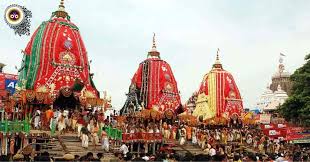
Jay Jagannath, Om Namo Bhagavate Vasudevaya. This Part 6 article explains Ghosha Yatra through the sacred Mahavedi Mahotsav tradition at Gundicha Temple.
The third name of this Ratha Yatra is:-
Ghosha Yatra and Mahavedi Mahotsav

(3) Mahavedi Mahotsav or Janmabedi or Antarvedi Yatra: Within the Gundicha Temple lies the ‘Yajnabedi’ (sacrificial altar) or ‘Mahavedi’ (great altar) where, during the time of Indradyumna, the idols (Bigraha) were first consecrated (pratishtha) by Brahma along with the performance of a yajna (fire sacrifice). Therefore, every year, the Darubrahma (the wooden embodiment of the Absolute) travels to His father’s abode (Pitru Sadana), i.e., the Gundicha Temple named Janakapuri, to reside on the Yajnabedi. Hence, in the ‘Vamadeva Samhita’, the Ratha Yatra is described as ‘Yajnotsav’ (Festival of Sacrifice).
Seen through this tradition, Ghosha Yatra is more than the movement of the chariots. The journey brings Darubrahma to Gundicha Temple and its Yajnabedi, remembered here as the sacred altar associated with the deities’ first consecration by Brahma. This is why Ghosha Yatra is connected in the article with Mahavedi Mahotsav, Janmabedi and the idea of Yajnotsav. The return to the great altar gives Ghosha Yatra a ritual meaning rooted in consecration, pilgrimage and darshan, while the quoted Skanda Purana verse praises Mahavedi Mahotsav as a festival that removes sins and grants the fruits of holy pilgrimages.
During this journey, described as ‘Mahavedi Mahotsav’ (Festival of the Great Altar), the Devas (gods) descend from heaven (swarga) to have darshan (holy sight) of the Darubrahma. Truly, it is said in the ‘Skanda Purana’:
‘Nātaḥ pa parataro loke Mahābedī Mahotsavāt sarvapāpa haro yogḥ sarvatīrtha phalapradaḥ.’
(Meaning: There is no greater festival in the world than the Mahavedi Mahotsav; it is the means (yoga) that removes all sins and bestows the fruits of visiting all holy places (tirthas).)
Jay Jagannath, Om Namo Bhagavate Vasudevaya Namah.