











Articles
Why Is Devi Subhadra’s Chariot Called Devadalana?
Jul
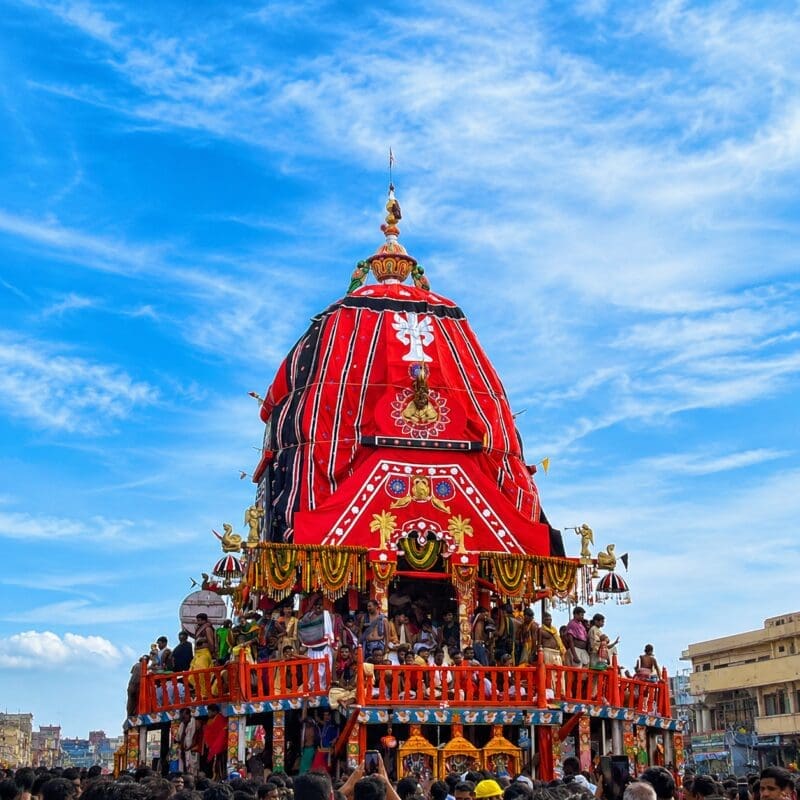
Devadalana, Devi Subhadra’s chariot, is not only a beautiful wooden Rath used during Puri Ratha Yatra. It is a moving symbol of divine power, humility, protection and the destruction of pride.
During the sacred Ratha Yatra of Shri Kshetra Puri, the three divine siblings leave Shri Jagannath Temple and travel towards Gundicha Temple.
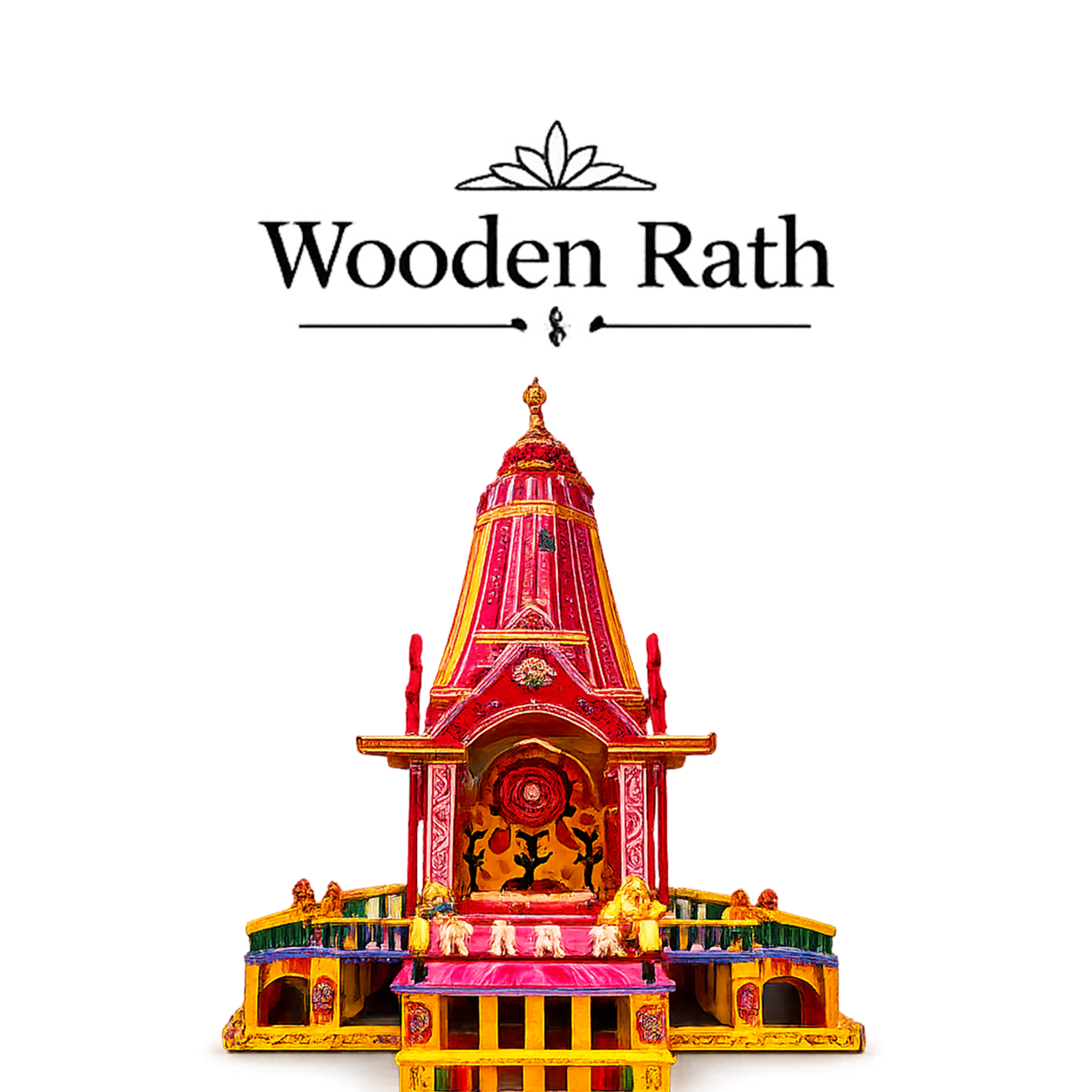
Badathakura Shri Balabhadra travels on Taladhwaja. Mahaprabhu Shri Jagannath travels on Nandighosha. Between them moves the sacred chariot of Devi Subhadra, popularly known as Devadalana or Darpadalana.
Devi Subhadra’s Rath is also known as:
- Devadalana
- Darpadalana
- Padmadhwaja
- Kamala Dhwaja
- Devi Rath
Each of these names carries a different spiritual meaning.
The name Devadalana is linked with an ancient story connected with Indrajit. The name Darpadalana means the destroyer of pride. The name Padmadhwaja means the chariot carrying the lotus banner.
These names show that Devi Subhadra is not simply the gentle sister standing between Jagannath and Balabhadra. She is Shakti—the divine power that protects, guides, removes pride and destroys inner darkness.
What Does the Name Devadalana Mean?
The word Devadalana can be understood in two parts:
- Deva — deity or celestial being
- Dalana — one who defeats, breaks or destroys
At first, the name may appear to mean “the chariot that defeated the gods.”
However, the deeper tradition behind Devi Subhadra’s Rath is more complex.
Some devotional narrations connect Devadalana with the powerful chariot used by Meghnad, the son of Ravana. Other temple traditions refer to Subhadra’s chariot simply as Devi Rath or Shri Subhadra’s Rath.
Therefore, the name Devadalana should not be understood only as a symbol of defeating celestial beings. It may also represent the divine power that crushes arrogance, evil intention and misuse of strength.
That is why the name Darpadalana, meaning “the destroyer of pride,” is spiritually very important.
Devadalana: The Story of Nikumbhila and Meghnad
A traditional narration connected with the Ramayana tells the story of Nikumbhila Devi.
Nikumbhila was regarded as the presiding goddess of a sacred place in Lanka. She was worshipped near a banyan tree, and her presence was compared with that of a protective mother goddess.
Meghnad, the powerful son of Ravana, wished to become unconquerable. To gain this power, he performed a special series of seven yajnas near the sacred banyan tree of Nikumbhila.
The seventh and final sacrifice was known as the Maheshwara Yajna.
According to the traditional story, Brahma had granted Meghnad a boon. When the yajna was completed, a powerful chariot would emerge from the sacred fire.
As long as Meghnad fought while seated on that divine chariot, no warrior would be able to defeat him.
After the yajna was completed, the chariot appeared from the sacrificial fire of Nikumbhila.
Meghnad rode upon it and fought against Indra and other celestial beings. Because he defeated Indra, he came to be known as Indrajit, meaning “the conqueror of Indra.”
The ancient Ramayana does not clearly give a name to this chariot. However, later Odia devotional literature connected it with the name Devadalana.
The name reflected the chariot’s power to defeat celestial forces.
Devadalana in the Dandi Ramayana
The great Odia poet Balarama Das, one of the Panchasakha, composed the celebrated Dandi Ramayana.
In this Odia retelling of the Ramayana, the chariot connected with Indrajit is referred to as Devadalana.
This became one of the popular explanations behind the name associated with Devi Subhadra’s Rath.
However, one should understand this as a devotional and literary connection rather than a single fixed explanation accepted in every temple document.
Jagannath culture preserves many traditions at the same time. Scriptural stories, oral narrations, temple customs, poetic works and philosophical meanings often meet within one sacred symbol.
Devadalana is one such symbol.
Why Is Devadalana Also Called Devi Rath?
In traditional temple records, Subhadra’s chariot is often described simply as:
- Devi Rath
- Shri Subhadra’s Rath
This name is deeply meaningful.
The chariot is connected with the grace and power of the Divine Mother.
The story of Nikumbhila also presents a chariot emerging through the blessing of a goddess and the sacred fire of her yajna.
Therefore, the term Devi Rath may indicate the chariot of divine feminine power.
Devi Subhadra is not only a sisterly figure. She is Yogamaya, Shakti, Bhuvaneshwari and the divine energy existing between Balabhadra and Jagannath.
Her chariot represents that spiritual power.
Why Is Devadalana Also Called Darpadalana?
The name Darpadalana has one of the clearest and most beautiful meanings.
- Darpa means pride, ego or arrogance.
- Dalana means destruction or crushing.
Darpadalana therefore means:
“She who destroys pride.”
Human beings often become proud because of wealth, knowledge, beauty, social position or success.
But before Mahaprabhu and the Divine Mother, all pride becomes meaningless.
During Ratha Yatra, kings, common people, saints, workers, travellers and devotees stand together on the same road.
Even the Gajapati Maharaja performs Chhera Pahanra by sweeping the chariots with a golden-handled broom.
This sacred act teaches that no person is greater than the Lord.
Devi Subhadra’s Darpadalana Rath reminds every devotee:
Leave your ego behind before approaching the Divine.
Devadalana and the Story Behind Padmadhwaja
Another important name of Subhadra’s Rath is Padmadhwaja.
- Padma means lotus.
- Dhwaja means banner or flag.
Padmadhwaja therefore means:
“The chariot carrying the lotus banner.”
Sarala Mahabharata contains a beautiful traditional account explaining this name.
According to the story, Surya Deva once came to Chandrabhaga for a sacred bath.
He left his chariot beneath the Arka tree and entered the river.
At that time, a demon known as Arka Daitya swallowed the chariot.
When Surya Deva returned, he found that his vehicle was missing.
Without his chariot, Surya could not continue his journey across the sky.
If the Sun stopped moving, there would be no sunrise, no sunset and no proper cycle of day and night.
The balance of the world was in danger.
Surya Deva then remembered Brahma and asked for help.
Brahma’s Sacred Yajna and the Eight Chariots
To restore cosmic order, Brahma performed a powerful yajna.
From the sacred fire of that yajna, eight celestial chariots appeared.
Among them were:
- Nandighosha
- Taladhwaja
- Padmadhwaja
Surya Deva temporarily used Padmadhwaja to continue his journey across the sky.
Later, he defeated Arka Daitya, recovered his original chariot and returned Padmadhwaja to Brahma.
This story presents Padmadhwaja as a chariot created to protect the movement of time and the natural rhythm of creation.
It helped restore the cycle of day and night.
Therefore, Padmadhwaja carries the meaning of balance, order and divine protection.
Padmadhwaja and Arjuna
The sacred story continues into the Mahabharata period.
During the burning of Khandava Forest, Brahma gave the Padmadhwaja chariot to Arjuna.
Arjuna later used the celestial chariot in great battles.
Tradition also remembers Arjuna as the charioteer associated with Devi Subhadra’s Rath.
This connection is especially meaningful because Arjuna was Subhadra’s husband.
Therefore, the presence of Arjuna as the charioteer creates a beautiful relationship between the divine family, sacred history and the Ratha Yatra tradition.
Because of this connection with the lotus-bannered chariot, Devi Subhadra’s Rath is called Padmadhwaja or Kamala Dhwaja.
The Meaning of the Lotus Symbol
The lotus is one of the most important symbols in Indian spirituality.
It grows in muddy water, yet its petals remain clean and beautiful.
For this reason, the lotus represents:
- Purity
- Spiritual awakening
- Divine beauty
- Detachment
- Grace
- Inner strength
The lotus teaches us how to live in the world without becoming trapped by its negativity.
A devotee may face difficulty, confusion or sorrow, but through faith the heart can remain pure.
As Padmadhwaja, Devi Subhadra’s chariot becomes a symbol of this spiritual purity.
Devi Subhadra as Divine Shakti
Devi Subhadra stands between Shri Balabhadra and Shri Jagannath.
This position is not accidental.
She represents the divine energy that connects strength and consciousness.
Balabhadra represents support, discipline and cosmic strength.
Jagannath represents the Supreme Lord and all-embracing consciousness.
Subhadra represents the Shakti through which divine action becomes possible.
Without Shakti, power cannot move.
Without Shakti, creation cannot continue.
Without Shakti, devotion cannot awaken.
Devadalana is therefore the moving throne of divine feminine energy.
Main Details of Devi Subhadra’s Rath
Traditional descriptions give the following important details about the Rath:
- Principal Name: Devadalana
- Other Names: Darpadalana, Padmadhwaja and Kamala Dhwaja
- Presiding Deities: Devi Subhadra and Shri Sudarshana
- Rathadhishwari: Jaya Durga
- Number of Wheels: 12
- Approximate Height: Traditionally described at around 44 feet
- Number of Wooden Pieces: Traditionally recorded as approximately 711
- Covering Colours: Black and red
- Weapons: Lotus symbols
- Charioteer: Arjuna
- Rath Peetha: Kampalya
- Sacred Rope: Swarnachuda Naga
- Rath Jewel: Manikya or ruby
- Rath Protector: Ugrachandi
- Rath Shakti: Chandraghanta
- Guardian: Harihara
Different traditional sources may give small variations in height, names or measurements. Such differences are common in old ritual records and oral traditions.
The spiritual identity of the Rath remains the same.
Why Does Devadalana Have Twelve Wheels?
Devi Subhadra’s Rath has twelve wheels.
The number twelve has great spiritual meaning.
It may be connected with:
- The twelve months of the year
- The twelve forms of the Sun
- The full cycle of time
- The twelve sacred energies of cosmic movement
The wheels remind devotees that life is always moving.
Time does not stop.
Seasons change, bodies change, situations change and human emotions change.
The Divine Mother remains present through all these changes.
The twelve wheels may therefore be seen as the complete cycle of life under the protection of Shakti.
The Four Red Horses of Devadalana
The four horses of Subhadra’s Rath are traditionally described as red.
Their commonly mentioned names are:
- Rochika
- Mochika
- Jita
- Aparajita
Other traditions mention names such as:
- Prajna
- Anujna
- Ghora
- Aghora
The colour red represents:
- Energy
- Strength
- Shakti
- Courage
- Life force
- Divine action
The name Jita suggests victory.
The name Aparajita means one who cannot be defeated.
These horses reflect the unconquerable power of the Divine Mother.
Arjuna as the Charioteer of Devadalana
Arjuna is traditionally associated with the role of charioteer for Devi Subhadra’s Rath.
This has both a family and spiritual meaning.
Arjuna was a great warrior, but he also became a student before Shri Krishna.
In the Bhagavad Gita, Arjuna’s pride and confusion were removed through divine knowledge.
Therefore, Arjuna represents the human soul that receives guidance, surrenders ego and acts according to dharma.
His association with Darpadalana is meaningful because he learned to overcome personal attachment and pride.
The Sacred Rope Swarnachuda
The rope of Devi Subhadra’s Rath is traditionally called Swarnachuda Naga.
Thousands of devotees hold this rope and pull the Rath together.
No single person moves the chariot.
It moves through unity, faith and collective service.
The sacred rope teaches that the spiritual journey becomes easier when people work together.
It connects the Divine Mother with her devotees and one devotee with another.
Divine Powers Associated with the Rath
Traditional accounts describe Devadalana as a complete sacred universe.
Its divine associations include:
- Rathadhishwari: Jaya Durga
- Protector: Ugrachandi
- Presiding Deities: Shri Subhadra and Shri Sudarshana
- Rath Devis: Shri and Bhu
- Rath Shakti: Chandraghanta
- Rath Yaksha: Kinjvalika
- Rath Guardian: Harihara
- Gandharva: Haha
- Charana: Mahakrura
- Door Guardians: Ganga and Yamuna
These names reflect the presence of many forms of divine power.
Durga protects.
Chandraghanta destroys fear.
Shri represents prosperity.
Bhu represents the Earth.
Ganga and Yamuna represent sacred purification.
Harihara expresses the unity of Vishnu and Shiva.
The Inner Shaktis
The sacred inner powers associated with the Rath are traditionally named:
- Shaktisapta
- Jaya
- Vijaya
- Ghora
- Aghora
- Sukshma
- Jnana
These names represent victory, power, subtle wisdom, fierce protection and spiritual knowledge.
The Divine Mother can be gentle and loving, but she can also become powerful when dharma needs protection.
Her softness is not weakness.
Her fierce form is not anger without purpose.
Both forms exist for the welfare of creation.
The Sacred Rishis
The Rishi panel of Subhadra’s Rath is associated with sages such as:
- Bhrigu
- Suprabha
- Vajra
- Shringi
- Dhruva
- Ulluka
- Pravartaka
These sages represent wisdom, discipline and the flow of sacred knowledge through generations.
Their presence shows that devotion should be guided by knowledge.
Emotion and wisdom must walk together.
Ganga and Yamuna as Door Guardians
The door guardians of the Rath are traditionally named Ganga and Yamuna.
These two rivers are among the most sacred rivers of India.
They represent purity, forgiveness and spiritual cleansing.
Their presence at the entrance of the Rath teaches that the devotee should approach the Divine Mother with a clean heart.
Before entering the sacred space, one must release anger, jealousy, dishonesty and pride.
The Two Sacred Parrots
The pair of sacred parrots associated with the Rath are known as:
- Suparna
- Dwasuparna
Two birds are often used in spiritual philosophy to represent the individual soul and the Supreme Soul.
One experiences the world, while the other watches in perfect awareness.
This symbolism reminds devotees that the Divine is always present within the heart.
The Three Sacred Kalashas
The three kalashas above the Rath are traditionally named:
- Para
- Apara
- Vaikhari
These names are associated with different levels of speech and divine expression.
They remind us that sound begins in the deepest level of consciousness before it becomes spoken language.
The chanting of “Jai Jagannath” is therefore not only a physical sound.
When it comes from a sincere heart, it becomes spiritual expression.
Devadalana as the Human Body
The Rath can also be understood as a symbol of the human body.
- The body is the chariot.
- The wheels represent time.
- The horses represent the senses and energy.
- The charioteer represents intelligence.
- The rope represents devotion.
- Devi Subhadra represents the divine power within.
The name Darpadalana teaches us that the greatest obstacle is often our own ego.
The name Padmadhwaja teaches us to remain pure like a lotus.
The name Devadalana teaches that divine power defeats misuse of strength.
The entire Rath becomes a lesson for inner transformation.
Spiritual Blessing of Devadalana Darshan
Traditional belief says that darshan of Padmadhwaja or Devadalana removes pride, sorrow and suffering.
This should not be understood as a simple promise without inner change.
True darshan happens when the devotee looks at the Rath with humility and faith.
The destruction of pride begins when we understand that everything we possess is temporary.
The removal of suffering begins when we develop trust in the Divine.
The healing of the heart begins when we let go of anger and fear.
Devi Subhadra’s grace teaches us to become soft without becoming weak and strong without becoming proud.
The Eternal Message of Devi Subhadra’s Rath
Devadalana carries a message that remains meaningful even today.
Power should protect, not dominate.
Knowledge should remove pride, not increase it.
Success should create humility, not arrogance.
Faith should unite people, not divide them.
When the black-and-red Rath begins to move, when Arjuna takes the position of charioteer, when the twelve wheels turn and when thousands of devotees hold Swarnachuda, the Divine Mother comes closer to her children.
She does not remain hidden inside the temple.
She comes onto the Bada Danda so that everyone can receive her darshan.
🙏 Devadalana is the destroyer of misuse of power.
🙏 Darpadalana is the destroyer of pride.
🙏 Padmadhwaja is the banner of purity and divine grace.
🙏 It is the moving throne of Devi Subhadra and Shri Sudarshana.
❤️ Jai Maa Subhadra! Jai Jagannath!