











Articles
Why Is Lord Jagannath’s Chariot Called Nandighosha?

Jul
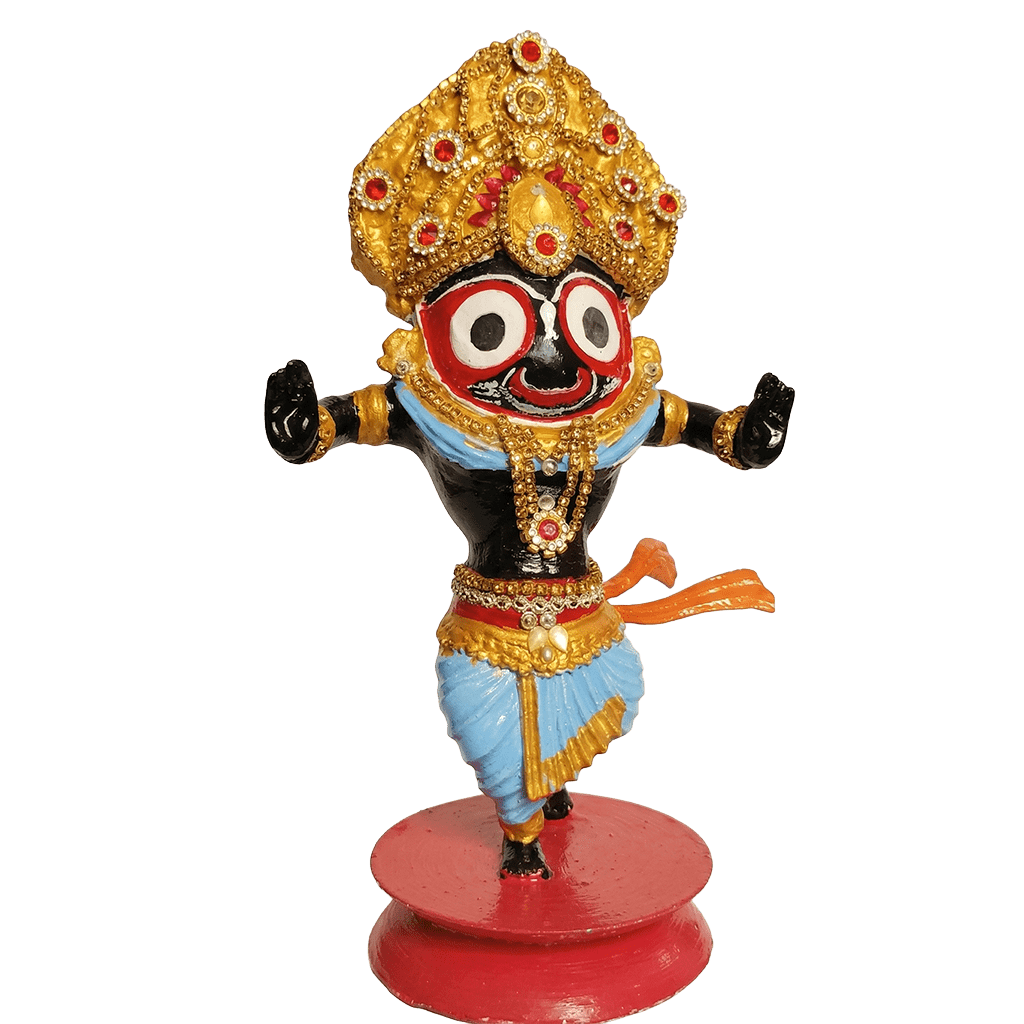
🙏 The chariot of Mahaprabhu is not merely a structure made of wood, wheels and cloth. Nandighosha is a moving temple, a sacred universe and a visible expression of Jagannath consciousness.
Every year during the world-famous Ratha Yatra of Puri, Mahaprabhu Shri Jagannath leaves the sanctum of Shri Mandira and comes onto the Bada Danda to meet His devotees.
Lord Balabhadra travels on Taladhwaja, Devi Subhadra travels on Darpadalana, and Mahaprabhu Shri Jagannath travels on the magnificent Nandighosha Rath. The Shree Jagannatha Temple Administration identifies Nandighosha as Lord Jagannath’s chariot. During the procession, it begins its sacred journey towards Gundicha Temple after the chariots of Lord Balabhadra and Devi Subhadra.
But why is Mahaprabhu’s Rath called Nandighosha?
What does the name mean? Why does the chariot have sixteen wheels, four white horses, a red-and-yellow canopy, the symbol of Hanuman and an entire assembly of divine guardians?
The answer belongs to a beautiful meeting point of sacred storytelling, Sanskrit meaning, regional tradition, spiritual symbolism, architecture and living devotion.
The Meaning of the Name “Nandighosha”
A popular devotional interpretation divides the name into two parts:
- Nandi — the sacred bull and vehicle of Lord Shiva
- Ghosha — a mighty sound, proclamation, resonance or roar
According to this traditional explanation, Nandighosha represents the powerful sound or divine roar of Nandi.
The Sanskrit word Nandighosha also carries broader meanings. It may refer to a joyful sound, an auspicious proclamation or a resounding announcement.
This meaning is equally suitable for Mahaprabhu’s chariot.
When Nandighosha begins moving along the Bada Danda, the entire atmosphere becomes filled with the sound of conch shells, drums, cymbals, ghantas and the voices of countless devotees chanting:
Hari Bol!
Jai Jagannath!
The Rath itself appears to announce that the Lord of the Universe has come out of His temple to bless the world.
Nandighosha may therefore be understood in two complementary ways: it is the mighty resonance of divine power and the joyful proclamation of Mahaprabhu’s arrival.
The Treta Yuga Legend Behind Nandighosha
A popular Odia devotional tradition connects the name Nandighosha with an event from the Treta Yuga and the war between Lord Rama and Ravana.
When Lord Rama declared war against Ravana, the vanaras and bears accompanying Him began preparing their strategy for the battle of Lanka.
Shri Rama was living as a forest exile. He did not possess the royal weapons, armies or war chariots ordinarily available to a king. Seeing this, Devaraja Indra decided to assist Him by sending a celestial chariot.
However, Ravana’s army was immensely powerful. Even with the celestial chariot, defeating the vast forces of Lanka was not easy.
At this critical moment, Lord Shiva wished to support Shri Rama, the incarnation of Lord Vishnu. Mahadeva therefore sent His divine vehicle, Nandi, to assist Him.
According to the sacred narration, ordinary beings could not bear the tremendous spiritual power of Nandi. Nandi was therefore placed upon the Sudarshana Chakra of Lord Vishnu.
Two great divine forces came together.
As Sudarshana began to revolve, Nandi released a terrifying roar. The resonance shook the battlefield, destroyed the strength of a large portion of Ravana’s army and opened the path for Lord Rama’s victory.
The celestial chariot connected with this divine event came to be remembered as Nandighosha — the chariot of Nandi’s mighty resonance. This account continues to be shared as a popular explanation within Odia devotional culture.
The story is not merely about the destruction of an army. It expresses the sacred unity of Hari and Hara — Vishnu and Shiva.
Shiva serves Vishnu. Vishnu honours Shiva. Nandi and Sudarshana act together for the protection of dharma.
In Jagannath culture, narrow sectarian divisions disappear before the all-embracing presence of Mahaprabhu.
Nandighosha: The Moving Throne of Mahaprabhu
During Ratha Yatra, Lord Jagannath is not alone on Nandighosha. His principal representative deity, Shri Madanamohana, also accompanies Him during the sacred Gundicha Yatra.
Nandighosha therefore becomes much more than a festival vehicle. It becomes a mobile temple and a moving Ratna Singhasana carrying Mahaprabhu beyond the walls of Shri Mandira.
This reveals one of the deepest messages of Ratha Yatra:
The Lord does not remain distant from His devotees. He comes outside to meet them.
People who may not be able to enter the temple, travellers from distant regions, elderly devotees, children and people from different social backgrounds can stand on the Grand Road and receive His darshan.
Odisha Tourism describes Ratha Yatra as a celebration in which people across communities come together before the Lord. Puri itself becomes a vast sea of devotion.
The movement of Nandighosha is therefore not simply a procession. It is a public revelation of divine accessibility.
How to Recognise Nandighosha Rath
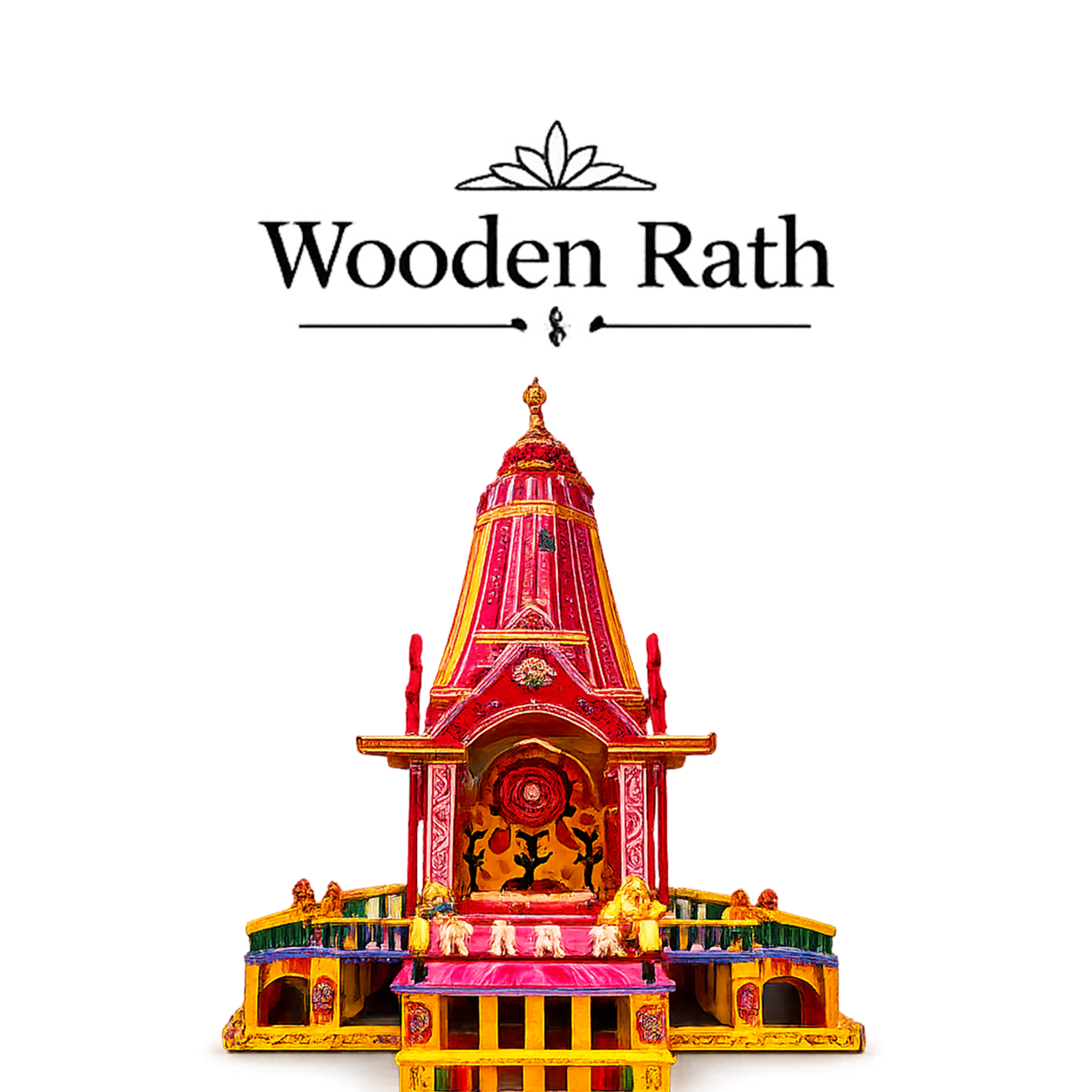
Among the three chariots of Puri, Nandighosha is the largest. It can easily be recognised by its majestic red-and-yellow covering.
Yellow is traditionally associated with Lord Vishnu, while red expresses divine energy, auspiciousness and Shakti.
Principal details of Nandighosha
- Presiding Deities: Mahaprabhu Shri Jagannath and Shri Madanamohana
- Alternative Names: Garudadhwaja, Chakradhwaja and Kapidhwaja
- Approximate Height: About 44 feet 3 inches
- Number of Wheels: 16
- Diameter of Each Wheel: Approximately 7 feet
- Canopy Colours: Red and yellow
- Number of Horses: Four
- Colour of Horses: White
- Charioteer: Daruka
- Rath Rope: Shankhachuda
- Flag: Trailokyamohini
- Symbol on the Flag: Hanuman
- Guardian Association: Garuda
- Principal Rath Deity: Narasimha
- Weapons: Chakra and Shankha
Published traditional accounts occasionally differ slightly regarding the precise height and the number of wooden components used in constructing Nandighosha. A commonly cited figure is approximately 832 pieces of wood, while the Rath is consistently described as having sixteen wheels and a red-and-yellow covering.
Such small variations may reflect different methods of measuring or counting individual structural components. They do not reduce the sacred significance of the Rath.
Why Does Nandighosha Have Sixteen Wheels?
Nandighosha has sixteen wheels. Tradition connects these wheels with the Shodasha Siddhis, or sixteen spiritual attainments and perfections.
The wheels are therefore not treated as ordinary mechanical components. They symbolise the movement of time, consciousness, cosmic order and the soul’s journey towards liberation.
Traditional accounts give the sixteen wheels individual sacred names:
Vishnusiddha, Vibhuti, Anima, Prajna, Dhi, Jnana, Prema, Asakta, Rati, Keli, Satya, Susvasti, Jagruti, Turiya, Ama and Nirvana.
These names suggest a spiritual movement from knowledge, awareness and love towards transcendence and liberation.
The constantly turning wheels remind us that human life also passes through attachment, experience, learning, awakening and surrender.
Mahaprabhu sits above those turning wheels as the eternal guide of the journey.
The Four White Horses of Nandighosha
The four sacred horses of Nandighosha are traditionally named:
- Shankha
- Balahaka
- Shweta
- Haridashwa
Their white colour represents purity, clarity and sattvic energy.
The horses may also be contemplated as the forces of the senses and mind. When these forces are controlled by wisdom and devotion, they carry the human being towards the Divine.
The charioteer of Nandighosha is Daruka, who is remembered in sacred tradition as the charioteer of Shri Krishna. His presence further expresses the inseparable identity of Lord Jagannath with Krishna and Vishnu.
The enormous rope used to pull Nandighosha is called Shankhachuda.
Thousands of hands may hold Shankhachuda, but bhakti is the invisible force that truly moves the Rath.
Divine Guardians and Sacred Powers
Every part of Nandighosha possesses ritual and spiritual meaning. Traditional descriptions present an entire divine assembly residing within and around Mahaprabhu’s chariot.
- Rath Deity: Narasimha
- Rath Devi: Yogamaya
- Rath Shaktis: Vimala and Viraja
- Rath Bhairava: Ekapada Bhairava
- Protectors: Garuda and Indra
- Door Guardians: Jaya and Vijaya
- Pratiharis: Kumuda and Kumudaksha
- Yaksha: Haryaksha
- Gandharva: Vaidhuti
- Charanas: Nala and Kubera
- Rathadhipa: Vainateya, another name of Garuda
- Shunya Chakra: Sudarshana
At the head of the chariot, Kalyana Sundara is remembered. Its upper sacred structure is associated with Hiranyagarbha.
The three kalashas situated above the Dadhinauti are traditionally named Nabha, Vyoma and Akasha—words connected with the sky, space and the cosmic expanse.
The sacred kumbhas of the Rath are associated with:
Hiranmayi, Satya, Shanti, Daya and Kshama.
These represent radiance, truth, peace, compassion and forgiveness.
They are not merely decorative names. They are divine qualities that every devotee is encouraged to cultivate.
The sacred jewel associated with Nandighosha is Sphatika, or crystal. The Rath Peetha is known as Kanaka Mancha, while the Chandratapa is called Kanaka Mundai.
The inverted parrots, or Olata Shua, are identified as Jiva and Parama, symbolising the individual soul and the Supreme Soul.
The Eight Sacred Rishis
The Rishi panel of Nandighosha is associated with eight revered sages:
Narada, Devala, Vyasa, Shukadeva, Parashara, Vashistha, Vishwamitra and Markandeya.
Their presence represents the continuity of Vedic and Puranic wisdom.
Narada embodies bhakti and the continuous chanting of the Lord’s name. Vyasa represents sacred knowledge and the preservation of scripture. Shukadeva represents liberated devotion. Vashistha and Vishwamitra recall spiritual discipline and transformation. Markandeya represents victory over death through divine grace.
Nandighosha therefore carries not only Mahaprabhu but also the memory of India’s sacred knowledge traditions.
The Nine Parshva Devatas
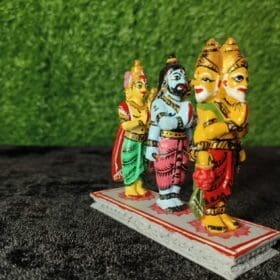
Nine Parshva Devatas, or attendant deities, are placed on the sides of Nandighosha:
- Harihara
- Pandu Narasimha
- Girigovardhanadhari
- Chintamani Krishna
- Chaturbhuja Narayana
- Panchamukhi Hanuman
- Ravana Chhatrabhanga
- Madhusudana
- Shri Rama
Together, they represent the many forms, powers and lilas of the Supreme.
Harihara once again expresses the unity of Vishnu and Shiva. Narasimha represents divine protection. Girigovardhanadhari recalls Krishna protecting the people of Vraja. Panchamukhi Hanuman represents courage, alertness and selfless service.
Shri Rama and Ravana Chhatrabhanga recall the victory of dharma over pride, injustice and misuse of power.
Nandighosha thus becomes a moving gallery of theology, mythology, sculpture and sacred art.
Why Is Hanuman Present on the Flag?
Nandighosha is also called Kapidhwaja, meaning the chariot whose banner bears the symbol of a kapi or vanara.
That sacred symbol is Hanuman.
Hanuman represents complete devotion, extraordinary strength, humility, courage and service without personal ambition.
His presence connects Mahaprabhu with Shri Rama and recalls the Treta Yuga narrative associated with Nandighosha.
Hanuman does not seek a throne. He seeks only the opportunity to serve at the feet of the Lord.
By placing Hanuman upon the banner, the tradition teaches that genuine strength must always remain guided by humility and devotion.
The flag of Nandighosha is called Trailokyamohini, meaning “She who enchants the three worlds.”
As it flies above the Rath, it proclaims Mahaprabhu’s sovereignty over the earthly, celestial and spiritual realms.
The Sacred Apsaras of Nandighosha
Traditional descriptions place sacred apsaras on the four sides of the chariot:
- Front: Urvashi and Phulamochi
- Rear: Kanakamanjari and Kamamanjari
- Left: Premamanjari and Champakamanjari
- Right: Anangamanjari and Bhramaramanjari
Their presence represents beauty, artistic refinement and the offering of every rasa to the Divine.
Jagannath culture does not reject beauty. It sanctifies beauty through seva.
Music, dance, carving, painting, textiles, flowers, fragrances and architecture all become offerings to Mahaprabhu.
Nandighosha as the Human Body
Jagannath philosophers frequently interpret the Rath as a representation of the human body.
The body is the chariot. The senses are its horses. The mind holds the reins. The individual soul undertakes the journey, while the Lord remains the eternal indwelling guide.
Nandighosha therefore teaches us about an inward Ratha Yatra.
The outer Rath travels from Shri Mandira to Gundicha Temple. The inner seeker must travel from ego towards surrender, from ignorance towards knowledge and from separation towards divine consciousness.
The wheels turn, reminding us that the world never remains still. The canopy protects the sacred presence just as spiritual discipline protects consciousness. The rope unites thousands of devotees just as bhakti joins countless hearts.
Odisha Review has similarly explored Nandighosha as a symbol of the human body, with Jagannath as the divine rider seated within it.
When Mahaprabhu becomes the guide of our life, the journey receives direction.
The Spiritual Fruit of Nandighosha Darshan
A traditional Shilpa Shastra belief holds that darshan of Lord Jagannath seated upon Nandighosha grants Sayujya Mukti, the liberation of becoming united with the Divine.
This teaching should not be reduced to a mechanical promise.
Darshan becomes spiritually transformative when it is accompanied by humility, faith, surrender and inner change.
To see Nandighosha is to witness the Lord coming towards humanity.
To pull its rope is to accept a place in collective service.
To bow before its wheels is to surrender human pride before time and divine will.
The greatest blessing of Nandighosha may therefore be the awakening of devotion itself.
Why Nandighosha Still Matters Today
In a divided world, Nandighosha carries a timeless message:
Many hands can pull one sacred rope.
No single person moves the chariot.
The Gajapati Maharaja performs Chhera Pahanra. The sevayats perform their inherited duties. Maharana artisans construct the Rath. Rupakara and Chitrakara sevaks carve and decorate it. Tailors prepare its sacred cloth. Devotees sing and pull the rope. Volunteers and administrators support the gathering.
Everyone contributes a form of seva.
This is the heart of Jagannath culture:
Service above self. Unity beyond identity. Devotion beyond barriers.
Nandighosha is not loved merely because of its impressive height, sixteen wheels or beautiful decorations.
It is loved because Mahaprabhu sits upon it and comes closer to His devotees.
When the red-and-yellow canopy appears upon the Bada Danda, when Trailokyamohini flies in the wind, when thousands of hands hold Shankhachuda and when the sound of “Jai Jagannath” fills Shri Kshetra, the meaning of Nandighosha becomes complete.
It is the sound of divine joy.
It is the roar of dharma.
It is the movement of grace.
It is Mahaprabhu’s journey towards His devotees.
🙏❤️ Jai Jagannath!