











Articles
Our Mother Mahalakshmi, a True Odia Woman (Khanti Odiaṇī)
Apr
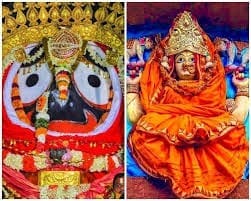
Mother Mahalakshmi is worshipped with a distinctive Thursday tradition in Odisha. Why is Lakshmi’s day Thursday here when Friday is commonly associated with Lakshmi elsewhere? I asked this extraordinary question in a very ordinary manner to a Sadhu (holy man/ascetic).
The Sadhu, who was resting tiredly under a banyan tree outside the Gundicha Temple, got up. Brushing himself off, he said, “Son! It’s foolishness to compare Odisha with anywhere else. For the rest of the country, Lakshmi is the presiding deity of wealth. Four-armed (Chaturbhuja), seated on a lotus (Padmasana), holding a conch (Shankha) in one hand, a lotus (Padma) in another, a measure of wealth/grain (Māṇapeḍi) in another, and the fourth hand in the Abhaya Mudra (gesture of fearlessness), from which gold, silver, diamonds, pearls, and so much more flow.
But Odisha’s Lakshmi Thakurani is a genuine Odia daughter-in-law (Odiaṇī Bohu). She gets angry, she sulks, and when it’s time for her husband to return home, she repeatedly runs to the threshold (Eruṇḍi) to see if he has arrived. Observe the entire process of Ratha Yatra carefully. Then you will understand everything automatically.
Mother Mahalakshmi and the Ratha Yatra Story
Firstly, Mahaprabhu (Jagannath) went off to the Gundicha abode without taking Lakshmi Thakurani along. After that, Lakshmi’s mind is no longer in the temple. ‘Where did my husband (gerasta) go? What work was so important that he forgot even to inform me?’ In anger, Mother Mahalakshmi goes to the Gundicha Temple. Out of fear of public shame, she cannot say anything directly to her husband and elder brother-in-law (Deḍhaśura – Balabhadra), but all the drama is directed towards this ‘troublesome’ (niā̃lagā) chariot. First, she breaks (ritually damages) the chariot wheel. Mahaprabhu is afraid to face Mother Mahalakshmi’s furious, flushed face. Returning to the main temple, Lakshmi, in anger, eats simple boiled rice (Bioḷi Chāuḷa Bhāta) and water spinach (Kalama Sāga). Because Mahaprabhu took Subhadra along, she fumes at Subhadra. Just like a typical new Odia daughter-in-law making sarcastic remarks (khuṇṭā mārilā pari) about her assertive sister-in-law (Naṇanda) in front of her husband: ‘No hands or feet, that turmeric-faced one (Haldī Muhĩṭā), daughter of a cowherd (Gauda) family… the husband (referring to Balabhadra as Subhadra’s guardian on the chariot) is useless (nikammā), sitting on the chariot, good for nothing (kou kūḷaku se nuhã)!’ Not only the sister-in-law Subhadra, but also the brother-in-law (Naṇandei – husband of the sister-in-law, referring to Arjuna) doesn’t escape Lakshmi’s wrath.
On Bahuda (Return Car Festival) day, when Mahaprabhu returns, Lakshmi’s anger is at its peak (pañchamare). Before Mahaprabhu even enters the temple, Lakshmi appears before the Gajapati’s palace (Na’ara) to give him a proper scolding (ṭike bhalare behushaṇa karibāku). Just like a wife starts scolding from the kitchen the moment her husband starts parking the car in the garage! Mahaprabhu is fortunate; the Gajapati mediates there. Without undermining the father’s (Jagannath’s) dignity in front of the son (Gajapati), Mother Mahalakshmi returns to the temple. She waits until ‘Niladri Bije’ (the final entry into the temple) to fully vent her anger (rāga śujheibāku).
On Niladri Bije day, there’s an unprecedented quarrel (nāhĩ nathibā kaḷi). But who can outwit the cunning (kapaṭiā) Mahaprabhu? He knows the secret (sūtra) to pacify Mother Mahalakshmi. He offers Mother Mahalakshmi Rasagolas as big as human heads (an affectionate exaggeration) along with velvety, gold-threaded silk sarees (makhamalī sunā jari pāṭa) as a bribe (lāñcha). Mother Mahalakshmi, who was roaring like the Bay of Bengal just moments before, accepts the bribe and sits quietly like a Bengali female ascetic (Bangīẏa Sanyāsinīṭe). To further appease Lakshmi’s mind, Mahaprabhu takes her, represented by the Sridevi idol, to the Varuna temple during Gupta Gundicha (a secret ritual). In the happiness of going to her symbolic parental home (Bāpaghara) with her husband, Lakshmi forgets the past conflicts. Like all wives, Lakshmi also sometimes endures taunts (khuṇṭā khāanti) from her husband Jagannath: “You are stubborn (Ṭerī), your faults are endless; your father (the salty ocean – loṇiā) roars uselessly every day!” Just like a middle-class husband, in anger, might bring up his wife’s entire family history (chaudapuruṣa uddhārilā pari).
Now tell me, son, is this Lakshmi Thakurani or an Odiaṇī? Just as all the women of Odisha are, so is our Lakshmi Thakurani.
Lest having her own children might lead to injustice towards the children of Jagannath, the Lord of the Universe, she chose not to become a mother herself. Throughout the month of Māgasira (Margashira – harvest month, Nov/Dec), she is not in the temple but roams the threshing floors (Dhānakhala) and granaries (Amāra) of the Odia people (‘Odia sons’). She walks, placing her feet on the intricate Jhoṭi Chita (rice paste floor art), wandering through the villages (gā̃ gaṇḍā) of Odisha. Our Mother Mahalakshmi is the husband’s wife, the sister-in-law’s Bhauja (brother’s wife), the elder brother-in-law’s Bhai Bohu (younger brother’s wife), and the mother to crores of sons like us.”
“Ever wondered why Lakshmi’s special day is Thursday in Odisha, unlike the rest of India? Discover Mother Mahalakshmi as the relatable ‘Odia Bohu’ in this Ratha Yatra tradition, and explore more Jagannath culture at JustKalinga.”