










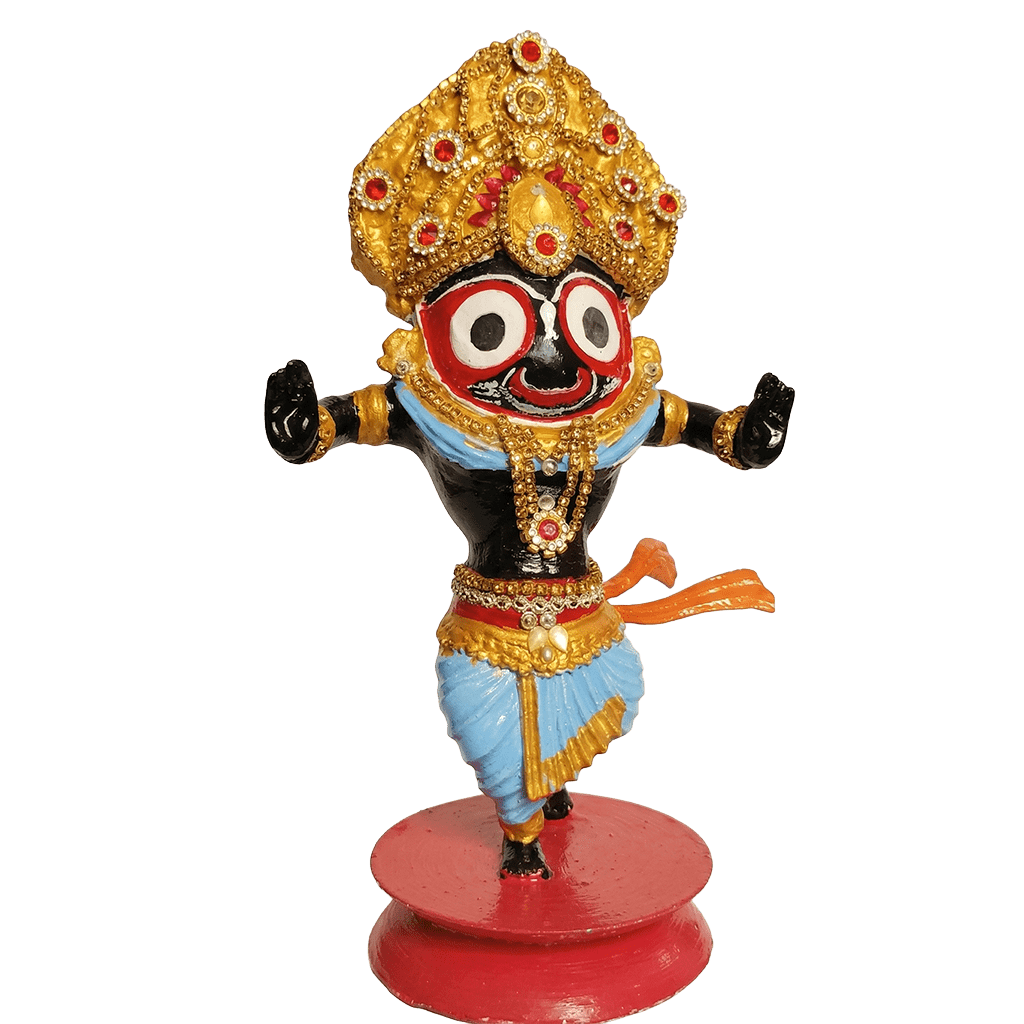

All Besha Of Shri Jagannath Mahaprabhu
The Sacred Nabakalebara Ritual

Feb
Nabaakalebara and the Sacred Renewal of the Deities

Nabaakalebara, also spelled Nabakalebara, is a profound ritual of divine rebirth at the Jagannath Temple in Puri, Odisha. Nabakalebara, meaning “new body,” involves the replacement of the wooden forms of the deities – Jagannath, Balabhadra, Subhadra, and Sudarshana – with newly crafted ones, symbolizing the cyclical nature of life, death, and renewal.
The intricate process begins with a divinely guided quest for specific neem trees, known as Daru Brahma. A team of priests and carpenters, guided by signs and strict criteria, embark on this sacred journey, seeking the blessings of Maa Mangala at Kakatpur. Once the sacred trees are identified, they are carefully transported to the temple.
Within the secret confines of Koili Baikuntha, skilled carpenters, known as Biswakarma, meticulously carve the new deities under the watchful supervision of the Daitapatis, the temple priests. The heart of Nabaakalebara (Nabakalebara) lies in the highly secret transfer of the “Brahma,” the life essence, from the old deities to the new ones. This ritual, performed by the Daitapatis, ensures the continuity of the divine presence, connecting the past, present, and future. The old deities are then respectfully laid to rest in Koili Baikuntha.
Nabaakalebara, also spelled Nabakalebara, is a rare and spiritually significant event, occurring only when the month of Ashadha is repeated in the Hindu calendar, which happens every 8 to 19 years. It serves as a profound reminder of the eternal nature of the divine and the continuous renewal of faith, attracting devotees from across the globe to witness this sacred spectacle.
The ritual brings together the search for sacred Daru, the carving of new forms, the secret transfer of Brahma, and the respectful resting of the former deities. In that sequence, renewal is expressed through continuity rather than separation.