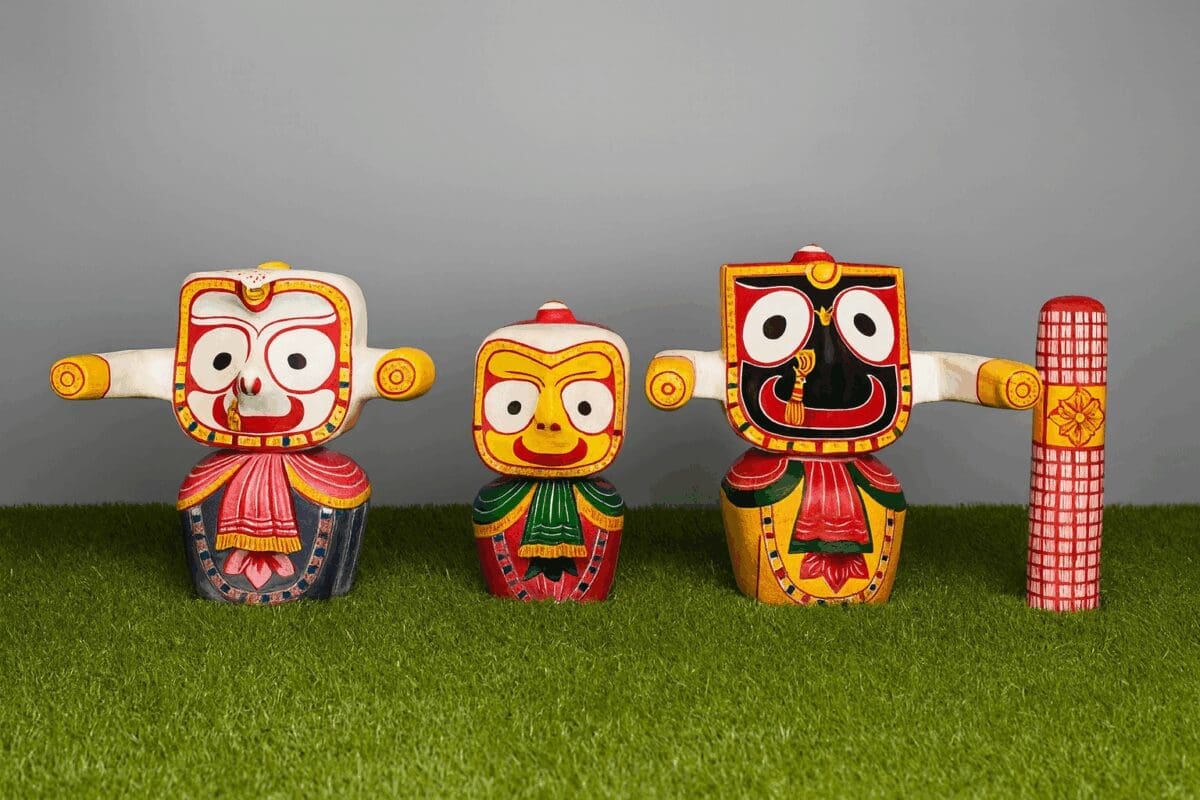
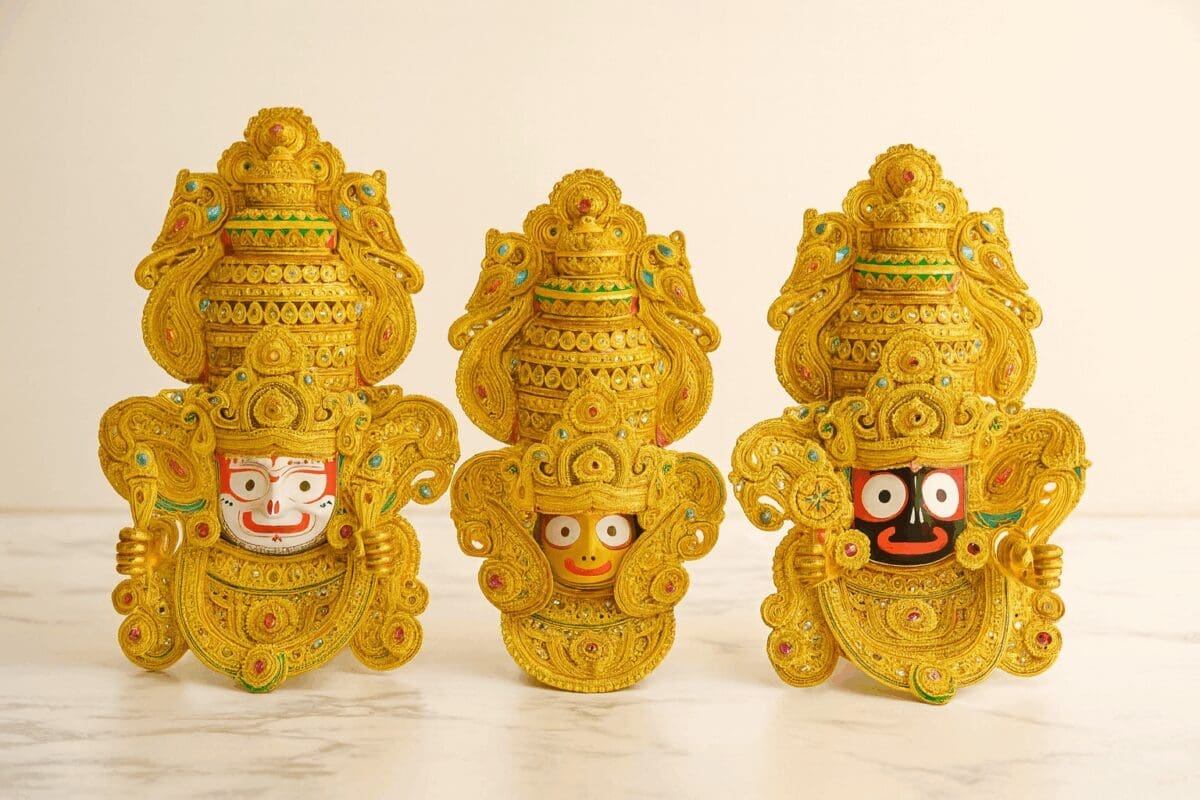
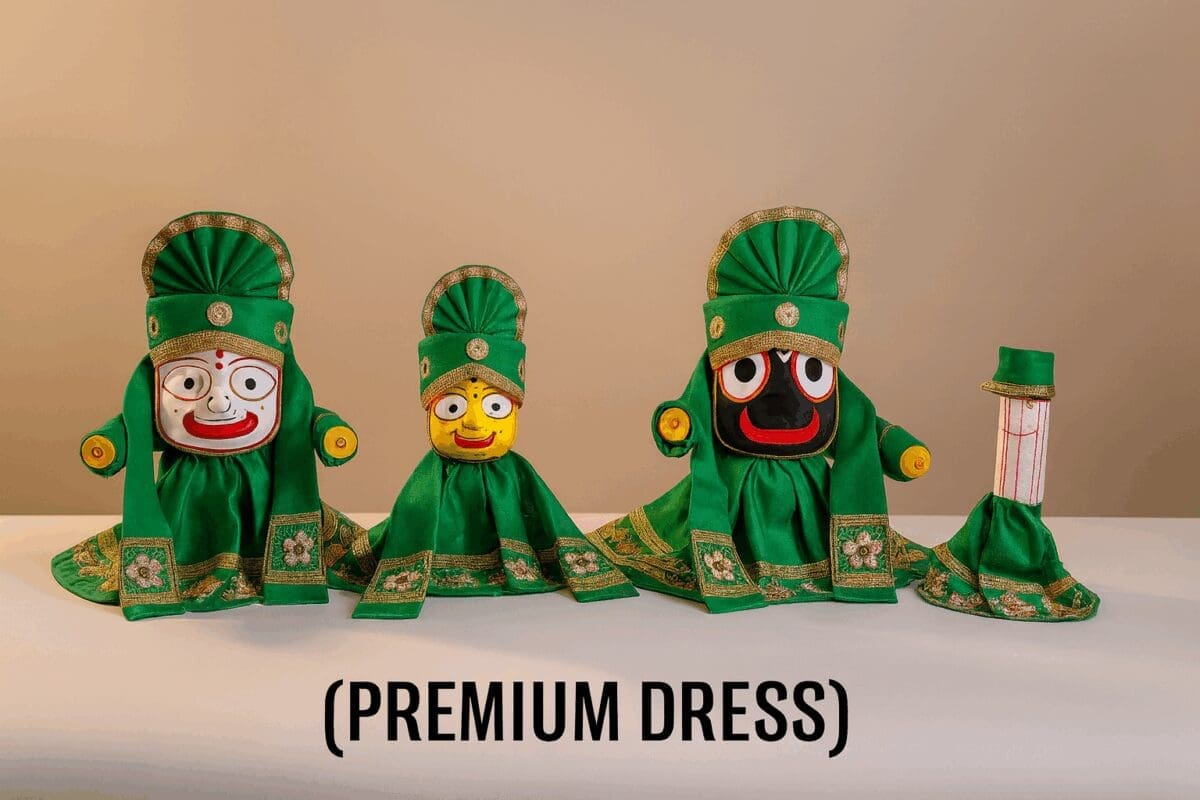
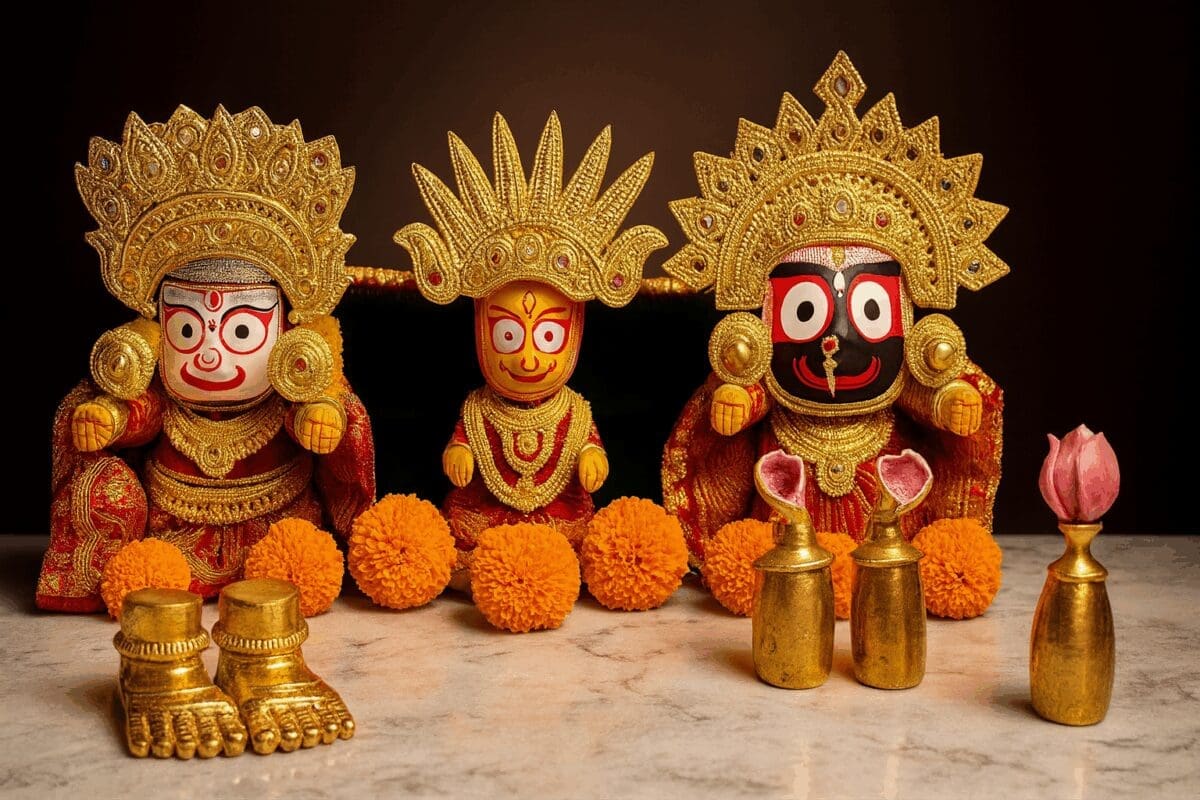
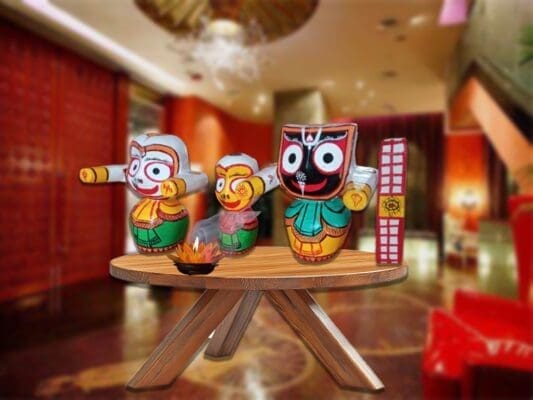
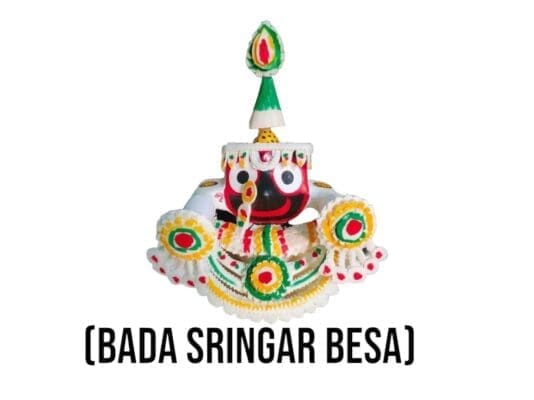
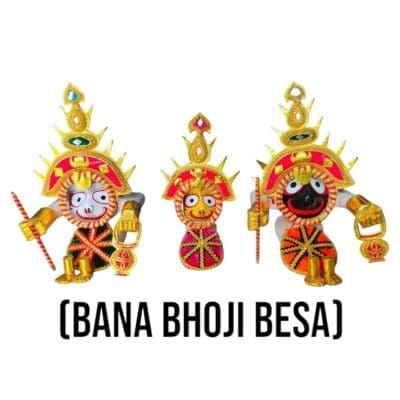
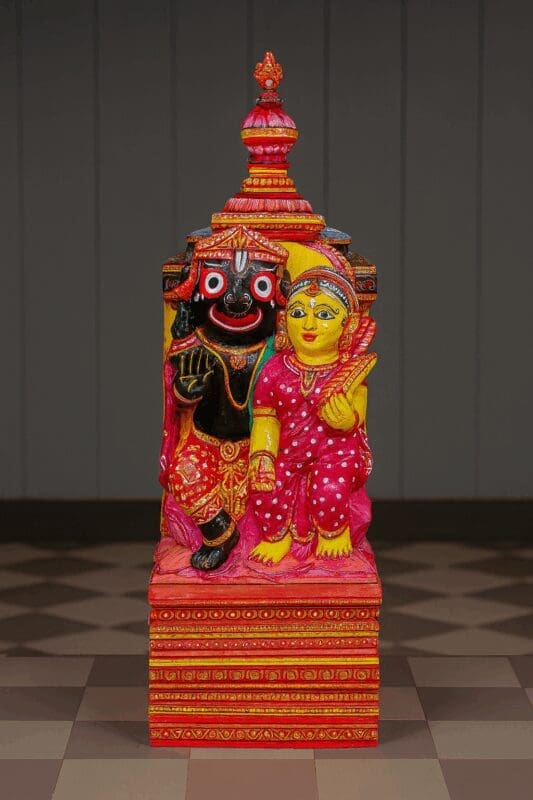
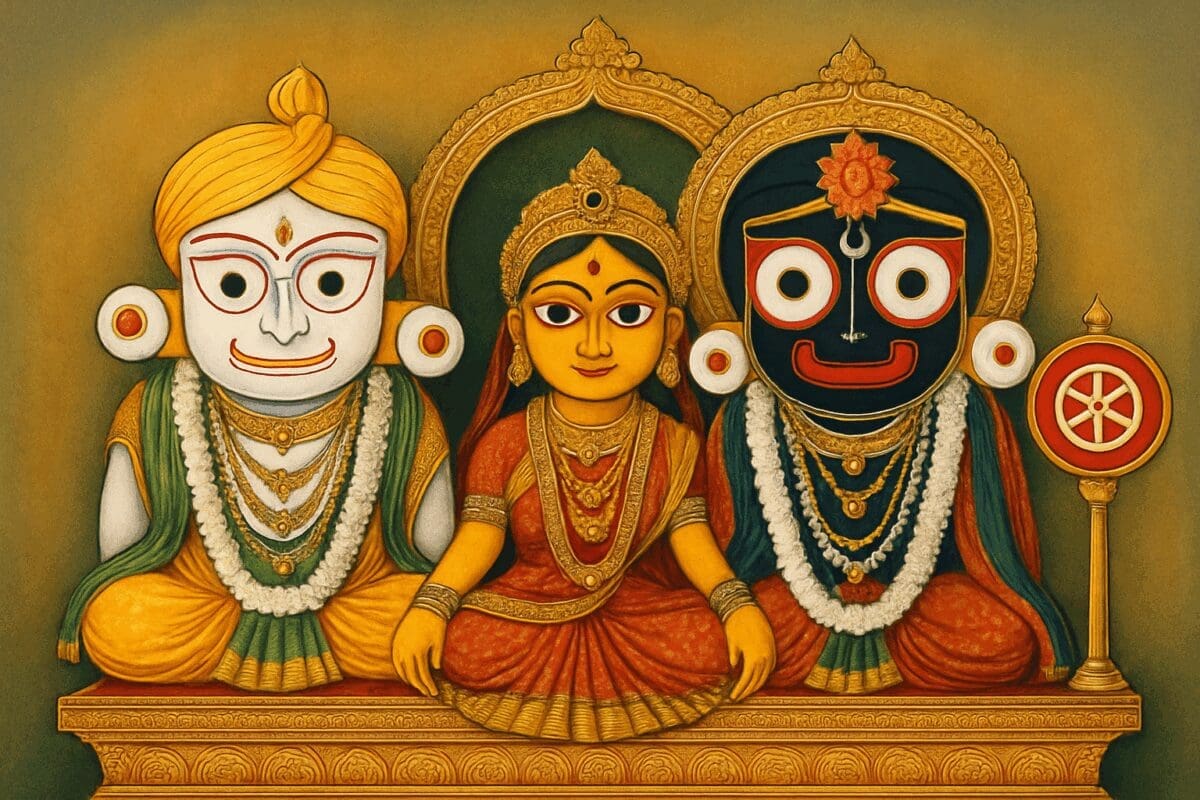
To say Odisha is the land of Lord Jagannath is to state a profound truth. The entire culture, history, and spiritual life of the land flows from Him. But who, truly, are the four divine forms (Chaturdhamurti) who grace the jeweled throne (Ratna Simhasana) of the Srimandir?
While their ultimate origin is a divine mystery, centuries of scripture, history, and tradition give us a beautiful understanding of their identities. They are not singular deities, but a grand synthesis of India’s deepest spiritual streams.
Lord Jagannath: The Fierce Protector and The Divine Beloved
The Lord of the Universe manifests primarily in two powerful forms.
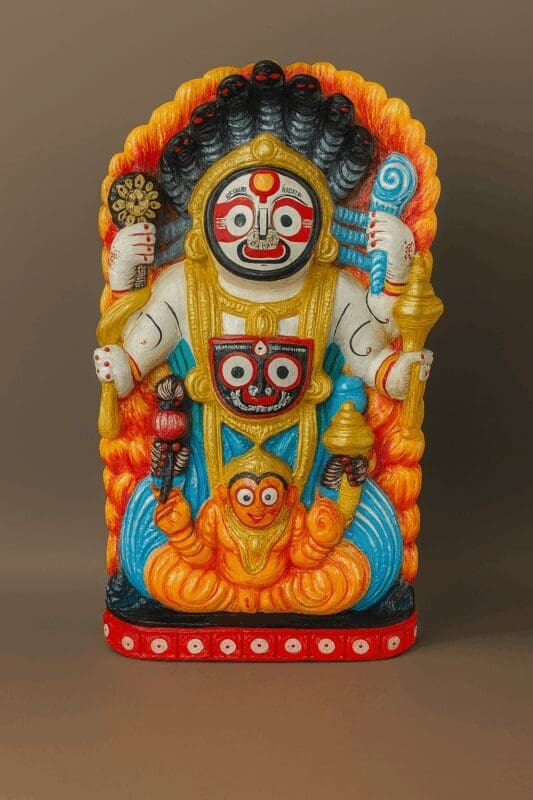
- The Nrusimha Foundation: Before Jagannath was worshipped as we know him, Puri was a center of Nrusimha worship. This fierce, lion-faced avatar of Vishnu is the bedrock of Jagannath’s identity. His presence is not just symbolic; it is the very backbone of the temple’s most sacred ritual, the Navakalevara. From determining the sacred Daru (wood) to the final installation, it is the Nrusimha mantra that sanctifies and protects the entire process. The Skanda Purana mentions that when King Indradyumna first had a vision of the Lord, a terrible, fiery Nrusimha form appeared, revealing the Lord’s primal, protective power.
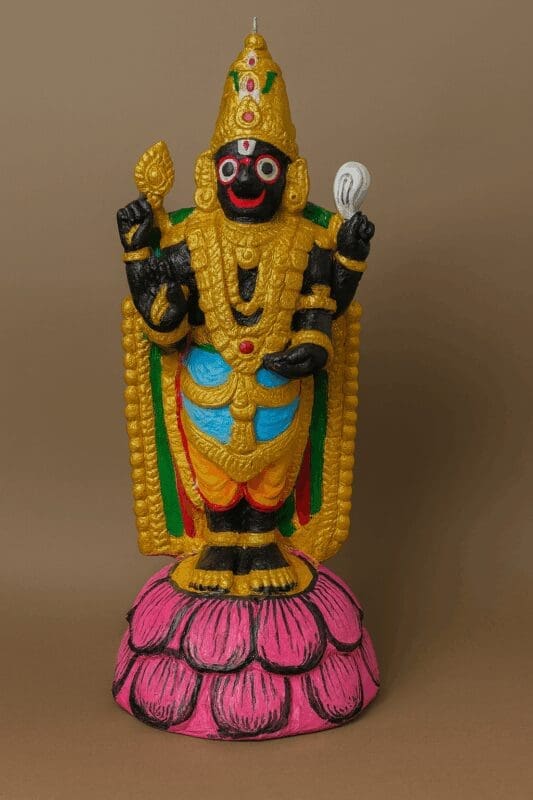
- The Krishna Synthesis: By the 13th century, especially with the influence of Jayadeva’s lyrical masterpiece Gita Govinda, Lord Jagannath became inseparably identified with Sri Krishna. He is the divine lover of the Gopis and the Supreme Being of the Gita. This beautiful synthesis makes Him both a fearsome protector to be revered and a personal, beloved God to be adored.
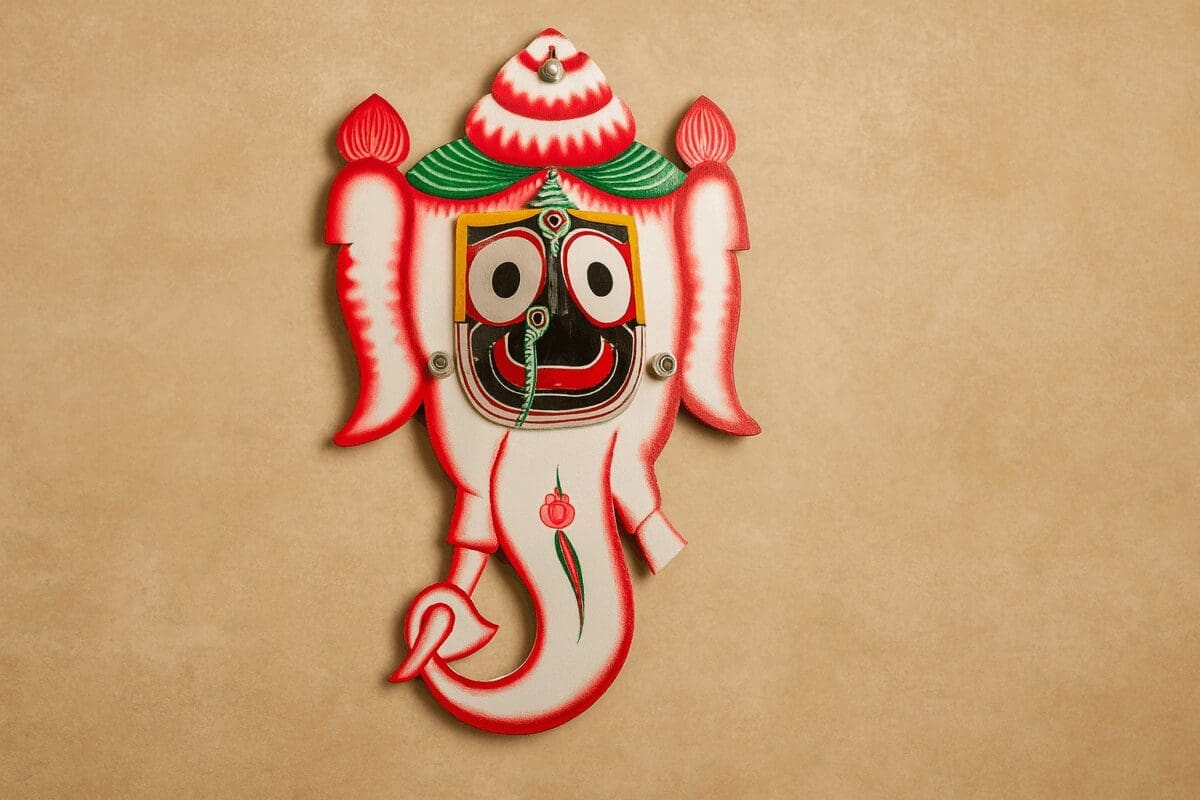
(Image Recommendation: An artistic split image showing the face of Nrusimha on one side and the face of Krishna on the other, both merging into the iconic face of Lord Jagannath.)
Devi Subhadra: The Tribal Goddess and The Divine Sister
Devi Subhadra’s identity is a beautiful example of how Jagannath Dharma embraces all traditions.
- Ancient Tribal Roots: Her form is deeply connected to the worship of Stambhesvari, a tribal pillar goddess from the western regions of Odisha. By placing her in the temple, the ancient kings honored the indigenous people and integrated their primal feminine deity into the fold.
- Puranic Identity: She is also revered as Ekanamsha or Yogamaya from the Vaishnava Puranas. As the sister of Krishna and Balarama, she is the Lord’s divine energy. The scriptures say Ekanamsha would be worshipped by the Shabaras (tribal forest dwellers), perfectly linking her Puranic identity back to her tribal roots.
Lord Balabhadra: The Great Brother and a Bridge of Faiths
Lord Balabhadra stands as a symbol of unity. In the Vaishnava tradition, he is revered as Sankarsana, the elder brother of Lord Krishna. However, his form also incorporates elements of Lord Shiva, thus satisfying the Shaivas. By including him on the throne, the Jagannath tradition created a sacred harmony, proving that different paths can lead to the same divine reality.
Sri Sudarshana: The Fiery Pillar of Divine Power
Sudarshana in Puri is not just Vishnu’s discus weapon. He is a pillar-shaped Daru representing the Lord’s power of action (kriyashakti). More importantly, Sudarshana is considered a potent, symbolic form of Lord Nrusimha. He is often the mobile deity (chalaanti pratima) who ventures out, carrying the fiery, protective energy of the Lord.
This divine family, the Chaturdhamurti, represents a complete universe of faith. For devotees who wish to keep this powerful symbolism of unity and devotion in their homes, a traditional Pattachitra painting of the Holy Trinity serves as a beautiful and constant reminder of their presence.
A Divine Confluence
From the fierce protection of Nrusimha to the sweet love of Krishna, from the primal power of a tribal goddess to the harmony of major faiths, the Four Deities of Puri are a testament to a faith that is all-inclusive. It was King Anangabhima Deva III who officially installed the deities in the 13th century, and by the 14th century, the sacred wooden forms we worship today were established, continuing a timeless legacy.
Jai Jagannath!


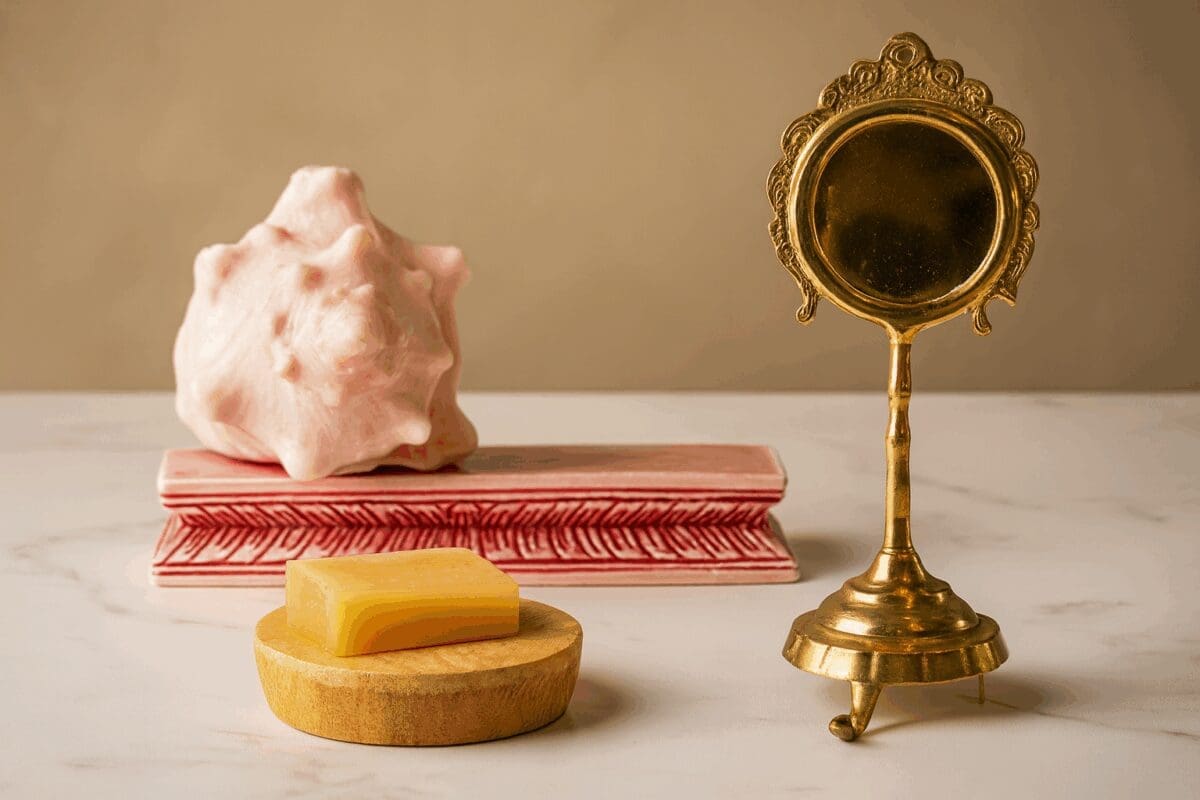
 Snan Darpan: for Shri Jagannath mahaprabhu's bathing rituals
  Grace Shawl for Pooja/fastival moments and Temple Visit
From ₹ 675.00
Grace Shawl for Pooja/fastival moments and Temple Visit
From ₹ 675.00