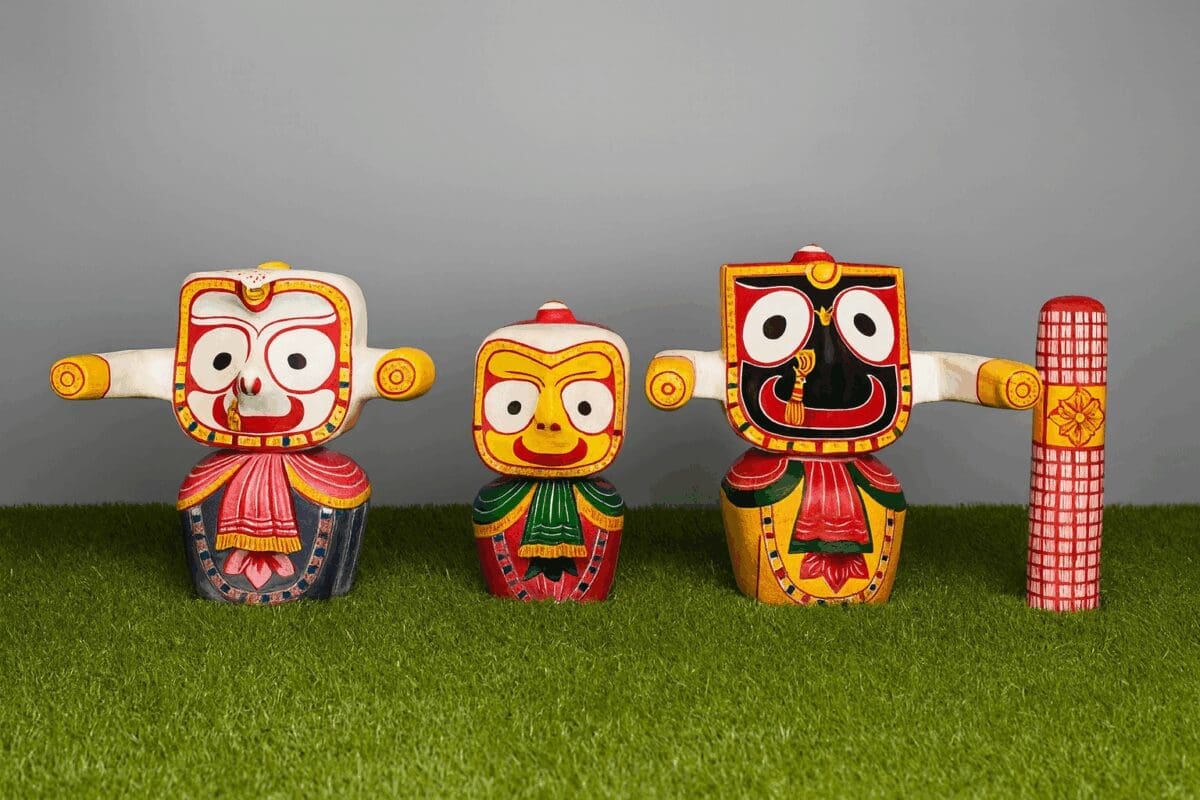
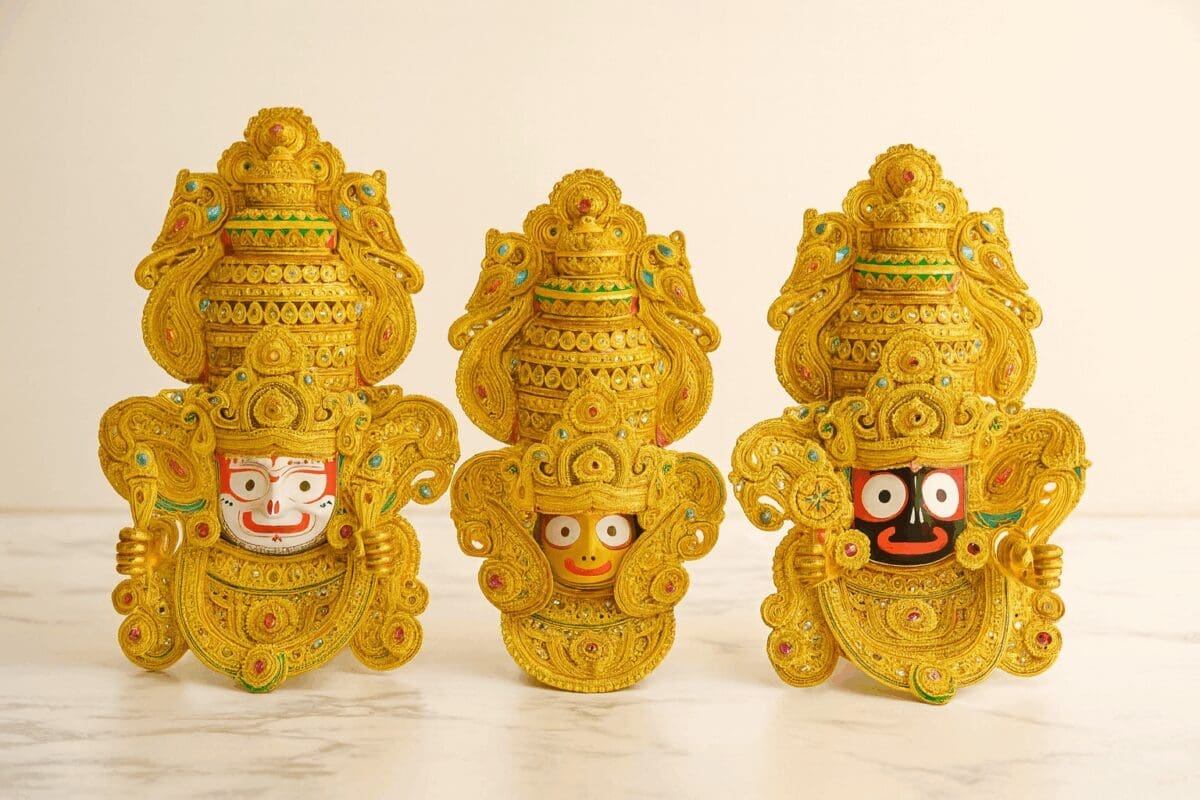
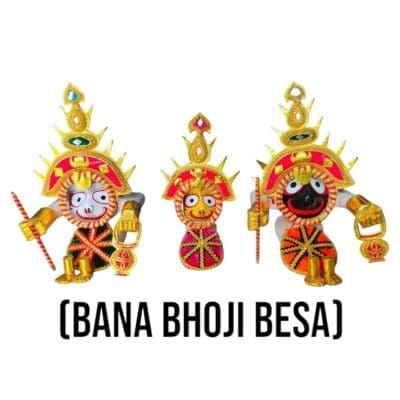
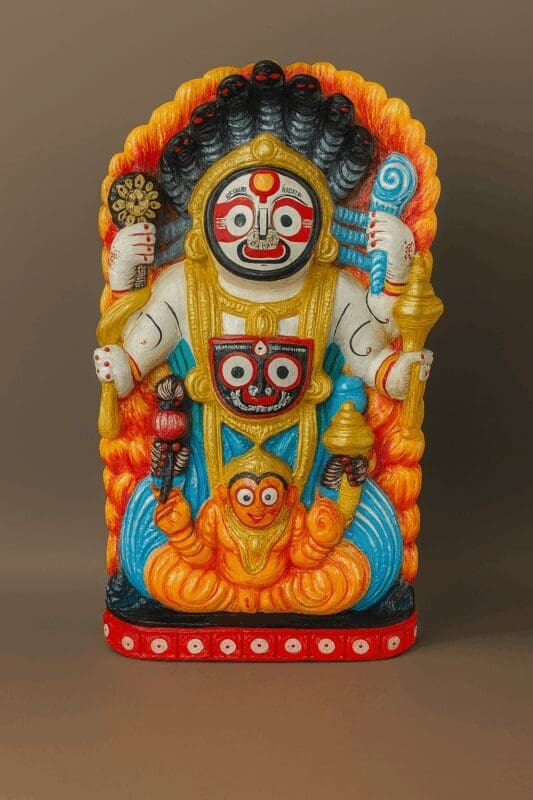
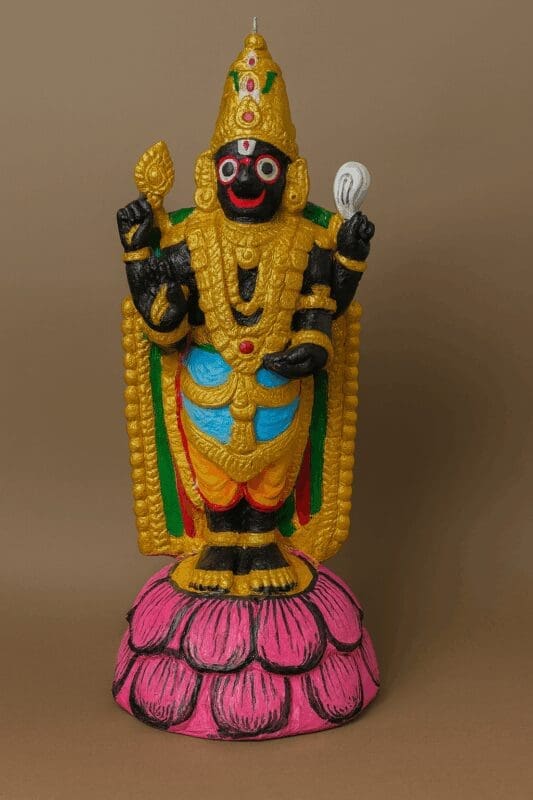
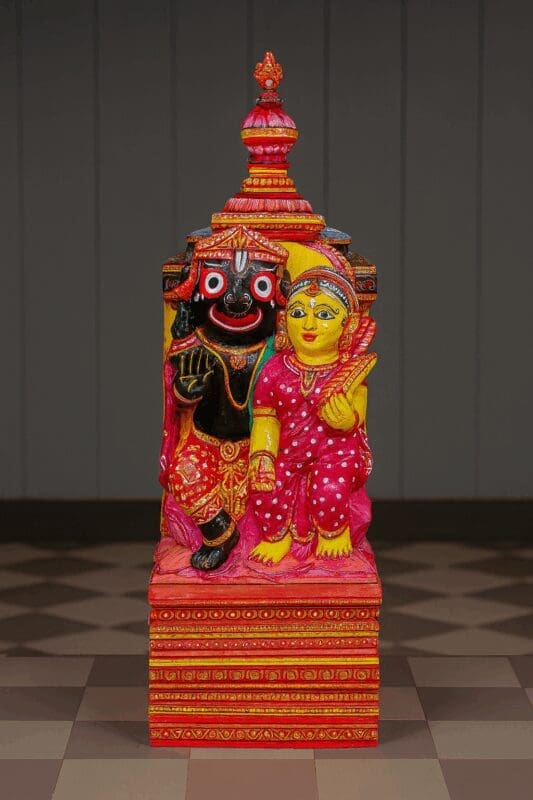
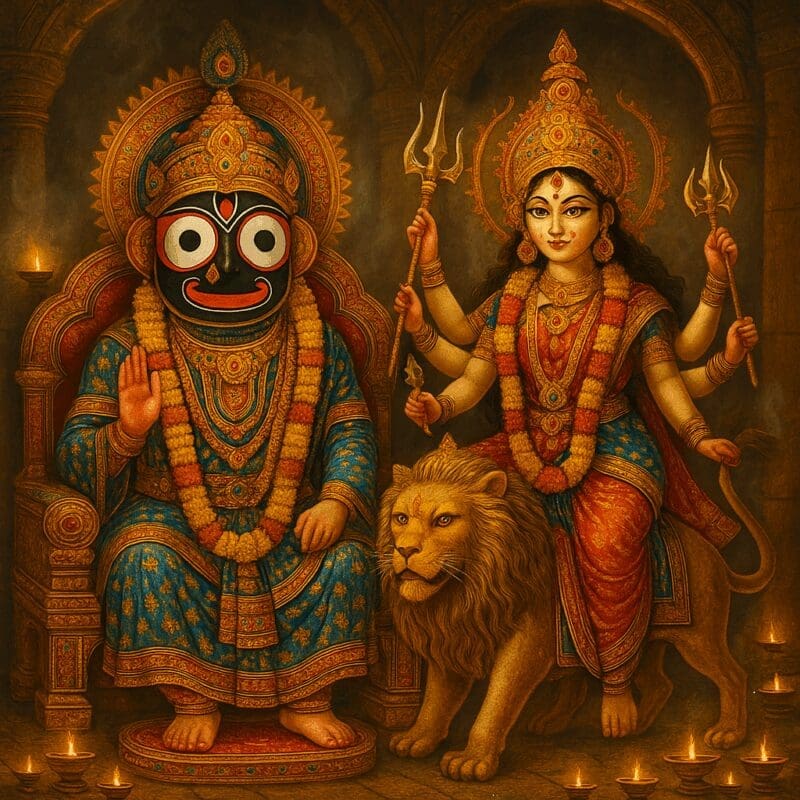
Sri Jagannatha and Bimala are both worshipped together for sixteen days, from Ashwina Krishna Ashtami to Shukla Navami, during the autumn season. This is a form of DurgaMadhab worship. According to the Uḍḍiśa Tantra, the
Goddess’s tongue fell in Srikshetra (Puri), making it an Uccishta Pitha (sacred site). Here, Bhairavi Bimala and Sri Jagannatha are Bhairava.
Rasanā Uḍradese ca Bimalā Puruṣottame; Taducchiṣṭa Mahapīṭhe Jagannāthasya Bhairava.
The Tantra Chudamani’s 51 Pitha determination states: “Bimala is the Mahadevi, and Jagannatha is the Bhairava.” Sri Jagannatha and Durga are one and the same. According to the Mahanirvana Tantra, Balabhadra is Tara, Subhadra is Bhuvaneshwari, and Sri Jagannatha is Dakshina Kalika or Durga incarnate.
Tarāsākṣāt Śūlapāṇi Subhadrā Bhuvanesvarī; Nīlādrī Jagannātha sākṣāt Dakṣiṇa Kālikā.
Because she serves the Kaivalya of Sri Jagannatha, Durga bears the name Bimala, who is known as the supreme Vaishnavi Maya in the Kali Yuga.
Bimalā bhavitā nāmnā Harikaivalya moditā; Vaiṣṇava paramā māyā kaṇaukhyātā bhaviṣyati.
The temple of Bimala is located in the northeastern corner of the Sri Mandir. According to the Madala Panji (Rajbhoga Itihasa) and the Uḍradeśa Raja’s genealogy, this temple was built by King Yayatikeshari. Over time, it deteriorated, and it was rebuilt by Janmejayakeshari in the ninth century. Later, “King Anangabhima Deva of the Ganga dynasty (circa 11891223 AD) renovated the temple for Sri Mahaprabhu, constructing the current The temple of Bimala was built when a great temple was constructed.” – Utkal Itihas (History of Odisha).
Durga sleeps from Bhadra Shukla Ashtami to Ashwina Krishna Ashtami. Pandit Godabar’s Sharadarchana Paddhati says – “On the day of Shayanashthami, torches, adorned with clothes and other items, are placed in a beautiful temple, in a charming Chandraatapa, in a beautiful, soft bed, with numerous flowers. The goddess should sleep, x x. Then, after lighting lamps, worshipping the gatekeepers and performing Shrikandhadi Nyasa, one should worship the gods with water.”
Munindra Devendra Virata Bandi Padaravinde Hata Vaijata Vrunde; Vidhehi Nidramih Yoganidre Nidhehi Sarvani Sumangala.
Again, according to the Durga Mata on Ashwina Krishna Ashtami, “After sixteen days, morning puja is performed and she is awakened. Sharadarchana Paddhati performs the awakening with songs, dance and various auspicious musical instruments like Veena, etc. Bandis are recited, bhogas and balis are offered. The goddess is awakened with Mahotsava.”
Nidra Vimunca Deveshi Durge Durgati Tarini; Pujarthi Bodhayami Tam Prasanna Bhava Shobhane.
From Ashwina Krishna Ashtami to Shukla Navami, the Mahapuja of Maa Bimala is celebrated for 16 days (excluding one day of rest for the goddess). For this Solapuja, the Gajapati Raja provides betel nuts and coconuts and selects the priests. On Ashtami, Subhadra is invoked for Durga Puja, and Ajnamala is offered. After offering Dhupa, the gold Durga idol is brought from the southern house and installed on the throne. After receiving Ajnamala, the Pratima is taken to the Majana Mandap, where Sahasra Kumbha Abhishek is performed by the Pandas, Pratiharies, Mudirastas and Acharyas with the Banadurga mantra. After this, the Sitala Bhoga is offered by Mudirath and after Panchopachar Bhoga and Bandapana, the Pratima is taken to the Bhandara door. Bamdev Samhita, Isakrishnapi Saptamam Jayadurga Samaniya Tasya says:
Pratah Pujavasanatah; Kumbhabhishekam.
“Jagannatho Rajavaryaa Yato’pyatasya Karmakam; Dinam Devyutthaapanakam Yatastat Snaanam Aacharet.” (123)”At this time, Madhab gets the Ajnamala of Jagannath and unites with the Devi on the Bhadrasana. At Bimala, Kothabhoga, Pishtaka, Thali Khichdi, and Manohi are offered, along with 16 upacharas, puja, arati and Vandapana. After this, Durgamadhab goes to Bimala’s temple and sits on a palanka (bed) in Jagamohana. Then, Sitalabhoga and Vandapana are done. After Bimala’s three Dhupas and Jagannath’s Ratra Chandan Lagi, the Biman Badus take Durgamadhab in a Vimana, and the Mahajans take Durgamadhab to the Bhandarghara (storehouse). This continues for eight days.
Puja Kritraa Nayet Sthanamapyashtamya Prathamarjanam; Kritraa Durgamadhavancha Samaaneya Prapujayet. Tayor Vandapanam Kritraa Devasya Chandikagruham; Neetwa Rakhet Kvachidesa Bimala Pujanam Shubham.
Kritra Trikala Pujante Udbhavaneeya Swasthale; Rakhetsa Chabadhurvedyashatadivasapurvakam.(26.34-36)
For the next eight days, up to Ashwina Shukla Navami, Durgamadhab sit in a ratha (chariot) and go to the Narayani Mandapa in Dolamandapa Sahi. This is called Shakta Gundicha. As Jagannath, along with his brother and sister, did the Srigundicha Yatra, Lakshmi was displeased. Thus, to please
Lakshmi, Jagannath Madhab and Lakshmi in the form of Durga are on the yatra, hence it is called Guptagundicha. When Durgamadhab are present at Narayani Temple, the temple sevaks, the Mebada Pandas, do the Subasit Jala and Karpura Lagi on the ratha, by the Garabadu and Bhitarachhu. Flowers, Bel leaves, Tulsi etc. are from Mebada Panda’s house. After Sandhyadhipa, the wives of the Pratiharis do Mandua Lagi. After Jagannath’s Ratra Chandan Lagi, the Biman Badu, in a palanquin, offer Bhoga Pankti Puja and the Pujapanda does Puja. Then, taking Karpura Arati and Janardan Dhupa Arati, they go to the Bhandarghara door. This continues till Navami, and for sixteen days, Durgamadhab reside in unity or are together. Bamdev Samhita says-”
Navame Bahyapujam Cha Kritva Pujam Tritiyakam; Tato’pyaneeya Swasthanam Samrakshaetu Punahsrunu.”
(26.37)
The day of Dashami (Tenth day) is celebrated as Dashahara. Since the ten heads of Ravana were taken away, it is called Dashahara, meaning “Dasha Ravanasya Mastakani Harati Yasa.” On this date, ten types of violence and sins are removed, hence the name Dashahara.
Dasha Adbhutpapan Hinsani Dashavidhani; Janmakruta Papanicha Harateti Dashahara.
According to Durgotsava Chandrika, on this day Durga removes ten kinds of obstacles and destroys adversity. “Dasha Vighnahruta Devi Durga Durgati Harini.” In the true sense, on this day, Durga destroys the ten obstacles such as self-pity, envy, jealousy, hatred, backbiting, falsehood, anger, pride, ego, atheism, etc., as stated in the Uddiyana Tantra:
Atmaglani Asuya Cha Irshadvesha Parokshavak; Mithya Krodhabhimanancha Ahamtanu Nastika Matam;
Dashabadhamiti Prokta Nishyanta Mama Sarvada.
As the Goddess, for the destruction of Ravana and for the victory of Ramachandra, granted a boon, it is called Akalabodhan Vijayadashami, according to the Devi Bhagavata.
Ravanasya Vadharthaya Ramasya Anugrahaya Cha; Akale Brahmana Bodha Devyasyayikruta Pura.
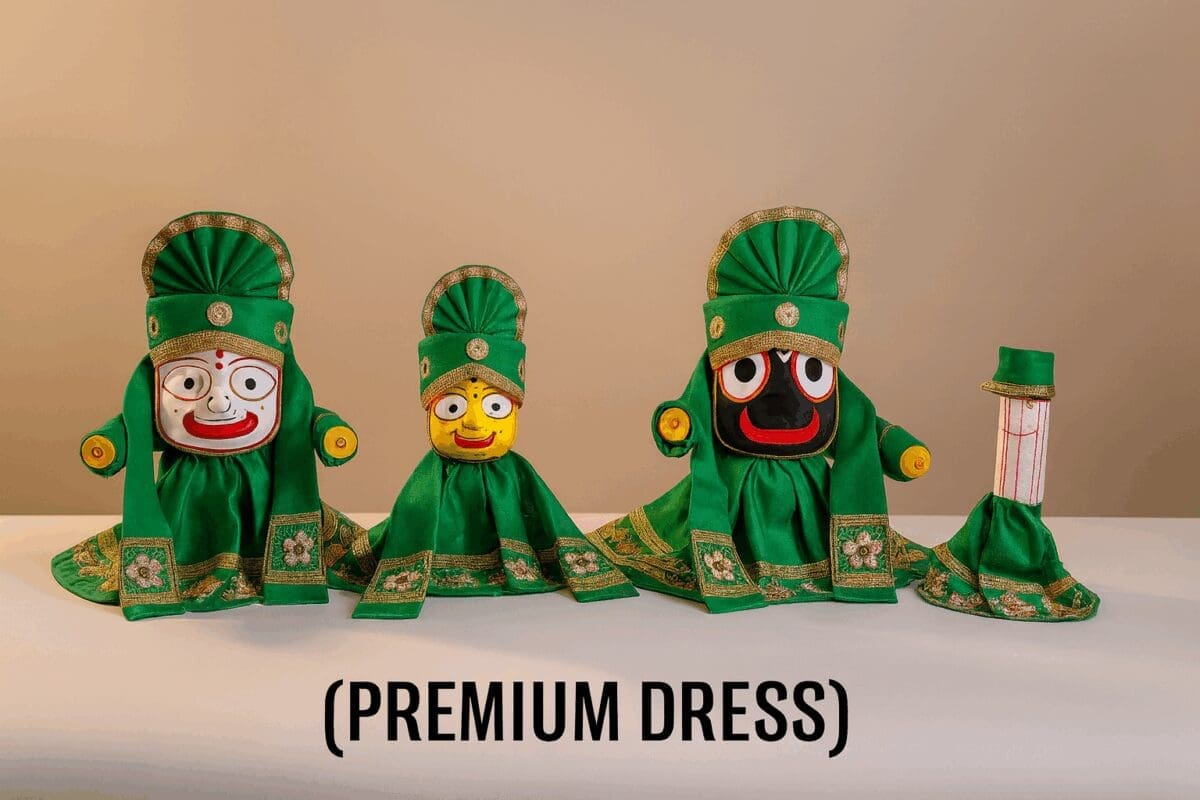
Its memory is fully maintained through the Durga-Madhab worship. Therefore, on this day, Ramakrishna, Madanmohan, and Durgamadhab, wearing Veeravesha (warrior attire), are seated on the Ratna Simhasana (jeweled throne). Jagannath is prayed for the Dashahara festival. It is said in Niladri Mahodaya:
Vijayam Cha Dashamya Vaidyutsavaya Janardanam; Agyapaya Jagannath Jagatah Hita Karanat.
After receiving the Ajnamala, Durgamadhab go in a ratha (chariot) in front, Ramakrishna in a palanquin in the middle, and Madanmohan in a Vimana (palanquin) at the back, to Jagannath Vallabh Matha.
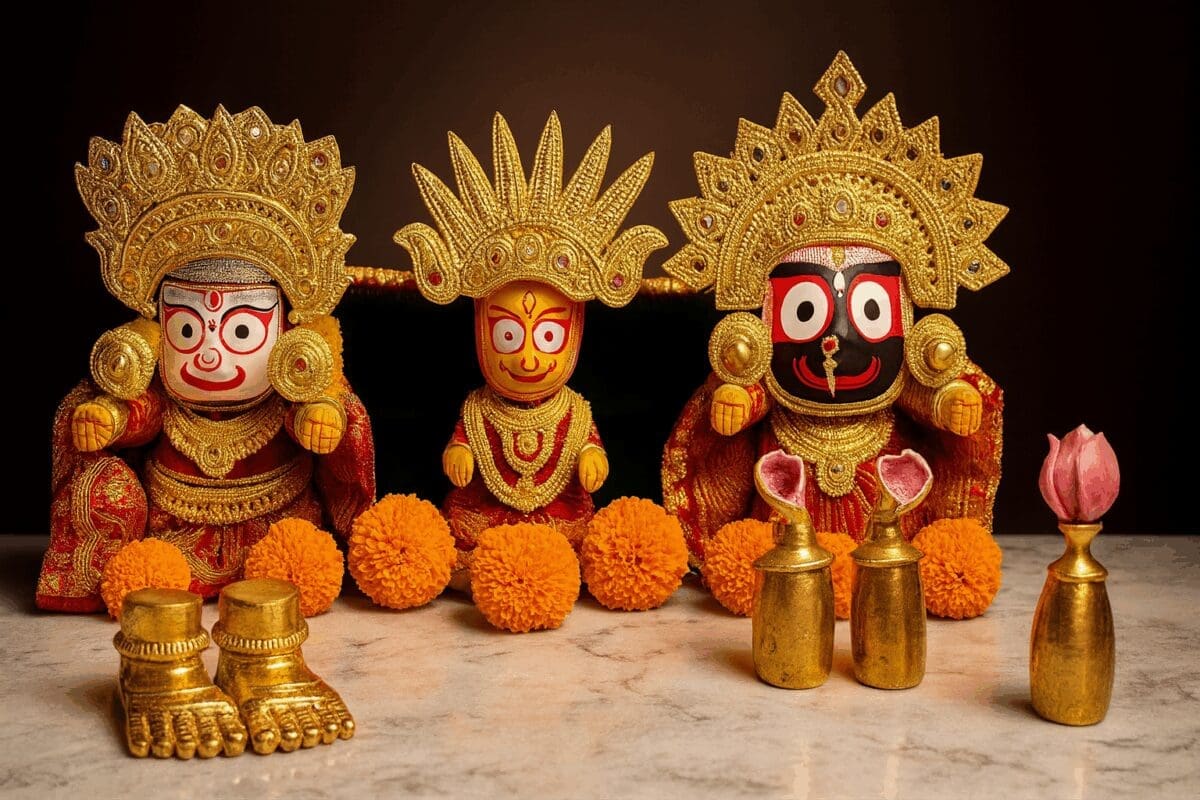
There, Durgamadhab are in the middle, Ramakrishna on the right and Madanmohan on the left take their seats. Then, Prasada Lagi, Sitala Bhoga, and Vandapana are offered by the Mudirath. After that, they return (Bahuda) and Madhab is placed to the left of Jagannath on the Ratna Simhasana. Durga is in the Bhandaragruha, and Ramakrishna and Madanmohan are in the Dakshinaghara. It is described in the Bamdev Samhita: “Dashamya Prathamaarchante Devaanapi Subhushayet; Mangalaaropana Kritwa Ramachandra Cha Krishnakam.”
Madhavam Jayadurga Cha Nayadevasya Sannidhou; Ayudhani Samarakshe Devangan Malya Manayet; Terangaleshrute Dadyaryyanevu Chopaveshayet; Mahotsavai Samaneeya Prasadbhramanam Charet.
Marichikasameepam Tu Nitwa Pujadikam Charet; Tato Vandapanam Kritwa Devan Swapadam Aaanayet. (26.39- 42)
This is known as Mangalika Kandotsava. On this day, along with the Ayudha Puja of Jagannath, Mahaprabhu is adorned with the Rajadhiraja Vesha (king of kings attire). At this time, those who have darshan (auspicious sight) of Janardana Jagannath, all attain happiness and in their final moments, obtain Hariprad, as stated in the Bamdev Samhita. Tesmin Samaye Devi Pasyanti Je Janardanam; Te Sarve
Sukhamabhujya Gachchhan Tante Harepadam. (26.42) During the Solapuja, Goddess Bimala wears 11 different Veshas (attires). They are: (1) Banadurga Vesha, (2) Bhuvaneshwari Vesha, (3) Narayani Vesha, (4) Bagala Vesha,
(5) Jayadurga Vesha, (6) Ugratara Vesha, (7) Matangini Vesha, (8) Dashabhuja Vesha, (9) Rajarajeshwari Vesha, (10) Harachandi Vesha, (11) Simhavahini Vesha. Furthermore, on the days of Mahasaptami, Ashtami, and Navami, Bali
(sacrificial offerings) is offered to Bimala. During these three days, fish is cooked and offered to Bimala in a special manner. Previously, this was done every day. The Raja of the Bhoi dynasty.
King Narasimhadeva prohibited this practice, restricting it to the time of the Mahapuja. According to the Bhadradesha Rajavanshavali, “Then, his son Narasimhadeva ruled the kingdom… The daily offerings of fish, etc., to Bimaladevi were stopped. It remained only for three days during the autumn puja.” The unknown chapters of Utkal Itihas says, “During the reign of Gajapati Maharaj Ramchandra Deb I (Bhoi) of Odisha, Badhanraja Guru composed ‘Durgotsav Chandrika’ and made the Durga Puja a public festival, treating it as a military festival. It was celebrated from Bimalapitha to various other Devi pithas. On Dashahara, the dual yatra of Durgamadhab shook the entire state. Even within the Sri Mandir, animal sacrifice was offered during the festival at the Chaturbhuja
Bimalapitha.” At its root was the revival of traditional military arrangements throughout Utkal. On Dashahara day, the Paikas of Utkal displayed their skills and received the Chhamu Saree from the king and, after tying turbans, remembered Durgamadhab, as stated by Kanai Vidyadhar’s Paika Khedara.
“On this day, the king will witness the games;The Chhamu Saree, headgear, will be tied on the head; Everyone will wear new clothes; And celebrate the Dashahara rituals with joy. This is their own, easy thing. Durgamadhab will be remembered, O God, all good… Remember Durgamadhab, do all.
If you remember Durgamadhab, there will be no danger;If you remember Durgamadhab, I become firm.Don’t abandon the name of Durgamadhab;Always remember it in your mind.
That is his festival, Dashahara, know that. (6P)Therefore, those who remember the blissful, Brahma-filled Durga and the Sachchidananda Ghana Vigraha Madhab, all their obstacles and fears are destroyed at every step.
Durga Madhabam Nitya Suranta Shraddhayanvite; Sarva Vighna Bhayatesha Vinashyanti Pade Pade.(Partially published in Dainik 9.10.97, Sambad)
Unveil the divine Durga Madhab union of Sri Jagannath.


 Dakhinabarti sankha (Small Size)
₹ 1,249.00
Dakhinabarti sankha (Small Size)
₹ 1,249.00 Chandan lagi seva(sandal wood)
₹ 4,712.00
Chandan lagi seva(sandal wood)
₹ 4,712.00 Chandan lagi seva(sandal wood)
  Mahaprabhu Marbles Art Idol
  Sambhu Jagannath Locket
  The divine Tulasi Kanthi Mali