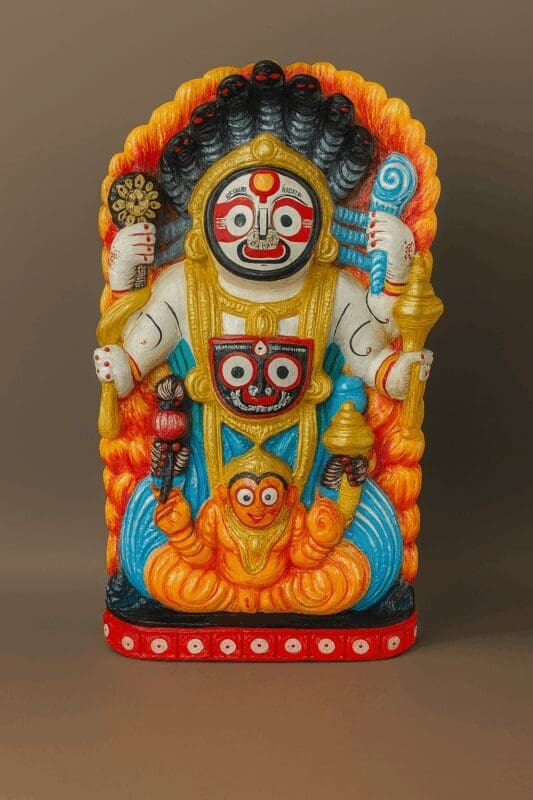
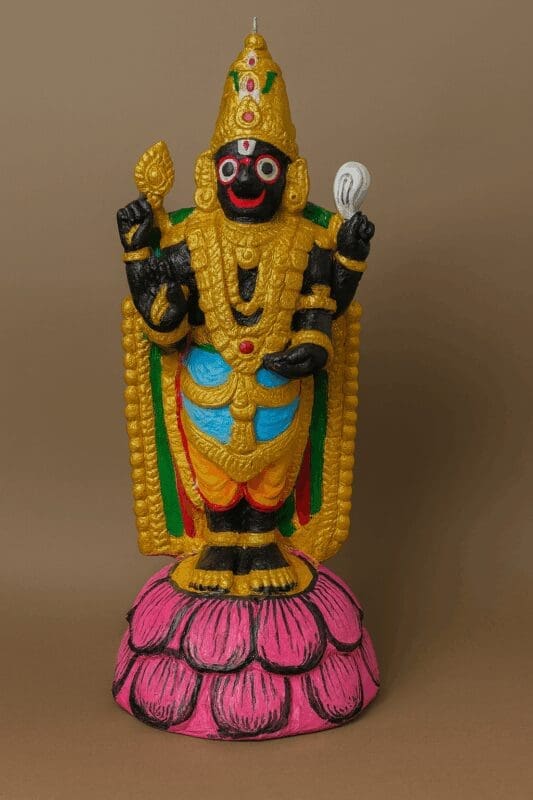
The Ekadashi of the waning phase (Krishna Paksha) of the Pousha month is described as the most excellent Ekadashi. Its name is ‘Saphala Ekadashi’. On this day, Lord Vishnu is worshipped in the form of ‘Narayana’.
Just as Sheshanaga is the best among serpents, Garuda is the best among birds, and Sri Vishnu is the best among Deities, similarly, the Ekadashi Tithi is the best among all vows (Vratas). Among them, Saphala Ekadashi is supreme. This is because by observing this Ekadashi, a human being becomes successful (Saphala) in every way. They enjoy wealth and prosperity during their lifetime and attain Vaikuntha (the abode of Vishnu) after death.
On this day, one observes a fast and keeps a vigil (staying awake at night). Narayana is worshipped with fruits like coconut, banana, and amla (gooseberry), along with incense and lamps. One remains awake throughout the night and donates lamps. The next day, after concluding the rituals (Parayana), one consumes only fruits as Prasad.
|| Ekadashi Mahatmya (The Legend) ||
Lumbaka, the son of King Mahismata of the city of Champavati, was wicked. Consequently, the King exiled him from the kingdom. He lived in the forest, eating fruits, roots, and the meat of animals and birds, residing under an old Peepal (Ashwattha) tree.
Once, during winter, suffering from extreme cold and a lack of food, he spent the entire night in distress. While repenting for all his sinful deeds, he uttered the name of Lord Vishnu and prayed for forgiveness for his sins. By the end of the night, while chanting in this manner, he lost consciousness due to the severe cold. When he regained consciousness, it was already noon. Rising with weak steps, he gathered some fruits, offered them to Sri Narayana, and then ate.
That day happened to be Pousha Krishna Ekadashi. Since he had unknowingly observed this Ekadashi vow, his heart was transformed, and he began to lead a holy life. Upon learning this, the King brought his son back to the kingdom. Lumbaka became the King, enjoyed royal happiness, and eventually attained Vaikuntha.
It is said that observing this Ekadashi vow yields the merit of one thousand years of penance and the Ashwamedha Yajna (Horse Sacrifice).
|| Sri Ekadashi Mahatmya (Scriptural Dialogue) ||
|| Yudhisthira Speaks ||
With humility, the son of Pandu (Yudhisthira) asks Vasudeva (Krishna):
“Please explain the details of this Pousha Krishna Ekadashi. What is its name, and by what method should it be observed?”
|| Sri Krishna Speaks ||
Krishna says, “O son of Pandu, this is my deepest secret, but out of love for you, I shall reveal it in detail. Vows involving special donations, sacrifices (Yajnas), or pilgrimages—none are equal to this. There is nothing else that pleases me as much as this does. Just as the Gita, the Bhagavata, and the Kartika Vrata are dear to me, this vow is even greater. Know that this is my five elements; it is like my five life-airs (Prana). Therefore, all men and women should perform this vow with care. I shall now explain the greatness of the Pousha month Ekadashi.”
“O Yudhisthira, do not distinguish between this and other Ekadashis. For the benefit of the people, I speak this Krishna-Diksha. The Ekadashi of the dark fortnight of Pousha is named Saphala. On this day, Lord Narayana is the presiding deity. Worship Him with care and various offerings, O Yudhisthira.”
“Just as Sheshanaga is the lord of serpents, and Garuda is the lord of birds, and just as Narayana is among the Devas and the Brahmins are in the Dwapara Yuga; just as Ganga is superior among rivers, this vow is the Lord among vows. Those who are devoted to Ekadashi are worshippable to me.”
“O King, listen to the method of Saphala. One should worship Narayana with fruits: Citron (Jambila), Mung beans, Coconut, Pomegranate, Bijapura fruit, Mango, Clove, Nutmeg, and other pure sweet fruits. Offer lamps and fragrant incense. Keep a vigil (Jagara) before the Deity. I shall tell you the merit of the one who stays awake until sunrise with a focused mind. Sacrifices are not equal to this merit; even pilgrimages like Ganga fall short. Such a person conquers both this world and the next and becomes luminous. The fruit one gains from performing penance for five thousand years is obtained by a man who keeps vigil on Saphala Ekadashi.”
“O Ruler of the Earth, listen to a story about the fruit of this vow. There was a prosperous city named Champavati. The King there was Mahismata. He had four sons. Each was stronger than the other, desiring to conquer the three worlds. The eldest of these four brothers was very arrogant in his wicked conduct. He fearlessly committed sins, was obsessed with other people’s wives and prostitutes, and was addicted to drinking. He repeatedly wasted his father’s wealth on sinful activities. He criticized Brahmins and Vaishnavas and lived by lies.”
“Seeing and hearing of his son acting this way, the father, in anger, named him Lumbaka and expelled him from the kingdom. Relatives and subjects, out of fear, gave him no shelter. It is nature’s law that one is punished for one’s qualities. Facing this, Lumbaka thought, ‘I have done many bad deeds. What kind of dharma is this of my father? They gave me no food and drove me out.’ Thinking this, the sinner entered further into sin. He decided, ‘I will stay in the forest and not go to my father’s kingdom.’ Thus, Lumbaka went into a dense forest.”
“There, he killed many living beings and stole from his father’s kingdom. He did this continuously without ceasing. People would catch him but, seeing his pitiful state, would release him. He was constantly engaged in eating meat, stealing, or visiting prostitutes. O King, this was due to sins of past lives. He suffered terribly due to these sins. Eventually, he thought, ‘Why kill living beings? It leads to hell. There are so many fruits in this forest; I will choose and eat them. Why steal from home and earn sorrow? I gave so much money to prostitutes but nothing to saints.’ Look at the movement of sin and merit; his mind changed.”
“Hearing about the movement of sin and merit, the King (Yudhisthira) was amazed and asked Krishna again, ‘What did Lumbaka do then?’ Krishna said, ‘O Son of Pandu, listen, he adopted the lifestyle of a sage. He lived under a Peepal (Ashwattha) tree and survived on fruits and roots. Time passed while he stayed in this ashram.'”
“On the Dashami (10th day) of the Pousha month, Lumbaka was afraid of the extreme cold. He remained without food that night. The night passed into Ekadashi. He bathed in the morning. After finishing his bath, he gathered some fruits and roots and kept them at his shelter. Though he laid out the food to eat, thoughts of his home caused him great sorrow, and he turned away from eating. He was weak and filled with worry. Due to the winter frost in Pousha, Lumbaka was deteriorating. His teeth chattered, he could not speak, but by destiny, the name of Krishna appeared in his mind. Unable to stand, his body trembling, he uttered ‘Krishna’ very slowly. The day passed in this manner.”
“In his weak attempt, a fast (Upavasa) occurred. Shivering in the cold, unable to rise, he lay still. Thinking of his misery, he thought death would be better than this suffering. Trembling, he lifted the fruits with great difficulty and said, ‘O Lord Narayana, let this cold not be a sorrow, or let sorrow depart from sorrow.’ Saying this, he placed the fruits at the root of the Peepal tree. Out of sadness, he ate nothing. Because he did not eat, sleep did not come. As the wind shook the tree branches, cold dew drops fell on him.”
“Lumbaka became cold like a corpse. He contemplated the difference between life and death. ‘How many sins have I committed? I live in this terrible forest. I left the city of Champavati, my parents, and my home. I am alone here; no one pities me. Whom shall I blame? I am suffering my own karma. God is the giver of the fruits of action; He is the punisher behind the King’s punishment. My bad deeds are known to people. By blaming God, I only earn more sin. O Narayana, destroy all my sins.‘ Thinking this, his mind gave way, and he fell unconscious.”
“He saw the night ending. ‘I have fasted since yesterday.’ He went to bathe but fell into a faint on the path. When the faint passed, he looked up and saw the sun rising. At that time, Narayana accepted his sorrowful submission. Saphala Ekadashi had arrived, and the Lord considered him a great observer of the vow. ‘This son kept a vigil and offered fruits. He repeated my name again and again. Since he performed the Saphala Vrata, let him receive some fruit, and let his misery end.'”
“While Hari (Vishnu) thought this, all prosperity appeared before Lumbaka. He transformed into a handsome form, wearing bangles and necklaces. At this time, the King’s ministers, who were searching for him, found him. Seeing him, they bathed him and told him his father had called for him. They fed him sweets and gave him a divine vehicle. Looking at the Peepal tree, he performed a mental worship. Remembering the Vishnu Kavacha (armor), he mounted the divine vehicle and entered Champavati. Everyone watched with joy.”
“King Mahismata rose and immediately sat him on his lap. He honored his son. What did he not do with Krishna’s grace? He gave him his authority and handed over the burden of the kingdom. Rising from the lap, the Yuvaraja (Crown Prince) worshipped his father’s feet. He worshipped the mothers and took his place. He ruled the subjects with Dharma and served Vaishnavas and Brahmins with devotion. He worshipped the feet of the Bhagavan, who removes all dangers. Following the Ashrama Dharma, he fathered four pure sons. Seeing his firm devotion to Vishnu and Vaishnavas, the King was satisfied.”
“Calling his son, the King gave him the royal umbrella and whisk, saying, ‘I entrust Champavati to you; you rule. With ministers and priests, protect this earth.’ Thus giving the earth to his son, the King went to the forest. Mastering spiritual knowledge and conquering enemies like lust through patience, the King went to Vishnu-loka. Lumbaka became the King of the earth. He protected the earth like a father, removing the path of unrighteousness. The King of Champavati constantly worshipped Vishnu, Vaishnavas, and the twice-born. He performed the great vow according to the rules and was very devoted. Other kings became subservient to him, and his spotless fame spread. He ruled for sixteen thousand years. In the end, he attained the heavenly abode, and his son became the King.”
“Krishna says, ‘Listen O King, men and women who perform the Saphala Ekadashi worship will enjoy the kingdom here and ultimately attain the heavenly abode. This is certain, O Yudhisthira. Blessed is the one who has done these pious deeds. There is no one more fortunate than the one who performs the Saphala Ekadashi vow according to the rules; their birth is fruitful. Furthermore, one who listens to the rules of Saphala fasting obtains the fruit of the Vajapeya Sacrifice and sits with the Devas.'”
“Hearing the glory of Krishna, King Yudhisthira was filled with joy. Honoring Krishna, he then asked about the bright fortnight (Shukla Paksha) Ekadashi.”
|| Thus ends the Third Chapter regarding the Pousha Krishna Saphala Ekadashi Mahatmya in the Bhavishya Purana ||


 Dhanwani sankha(Blowing Sankha)
₹ 5,622.00
Dhanwani sankha(Blowing Sankha)
₹ 5,622.00 Dakhinabarti sankha (Small Size)
₹ 2,498.00
Dakhinabarti sankha (Small Size)
₹ 2,498.00 Dakhinabarti sankha (Small Size)
  Goddes Laxmi Annd God Vishu Koudi
  Beutiful shri jagannath Mahaprabhu Car/wall hanging
  Lotus flower agrabati stand
 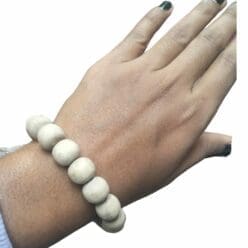 Beautiful Tulasi Wood Bracelet
 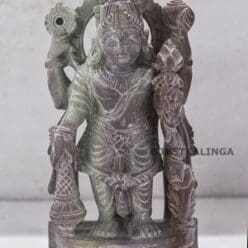 Shri Narayan Marble murti
  Nitya Patham of Shri Jagannath Mahaprabhu (SANKRIT)- E-book
 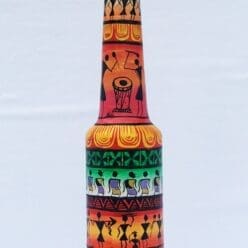 Ancient Tribal Art
 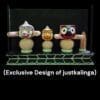 Mohan Rupam With Ratna singhasan
 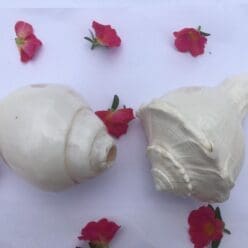 Sankha
  Tulasi Jagannath Locket
 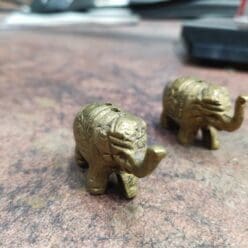 The brass "Elephant Jodi"
  wall hanging Jhumar Big Size
  Locket
 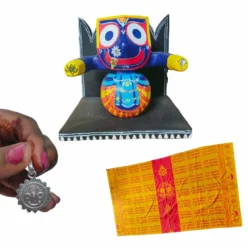 Niladrinath Gift Hamper