The Ekadashi of the Shukla Paksha (bright fortnight) in the month of Bhadrava is celebrated as Parsva Parivartini Ekadashi or Padma Ekadashi. This Ekadashi is one of the four major Ekadashis of the year. According to religious beliefs, on this day, Lord Vishnu, while in Yoganidra (cosmic sleep), changes his side. This results in a change in Lord Vishnu’s position. Hence, it is said to be named this way. As per religious beliefs, observing vows (vrat), fasting, and performing worship on this day grants liberation from all sins, and peace prevails in the household.
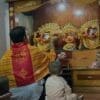
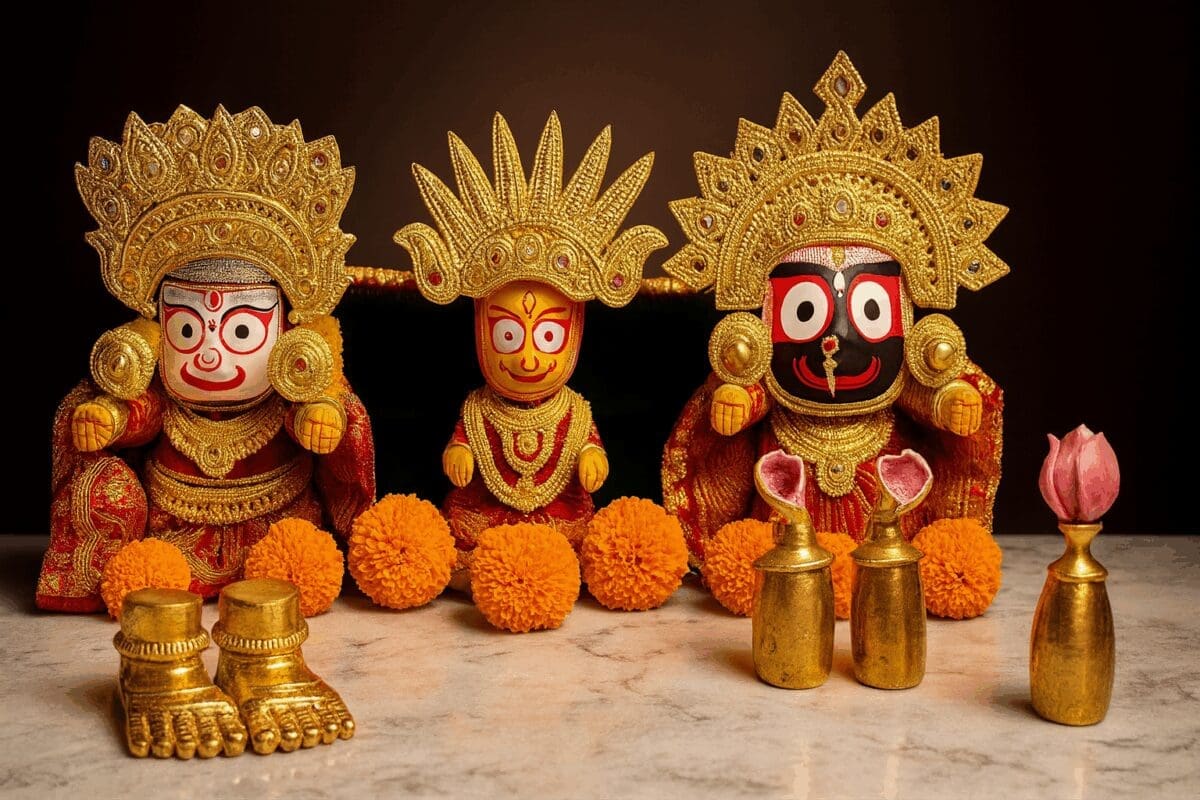
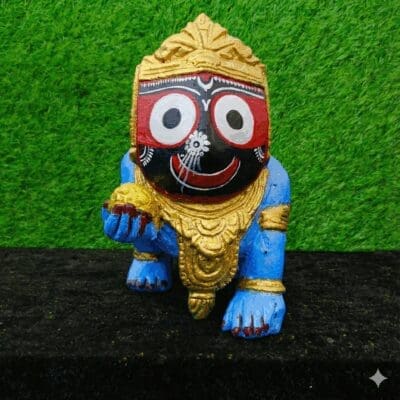
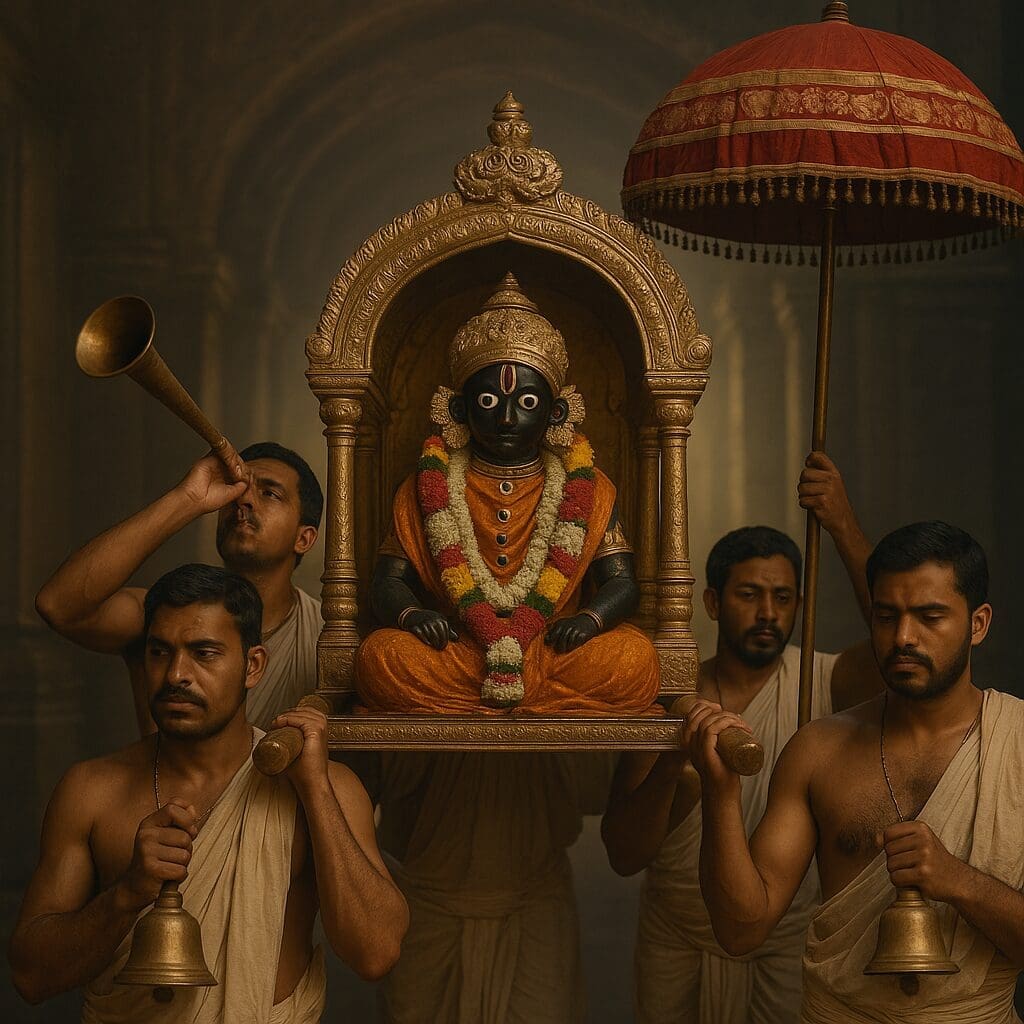
Parsva Parivartana Yatra is one of the twelve major yatras (festivals) celebrated in the Shri Jagannath Temple. This yatra is held on Bhadrava Shukla Ekadashi. During the Mahaprabhu’s four-month sleeping period (Shayana Kala), he changes his side after two months. On the day of Bhadra Shukla Ekadashi, after the Bhogamandapa ritual is completed, the three deities undergo a grand bath (Mahasnana) and are adorned with new clothes. Thereafter, the Pujapanda, Patimahapatra, and Mudirasta sevakas (servitors) apply sandalwood paste, brought from the Ghatuari’s house, on the sacred bodies (Shri Anga) of the deities. Following this, the Mahajana sevakas bring Shri Madanmohan to the Ratnasimhasana (jewelled throne). There, after receiving the Agya Mala (garland of command) from Mahaprabhu, he is taken to the palanquin near the Muktimandap. Then, the Bimana Badu sevakas carry the palanquin on their shoulders, circumambulate the main temple once, and place it back near the Muktimandap. After this, Shri Madanmohan is seated near the Jaya Vijaya gate, where the Ekadashi Bhoga (offering) and Bandapana (welcome ritual) are performed. Subsequently, Shri Madanmohan proceeds to the Dakshini Ghara (southern chamber).

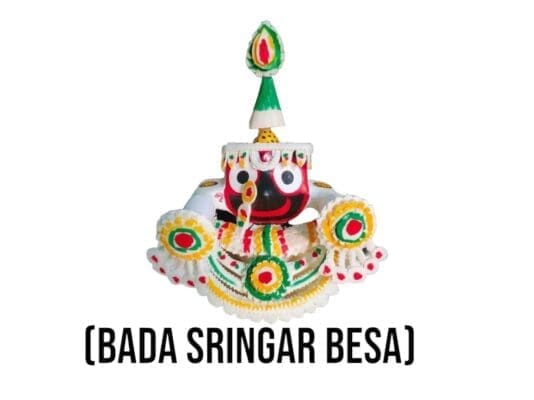
After the Sandhya Dhupa (evening offering) is over, the Deula Purohit (temple priest) is chosen as the Acharya and Brahma inside the Ananta Purushottam temple for the Pabitra Adhibasa (consecration of the holy thread) and performs a Homa (fire sacrifice). After the first Badasimhara Besha (a specific attire) and Bhoga are completed, the Khata Sheja Ghara (bed chamber) is washed and cleaned. The Deula Purohit draws three Mandalas (sacred diagrams) with five-colored powders (Pancha Muruja) in this room and establishes a Purna Kumbha (full pitcher) on it. Then, the Bhandara Mekapa (storekeeper servitor) places nine sacred threads (Pabitra) and three Kurvantimala (a type of garland) covered with a cloth on this mandala. Subsequently, the Deula Purohit performs Varuna Puja and consecrates the Pabitra for the three main deities by chanting mantras. The Khata Sheja Ghara is then sealed. After the inner sanctum is cleaned (Bhitara Mailama) and the Mahasnana is done, the Palia Pushpalaka servitor adorns the deities with new clothes. The Pujapanda, Patimahapatra, and Mudirasta, accompanied by ghanta (bells), chhatra (umbrella), and kahali (trumpet), bring sandalwood paste in three silver bowls and apply it all over the sacred bodies of the deities. After this, the Ballabha Badasimhara Besha is done, and six idols’ worth of ornaments are adorned. Then, accompanied by ghanta, chhatra, and kahali, the Taluchha Mahapatra and Pradhani sevakas bring the Ballabha Badasimhara Bhoga in a procession before the deities. On this day, the Badasimhara Besha and Bhoga happen twice in the Srimandir.
After the Shodasha Upachara Puja (worship with sixteen services) is finished and Karpura Alati (camphor waving) is done, the Parsva Parivartana Niti (ritual of changing sides) is performed. The Mudirasta, Behera Khuntia, Garabadu, Palia Mekapa, Akhanda Mekapa, and Tadhau Karana sevakas climb up to the Khata Sheja (sacred bed) using a ladder. After breaking the seal, the Mudirasta opens the box containing the Shayana Thakura (sleeping deity). Taking sanctified water (Hatuani) from the Garabadu, he offers Pushpanjali (flower offering) three times with white flowers provided by the Behera Khuntia in a silver bowl. Then, the ritual of turning the sleeping deity’s side (Kada Leuta Niti) is performed. During this time, the Mudirasta performs Bandapana. After this, the box is closed, the doors are sealed, and they descend. The six sets of gold ornaments worn by the deities on the Ratnasimhasana are removed (Mailama), and they are offered betel nuts (bidia), ghaza, and paida. They are then taken to the bed chamber for their slumber (Pahuda).
ll The Glory of Parsva Parivartan Ekadashi ll
ll Yudhishthira Said ll
The son of Pandu asks, “O Lord, the beginningless and infallible one! Please tell me the name and rituals of the Ekadashi of Bhadrava Shukla Paksha. O King of Gods, which deity is to be worshipped on this day?”
ll Shri Krishna Said ll
Krishna says, “O King, listen. I shall narrate a wondrous tale. This is the same glory that Brahma had explained when Narada had asked him.”
ll Narada Said ll
“O four-faced, lotus-born one! I bow at your feet and ask you. Please tell me in detail the name of the Ekadashi of Bhadrava Shukla Paksha. Knowing its rituals, I wish to worship Lord Vishnu.”
ll Brahma Said ll
“You are the best among Vaishnava sages. The answer to this question is profound. There is no greater vow in the three worlds than this Hari Vasara (day of Hari). It is famous by the name ‘Padma.’ This is the Bhadrava Ekadashi. On this day, one should worship Hrishikesha (a name of Vishnu). This is the best among all vows. I will tell you a Puranic story; listening to it will end the sorrows of worldly existence. By listening to this, a soul’s great sins are destroyed.”
“There was a royal sage named Mandhata, who belonged to the solar dynasty. He was a truth-abiding, universal emperor, powerful and righteous. He protected his subjects like his own sons. In his kingdom, people were happy; there was neither famine nor hellish suffering. There were no primary diseases, nor was there any fear of thieves. Everyone was virtuous and prosperous with wealth and grains. The king kept the justly earned wealth in his treasury. The subjects lived according to the duties of their respective ashramas (stages of life). Under Mandhata’s rule, the earth became like Kamadhenu (the wish-fulfilling cow). The subjects lived in joy, receiving all their desired pleasures.”
“However, due to some past karma, a calamity struck. There was a drought in the country, and for three years, the crops failed. Without grains, the people became distressed with hunger. Rituals like Swaha, Swadha, and Vashatkara, as well as the study of the Vedas, ceased. Suffering from this deprivation, the subjects went to the king and said, ‘O King, listen to our words. We are tormented by hunger. The wise ones in the Puranas say that water (Nara) is called ‘Apah.’ The Lord resides (ayana) in it; therefore, he is Narayana. The Lord, in the form of clouds (Parjanya), is omnipresent. He is the one who causes rain. From rain comes food, and from food, living beings are born. This is the verdict of all scriptures. Due to the lack of water, the subjects will perish. O King, please think of a way to bring rain.'”
ll The King Said ll
“You have spoken the truth; there is no falsehood in it. It is said that living beings are born from food, and they survive on that food. This is stated in the scriptures and Puranas. The misdeeds of kings cause suffering to the subjects. Nevertheless, for your well-being, I will make an effort.”
“Saying this, the king, after praying to the Creator, took a few men with him and went to the ashrams of the sages. He wandered through various hermitages and saw the sage Angirasa, who was born of Brahma’s effulgence. The ascetic shone with such radiance as if he were a second Brahma. The king was delighted, quickly dismounted from his vehicle, and with folded hands, he bowed to the sage. The sage welcomed him with auspicious words and joyfully inquired about the welfare of the seven limbs of his kingdom. The king also inquired about the sage’s well-being and reported his own.”
“After receiving a seat and offerings, the king sat near the sage. When the sage asked, he explained the reason for his arrival.”
ll The King Said ll
“O Sage, I have ruled my kingdom according to Dharma. Yet, there is a drought on my land. I do not know the reason for this. If the cause is known, a remedy can be found. Please tell me, O great sage. Dispel my doubt, my lord; that is why I have come to you. Through your yogic power, tell me how to save my subjects. I pray to you.”
ll The Sage Said ll
“O King, this is Satya Yuga, the best among all ages. In this era, everyone is a follower of Brahma, righteous, and truthful. In this age, only the Dvijas (twice-born castes) perform difficult austerities. O King, in your country, a Vrishala (a person not following Vedic injunctions) is performing penance. Due to his improper act, the clouds are not raining. Strive to kill him, and the clouds will shower rain upon your country.”
ll The King Said ll
“How can I kill an innocent ascetic? Please tell me another solution where there is no loss of life.”
ll The Sage Said ll
“If you are bound against killing this Vrishala, then all of you should observe the Padma Vrat. The Ekadashi of Bhadrava Shukla Paksha is known as Padma. If this vow is observed properly, the clouds will surely bring good rain. This Padma Ekadashi grants all accomplishments and destroys all calamities. O King, go to your city and observe the Padma Vrat with your people.”
“Hearing the sage’s words, the king bowed to him and returned to his city, pleased. He, along with his subjects and all necessary arrangements, observed the Padma Vrat. As a result, good rains occurred in the country. The land was flooded with water, and the crops grew abundantly. By the grace of the sage and the Lord, all people became happy.”
“Therefore, O men, observe this vow and you will cross over all difficulties. One should offer curd and rice (dadhi-odana), moistened with water, wrapped in a cloth, to a Brahmin. One should also lovingly donate an umbrella and footwear to a Brahmin, saying: ‘O Damodara, lover of devotees, O Govinda, I bow to you. O Hari, please destroy my sins and grant me all happiness.’ Saying this, one should offer Dakshina (monetary gift) to the Brahmin, bow to him, and show proper respect. This vow grants both worldly enjoyment (bhukti) and liberation (mukti), and all sensory pleasures are attained. By reading or listening to this, all sins are destroyed.”
Thus ends the twentieth chapter on the greatness of Bhadra Shukla Padma Ekadashi in the Shri Brahmavaivarta Purana. 🙏❤️
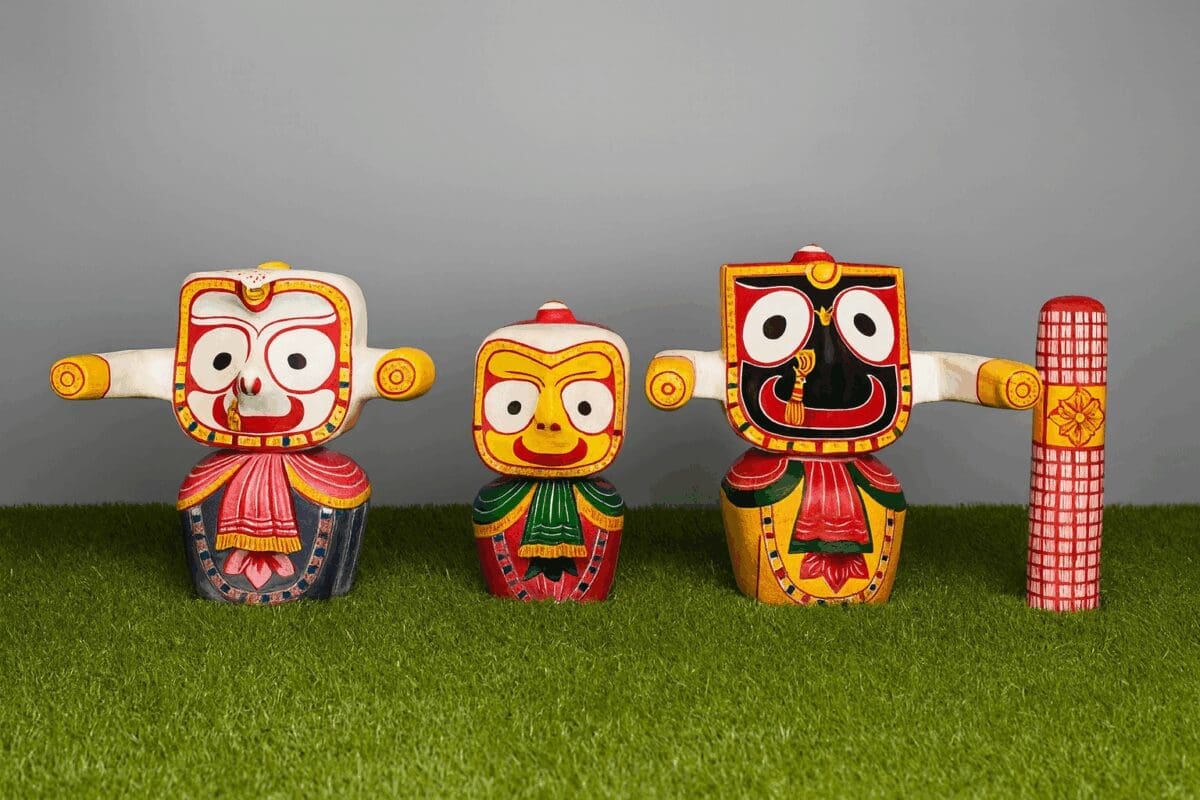
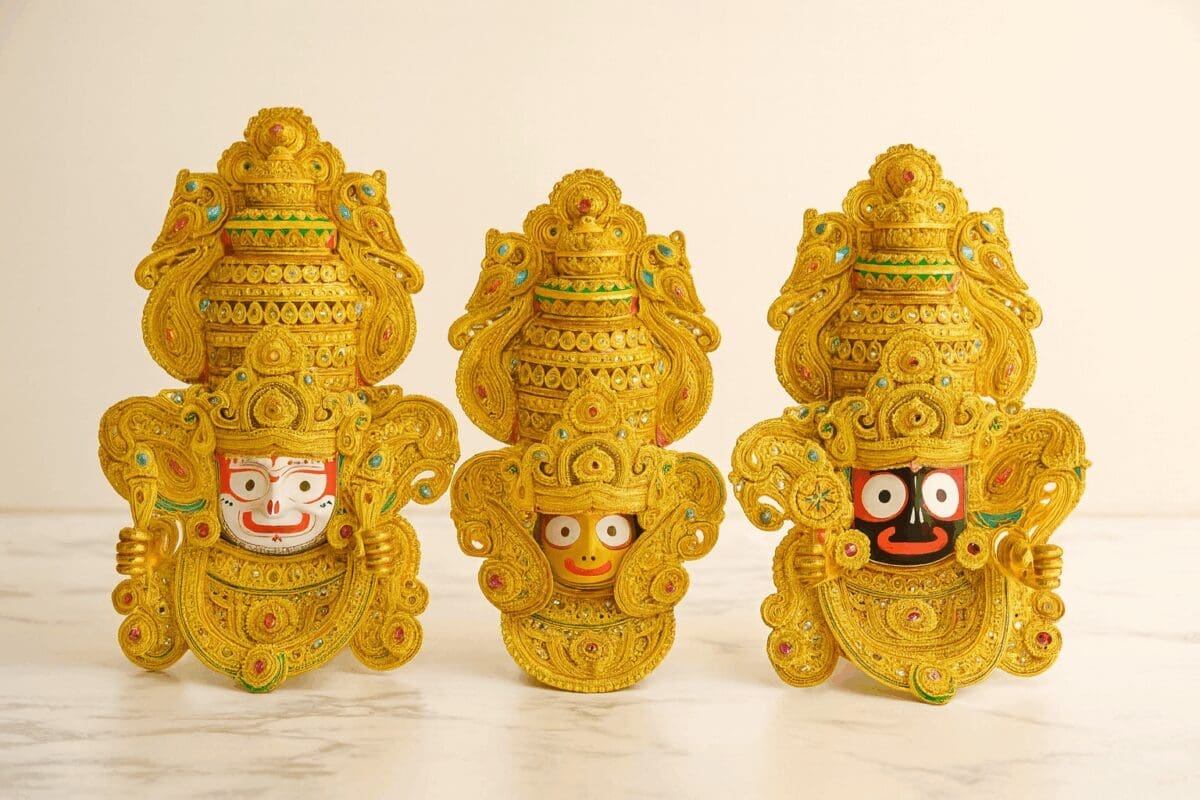
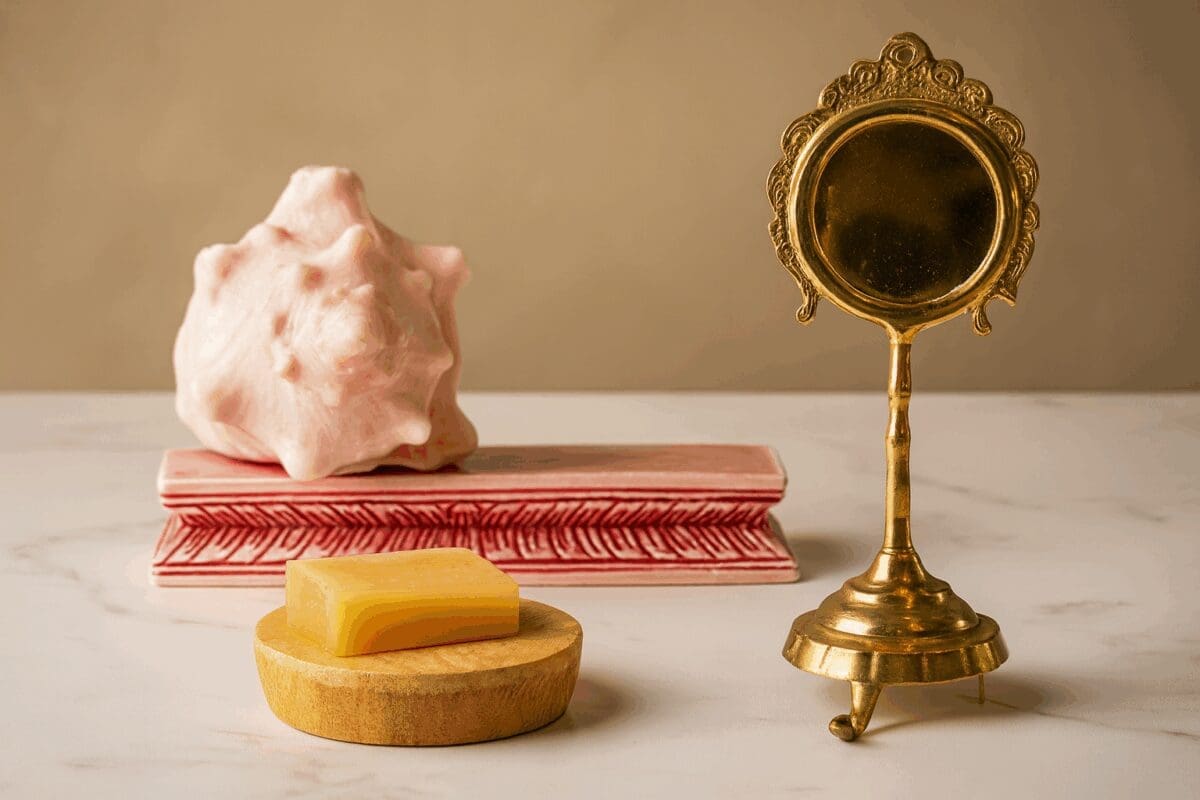
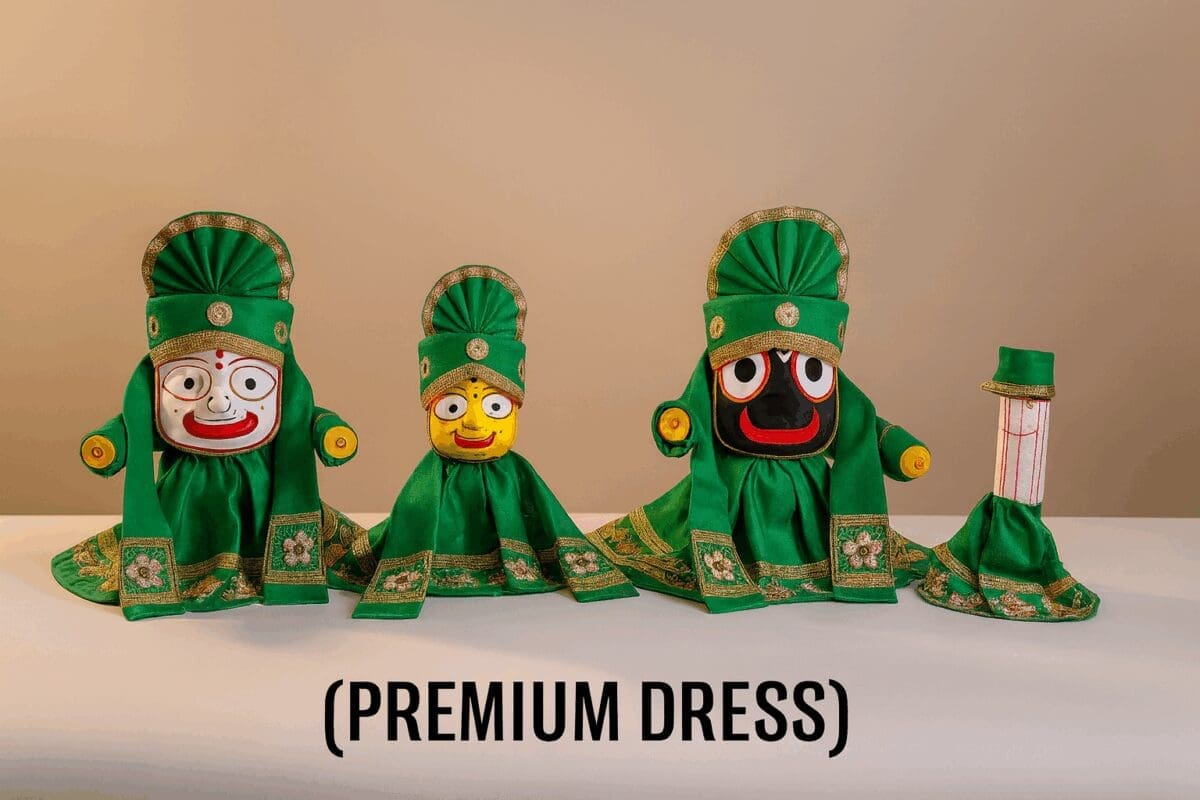
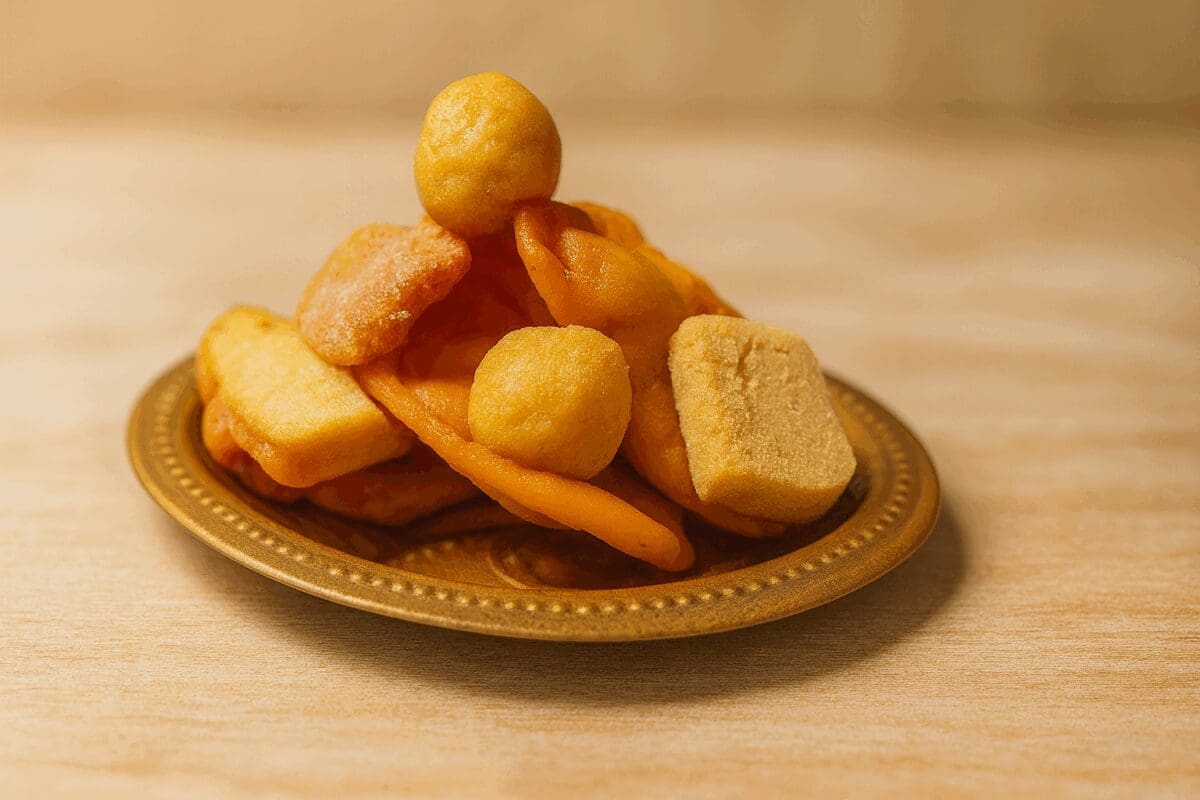
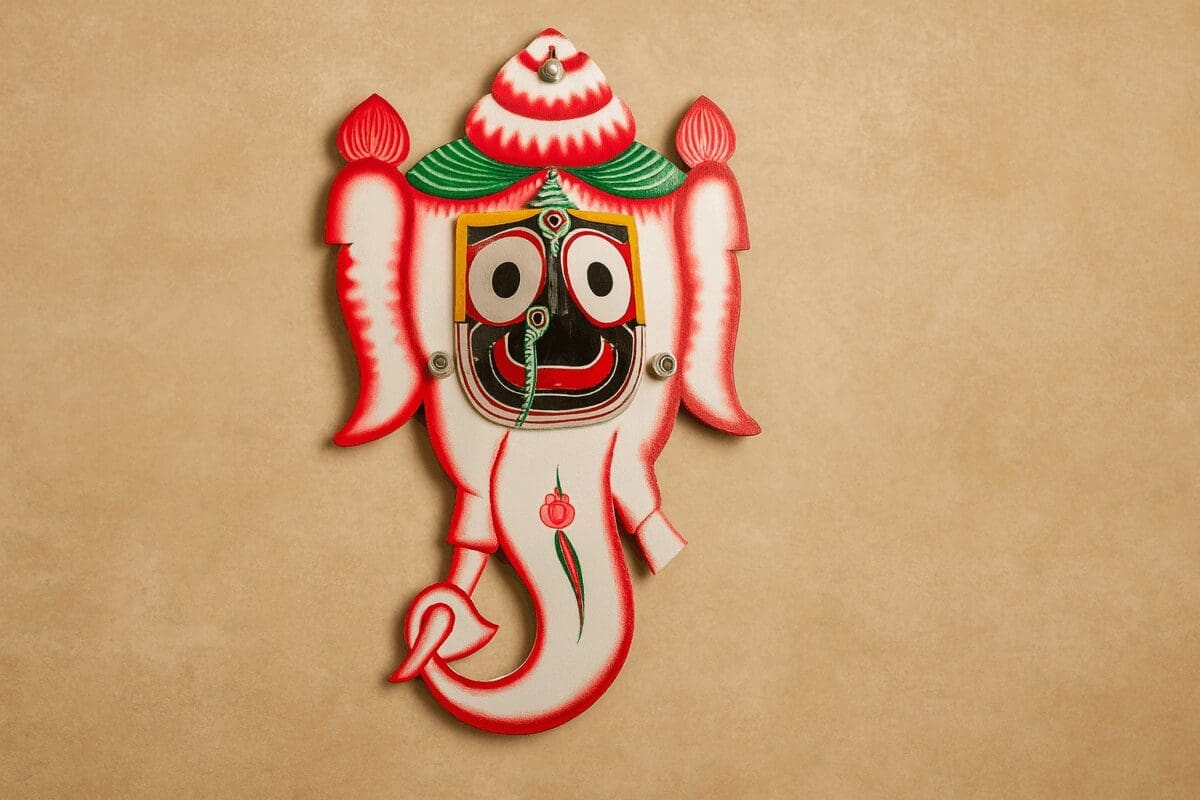
Discover divine blessings with our exclusive collection for Parsva Parivartini Ekadashi. Each item is crafted to bring peace and prosperity to your home, honoring the sacred rituals of Shri Jagannath.


 Dakhinabarti sankha (Small Size)
₹ 2,498.00
Dakhinabarti sankha (Small Size)
₹ 2,498.00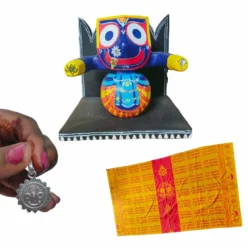 Niladrinath Gift Hamper
 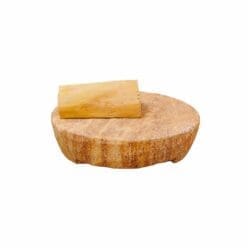 Chandan lagi seva(sandal wood)