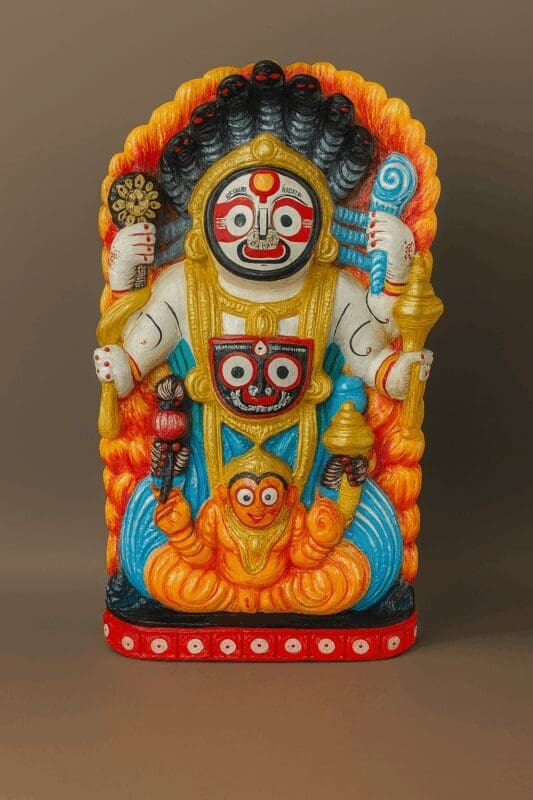
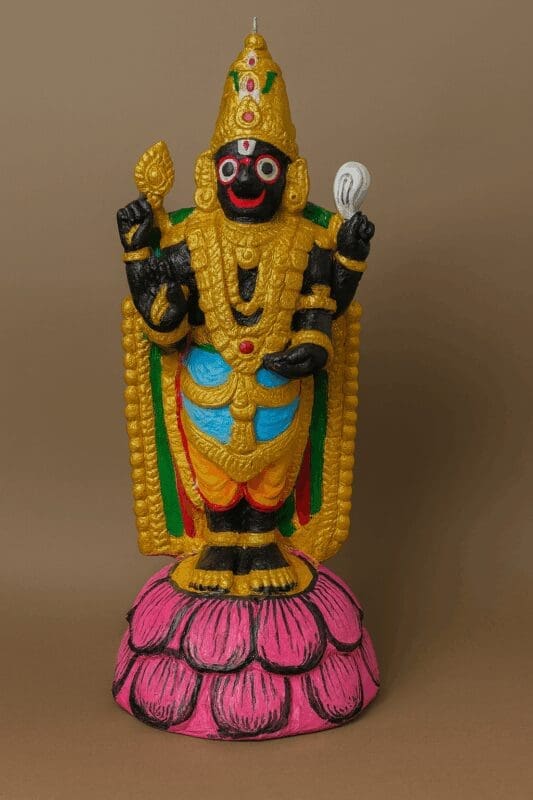
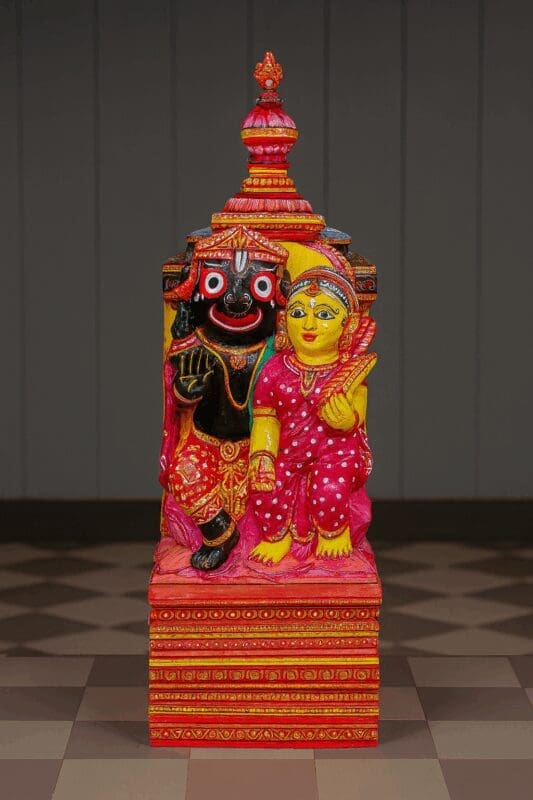
The Formless Supreme Brahman (Paramabrahma) is the foundation of all creation. He is beyond the elements of Brahma, Vishnu, and Maheswara. He manages the creation through the three Gunas: Sattva, Raja, and Tama. He assumes various forms for the protection of creation. Sometimes He is born from a womb, and other times He manifests without birth. He, whom Maya cannot bind and who remains beyond the perception of Shankara (Shiva), performs various divine plays (Leelas) for the welfare of the world.
Among these, offering Shradha (homage to ancestors) in the month of Margashira is a significant divine play. In memory of His births across the four ages (Yugas), He offers Shradha to His parents with devotion. Avatars like Vamana, Parshurama, Rama, Balarama, Krishna, Jagannath, and the Supreme Being Himself in the four-fold form (Chaturdha Murti) offer Shradha to their parents. Mahaprabhu, along with His consorts, observes Deba Dipabali for three days in memory of His parents. This signifies how much respect God Himself has for His parents, teaching us that the place of parents is supreme.
Tradition in Srimandir:
In the unique tradition of Srimandir (Jagannath Temple), Lord Jagannath performs eternal human-like rituals (Nitya Manabiya Leela). He offers lamps (Deepa Daan) to His ancestors on three specific days: Margashira Krishna Chaturdashi (14th day of the waning moon), Amavasya (New Moon), and Shukla Pratipada (1st day of the waxing moon).
Lamps are offered to the following ancestors:
-
Aditi & Kashyapa
-
Dasharatha, Kausalya, Kaikeyi, & Sumitra
-
Nanda & Yashoda
-
Vasudeva & Devaki
-
King Indradyumna & Queen Gundicha
The Schedule:
-
Margashira Krishna Chaturdashi: Lamps offered to Aditi and Kashyapa.
-
Amavasya: Lamps offered to King Dasharatha and Kausalya.
-
Pratipada: Lamps offered to Vasudeva, Devaki, Nanda, Yashoda, Indradyumna, and Queen Gundicha.
Since Lord Jagannath Himself dresses in Shradha Besha (mourning attire) and performs Shradha and Tarpan for his ancestors, this festival is famous as “Deba Dipabali” and “Shradha Besha.” The festival of lights begins on the first day and concludes on the third day. For these three days, Mahaprabhu offers Shradha to His fathers and forefathers.
Rituals of the First Day:
Mahaprabhu offers Shradha to Aditi and Kashyapa. Aditi is the daughter of Daksha Prajapati, and Maharshi Kashyapa is her husband. Since the Devas (like Indra) and Lord Vishnu’s Vamana avatar were born from Aditi’s womb, Aditi and Kashyapa are considered the parents of God. Lord Jagannath offers Shradha to them.
On Margashira Krishna Chaturdashi, after the Sandhya Dhupa (evening offering), the Sudha Suara servitors wash and clean the area below the Ratna Simhasana (throne). Then, it is mopped. Following this, the Bhandara Mekapa draws a “tree” design using rice under the throne. The Palia Mekapa places ghee in earthen lamps and lights wicks on these rice trees. After three gold Alatis are performed, the Puja Panda servitor consecrates the rice trees and sprinkles water. Then, three servitors—Panda, Pati Mahapatra, and Mudirasta—climb onto the throne and perform the Bandapana ritual at three places.
Subsequently, Bandapana is performed with three Mahadipas (Great Lamps). During this time, three Palia Puja Pandas hold the Mahadipas inside the Jaya-Vijaya door. A Puja Panda consecrates the rice tree made by the Asthana Pratihari and sprinkles water. After this, the Mahadipa vessel is handed over to the Palia Chunara servitor. The Chunara servitor takes oil and ghee provided by the Bada Odia Matha, lights lamps on the Amalaka Bedha (top of the temple), lights a Chandraudia (flare), and chants the name of the Gajapati King, praying for his welfare.
Shradha Besha (The Attire):
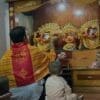
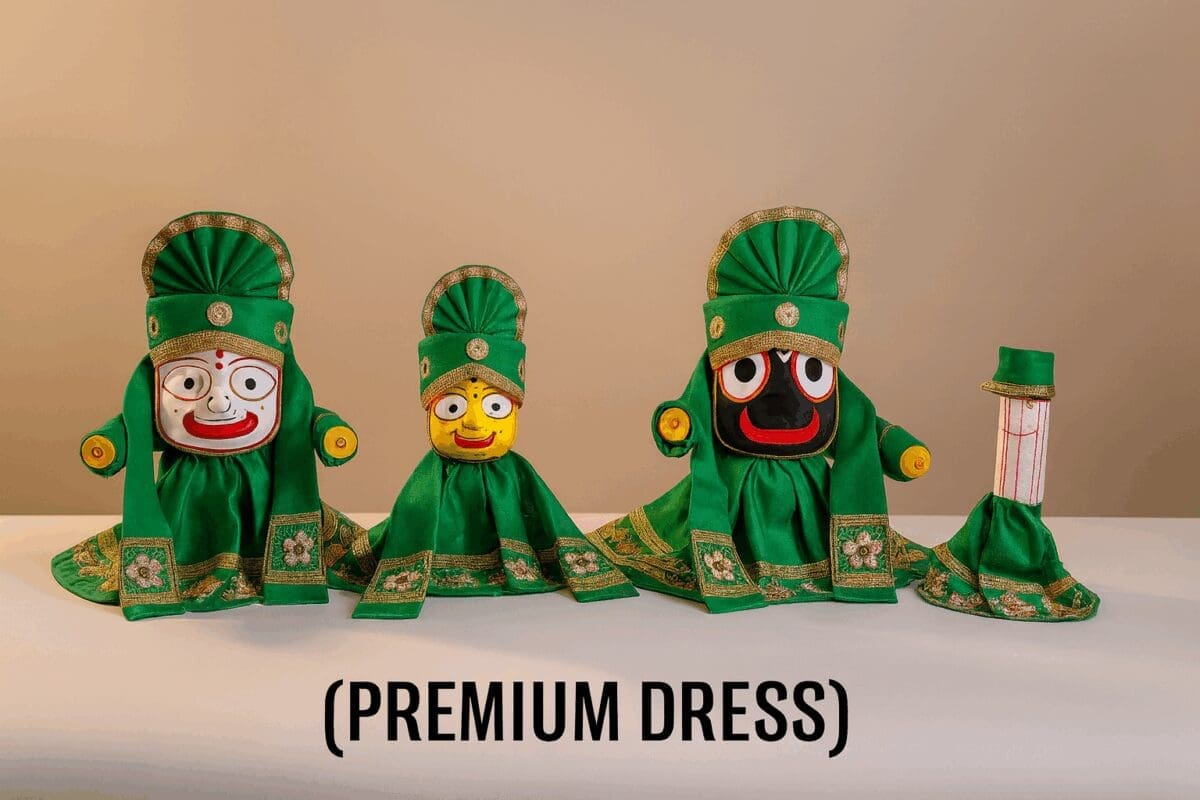
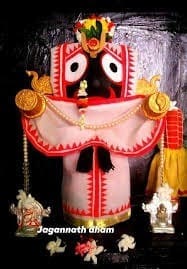
During this lamp offering, Mahaprabhu is adorned in a special attire known as Shradha Besha. The Pushpalaka servitors dress the Deities in Nagapuri sarees and chadars. In this attire, the Deities wear white clothes, but the borders of the clothes for each Deity are of different colors.
The Deities are dressed in Nagapuri sarees and chadars while remaining in a simple attire (Sadha Besha).
-
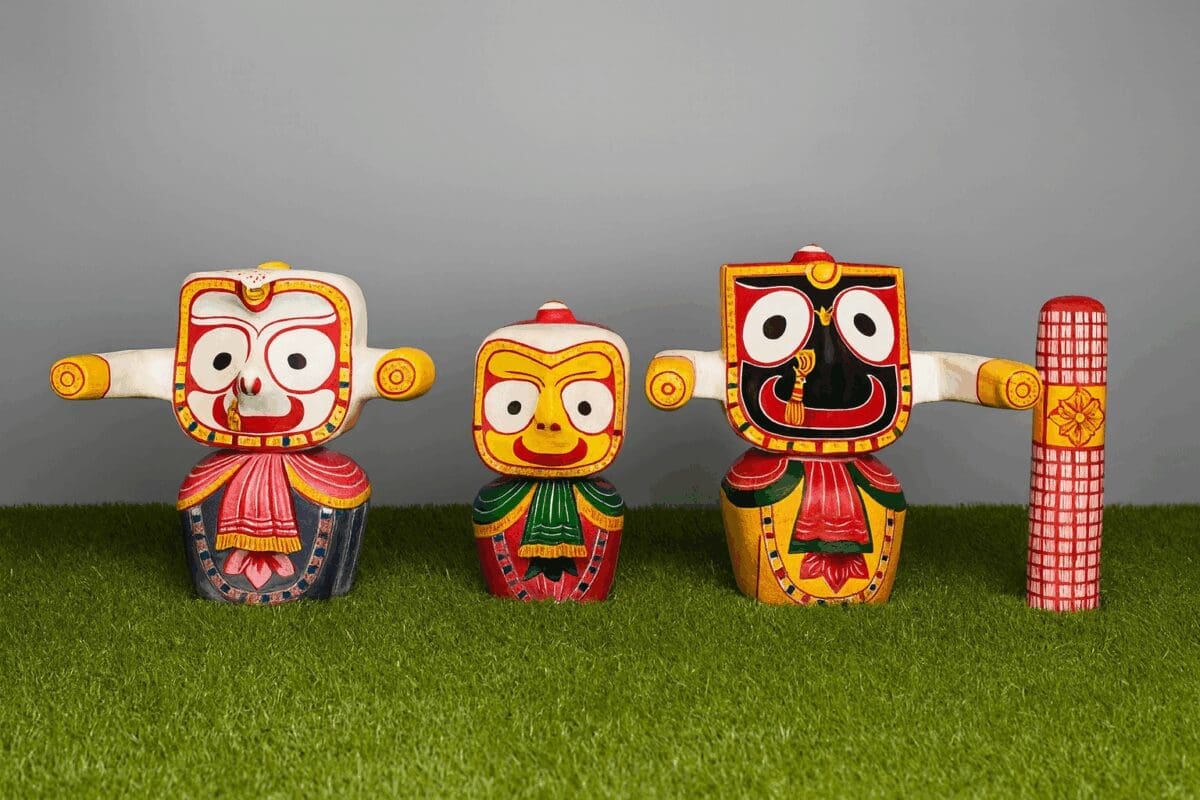
Lord Jagannath: Cotton Saree (Nagapuri Saree), 16 or 18 cubits long, with a border width of 1 foot. The cloth has Kumbha motifs, and the border color is Yellow.
-
Lord Balabhadra: Length 14 cubits, width 4 cubits, border width 1 foot. The border color is Black.
-
Goddess Subhadra: Length 12 cubits, width 3.5 feet, border width 1 foot. The border color is Red.
Additionally, the bodies of the Deities are draped with a single chadar each. Their heads are covered with a cotton cloth known as Srikapada. The chadar extends over their arms. The cloth used in Shradha Besha is called Kaidhadia (Nagapuri) cloth. In this attire, the Deities wear gold ornaments such as Tadaki, Kundala, Nali Bhuja, Chandra Surya, Adakani, Kamarpati, and Harida Mali. On the occasion of the Deba Dipabali rituals, the Srimandir is decorated with rows of lights. 🙏❤️


 Niladrinath Gift Hamper
₹ 8,899.00
Niladrinath Gift Hamper
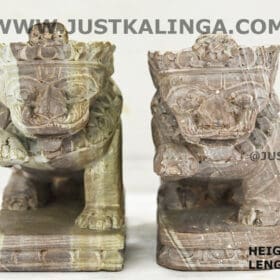
₹ 8,899.00 Pair Lion Carved Design Murti
₹ 11,978.00
Pair Lion Carved Design Murti
₹ 11,978.00 Pair Lion Carved Design Murti
  Justkalinga.com Traditional Jodo (Dhoti + Uttariya)
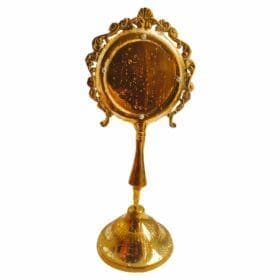
  Snan Darpan: for Shri Jagannath mahaprabhu's bathing rituals
  The origin story of Shri Jagannath
  Dakhinabarti sankha (Small Size)
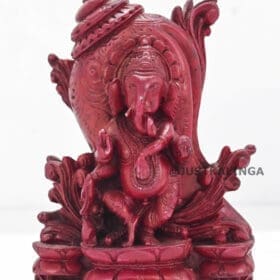
  Shri Ganesh with Sankha Carved Design Murti
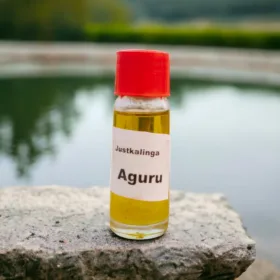
  Aguru : The natural Perfume for Mahaprabhu
  Netra Utstav :The day of re-consecration (AUDIO & PDF FILES)
  Tulasi Kanthi Mala
  10 divine expression of lord Vishnu
  Laxmi Rupam Of Shri Jagannath Mahaprabhu