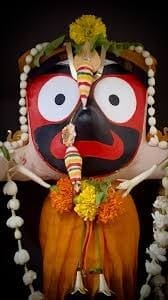
One of the holiest sanctified places of Sri Nilachala Kshetra (Jagannath Dham) is the sacred Gundicha Temple. In various ancient scriptures and folk literature, this temple has been referred to with many names—Mahavedi, Yajnavedi, Gundicha Mandapa, Adapa Mandapa, Gundicha Ghar, Atopa Mandapa, Rasa Mandapa, and Āḍambara Mandapa.
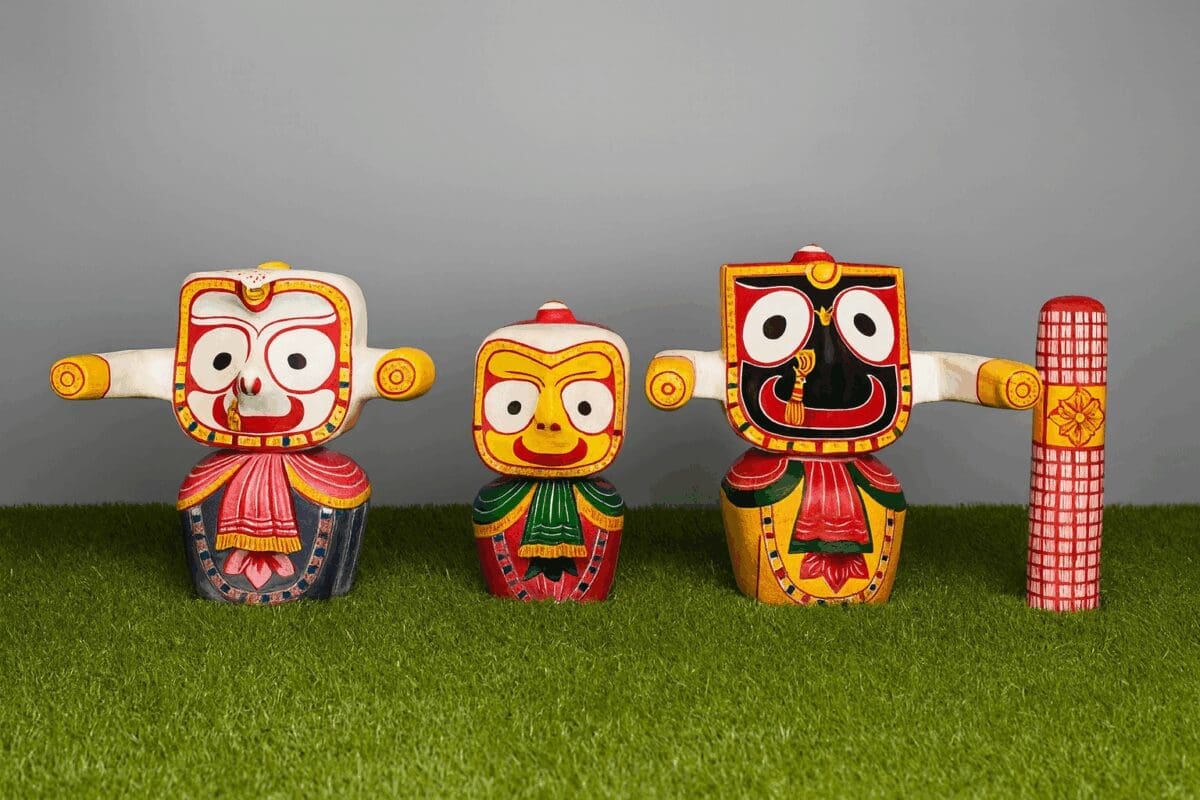
According to the Skanda Purana, the Yajnavedi and its surrounding area are known as Nrusimha Kshetra, and the Adapa Mandapa falls within this sacred territory. It is considered the first abode of the divine Chaturdha Murti (Jagannath, Balabhadra, Subhadra, and Sudarshana).
The name “Adapa Mandapa” has multiple interpretations:
-
One belief holds that “Gund” derives from the root meaning to hide. Hence “Gundicha” could mean the place of hiding. It is said that during the divine appearance (birth) of the Chaturdha Murti on the Yajnavedi, they were kept covered in pattavastra (sacred cloth), symbolizing concealment. Hence, a Mandapa that holds a concealed or enclosed presence became known as Adapa Mandapa.
-
Another view explains “Adapa” as the inner enclosure, aligning with the idea that this was the inner sanctum for the deities.
-
Yet another opinion relates “Āṭu” to the meaning temporary hut or wooden structure. According to records in the Madala Panji (temple chronicle), in the 12th century, the Gundicha Ghar was just a wooden mandapa. It says:
“King Banki Mohana renovated it. Earlier there were six chariots; later he built three new ones. The Gundicha house was a wooden mandapa, later converted into a stone temple.”
So, from Āṭu Mandapa (wooden hall), it likely became Adapa Mandapa.
The spiritual glory and sanctity of this mandapa are vividly described in Chapter 29 of the Skanda Purana – Utkala Khanda under the section Sri Purushottama Kshetra Mahatmya. It is even described as the most beloved place on Earth for the Lord Himself. In verses 34-35, Mahaprabhu (Lord Jagannath) says:
“Gundicha Mandapam Nama Yatrahamajanam Pura…
Tasyah Punyatamam Sthanam Prithivyam Neha Vidyate.”
Translation:
“The place called Gundicha Mandapa is where I first manifested. There is no holier place on this Earth than this.”
According to researchers, over time, to protect and preserve the wooden mandapa, a wooden cottage was built, later referred to as Gundicha Ghar. During the rule of the Ganga kings, the current stone temple structure was built, now known as the Gundicha Temple or Adapa Mandapa.
Thus, Gundicha Mandapa, Adapa Mandapa, Gundicha Ghar, or Gundicha Temple—all refer to the same sacred site and convey the same essence.
During the sacred Rath Yatra, when the Lord and His siblings reside at the Gundicha Temple for a week, the specific area of their stay is referred to as the Adapa Mandapa. However, in Niladri Mahodaya, it is referred to as the Yajnavedi, and in the Skanda Purana, as the Mahavedi.
Later, observing the glorious and divine presence (satopa or majestic form) of the deities in this mandapa, it came to be known as Adapa Mandapa. Poet Dinakrushna Das even refers to it as Āḍambara Mandapa in his famous composition Jagamohana Chhanda.
On the other hand, in Krushna Das’s “Deula Tola” narrative, it is described that:
In a divine dream, the king saw a golden chariot at the Chakratirtha shore, where the divine wood (daru) had manifested. He summoned Basu Shabara and proceeded to the spot. Following the Lord’s command in his dream, the king tied a cloth around his head and offered his respect. The daru was then placed on a chariot and brought to the Adapa Mandapa, where the king himself stayed and performed the Yaga (ritual). Lord Nrusimha presided over the yajnavedi. Here, the deity of Jagannath was to be carved. The queen Gundicha Devi was informed that in her name, the Gundicha Yatra (Rath Yatra) would be celebrated, and that Lord Jagannath would stay at Adapa Mandapa for a few days.
According to Niladri Mahodaya, during the ten-year cycle of Trikala Puja (triple-time rituals) at Nilachala, the fruits attained by a devotee from Darshan of the deities over a decade, can be received in a single day at the Yajnavedi (Adapa Mandapa).
Especially during the evening Darshan, the fruits are said to be multiplied tenfold. Hence, the proverb:
“Niladrau Dasha Varshani Adapa Mandape Dine“
(What is gained in 10 years at Niladri can be attained in a single day at Adapa Mandapa)
On this auspicious day, devotees visit the Gundicha Temple in the evening for Darshan and offer deepa dana (lamp offerings).
In the Skanda Purana, Lord Jagannath Himself instructs that on Ashadha Shukla Dwitiya (the second day of the bright half of Ashadha), a grand festival (Rath Yatra) must be held, and He must be taken to the place of His first appearance—Gundicha Mandapa—which also served as the Yajnavedi for a thousand Ashwamedha Yagnas.
As it is His birthplace, He expresses immense affection for it. The Lord says He will stay there for nine days, after which He will return to Srimandir (Jagannath Temple).
He declares that anyone who sees Him there with a pure heart shall attain Vaikuntha Dham.
The seven-day stay at Adapa Mandapa is referred to as the Mahavedi Mahotsav, and according to the Puranas, any devotee who witnesses this festival with devotion will have the sins of a hundred crore lifetimes instantly destroyed.
As mentioned in Chapter 29 of Skanda Purana:
“The Srimandir established by the king is dear to the Lord, and the Mahavedi at Nrusimha Kshetra is equally beloved. The Lord stays there for seven days and hence, the tradition of Rath Yatra was established. On the ninth day, He grants Sandhyadarshan (special evening Darshan) to devotees, and on the tenth day, the deities return to Srimandir through Bahuda Yatra.”
🙏❤️


 Snan Darpan: for Shri Jagannath mahaprabhu's bathing rituals
₹ 4,749.00
Snan Darpan: for Shri Jagannath mahaprabhu's bathing rituals
₹ 4,749.00 Chandan lagi seva(sandal wood)
₹ 2,356.00
Chandan lagi seva(sandal wood)
₹ 2,356.00 Chandan lagi seva(sandal wood)