Articles
|| The Glory of Indira Ekadashi ||
Sep
Indira Ekadashi Mahatmya.
Today is the Ekadashi of the Krishna Paksha (the waning phase of the moon) in the month of Ashwina. Its name is ‘Indira Ekadashi’. By the power of this vrata (vow/fast), even the greatest of sins are destroyed. Since this Ekadashi falls during Pitru Paksha (the fortnight dedicated to ancestors), its significance is paramount. This is because the main purpose of this Ekadashi vrata is to observe the fast and offer its meritorious results (punya phala) to one’s ancestors. By doing so, they attain moksha (liberation).
In this regard, there is a beautiful story in the Puranas. In the Satya Yuga, in the city of Mahishmatipura, there was a famous king named Indrasena. He was extremely knowledgeable in dharma, just, and righteous, and thus his fame spread in all directions. King Indrasena would spend his time immersed in devotion to Lord Vishnu, chanting the liberating names of Govinda. Therefore, the subjects in his kingdom lived happily. One day, while the king was seated in his royal court, the divine sage Devarshi Narada arrived there. Seeing him approach, the king stood up with folded hands, worshipped him according to the prescribed rituals, and offered him a seat. He then inquired about the reason for his visit.
Narada said, “Listen, O King! I had gone to Yamaloka (the abode of Yama, the god of death) and there I saw your father. He is suffering the torments of hell due to the sin of breaking a vow. He has sent a message through me.” Hearing this, Indrasena became deeply saddened. Therefore, Narada advised him, “If you diligently observe the Indira Ekadashi vrata of the Ashwina Krishna Paksha and offer its meritorious results to your father, he will once again ascend to heaven.”
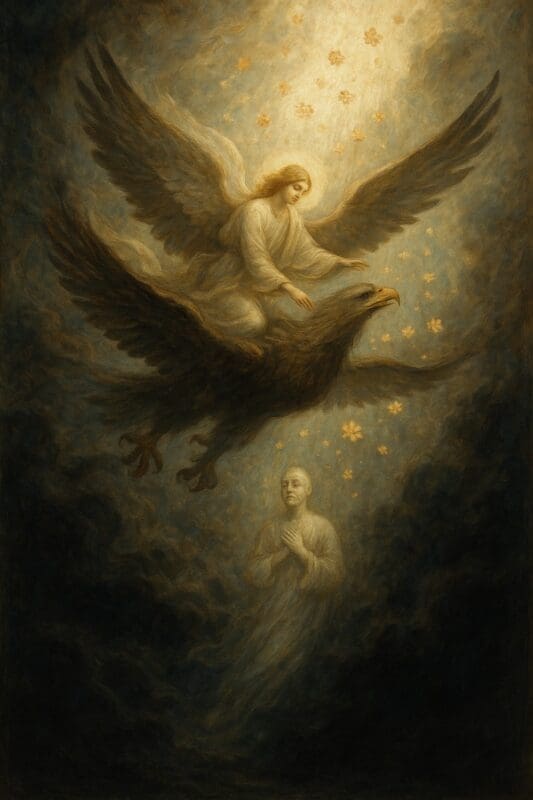
King Indrasena observed the vrata as instructed by Narada. Upon the completion of the vrata, flowers rained down from the sky. King Indrasena’s father, seated on Garuda, departed for Vishnudhama (the abode of Vishnu). And Indrasena, after ruling his kingdom without any obstacles for a long time, placed his son on the throne and himself ascended to heaven. By reading and listening to this account, a person is freed from all sins.
|| Rituals of the Vrata ||
On the Dashami (tenth) day of the Krishna Paksha of the month of Ashwina, one should bathe in the morning and then again take a dip at noon before eating a single meal. The rule is to sleep on the floor at night. On the Ekadashi day, after bathing and purification, one should chant the following mantra to take the vow of fasting:
“Adya sthitvā nirāhārāḥ sarvabhoga vivarjitaḥ |
Śvo bhokṣye puṇḍarīkākṣa śaraṇaṁ me bhavācyuta ||”
(Meaning: “Today I shall remain without food, renouncing all worldly pleasures. O Lotus-Eyed Lord, O Infallible One (Achyuta), be my refuge. I shall eat only tomorrow.”)
Following this rule, at noon, for the satisfaction of the ancestors (Pitaras), one should perform Shradh (ancestral rites) with due ceremony in front of a Shalagrama-shila. One should honor the Brahmins with Dakshina (offerings) and feed them. The anna-pinda (rice ball offering) made for the ancestors should be smelled and then fed to a cow. Then, one should worship Lord Hrishikesha (Vishnu) with incense and sandalwood paste and stay awake near His idol at night (jagaran).
The next morning, on the Dwadashi day, one should again worship Shri Hari with devotion. After this, one should feed the Brahmins and then, along with brothers, relatives, grandchildren, and sons, eat in silence. On this day, the consumption of garlic, onion, eggplant, meat, alcohol, paan (betel leaf), betel nut, tobacco, etc., is forbidden. After the vrata is completed, offering its merits to the ancestors ensures their liberation (moksha).
|| The Glory of the Ashwina Krishna Indira Ekadashi Vrata ||
|| Yudhishthira Said: ||
The son of Pandu said: “Listen, O Shri Madhusudana! What is the name of the Ekadashi that falls in the Krishna Paksha of the month of Ashwina? What is its special significance? Please tell me, O Lord Pītavāsa (wearer of yellow garments).”
|| Shri Krishna Said: ||
Krishna said: “O King, listen. Know that its name is Indira. By the power of this great vrata, even heinous sins are destroyed. Those who have fallen into lower realms are swiftly liberated. Listen carefully to this account, which destroys all sins.
Long ago, in the Satya Yuga, there was a king in Mahishmati named Indrasena, who was the vanquisher of his enemies. He ruled the earth righteously, blessed with sons and grandsons. He was famous, wealthy, and prosperous, a charitable and honorable devotee of Vishnu. He would spend his time chanting the liberating name of Govinda to attain spiritual wisdom. His victory was assured everywhere.
One day, as he was sitting peacefully in his court, Narada arrived, dismounting from his steed, and entered the assembly. Seeing him, the king rose with folded hands and respectfully bowed to him. He offered him a worthy seat and inquired about the rituals of worship. Accepting the king’s worship and offerings, the sage sat comfortably and smilingly asked, ‘O great King, are all seven limbs of your kingdom well? Is your mind attached to dharma? Are you focused in your devotion to Vishnu?'”
|| The King Said: ||
“By your grace, O best of sages, all is exceedingly well. My charity and meritorious deeds have become fruitful and I am blessed. You, the manifest lord of sages, have entered my city. You are a desireless and accomplished ascetic; what could be the reason for your arrival? Yet, for the benefit of others, you wander this world. Therefore, I ask you, please purify me by telling me the reason for your visit and deliver me from my troubles.”
|| Narada Said: ||
“Listen to my astonishing words, O King Indrasena! One day, out of curiosity, I set out on my travels. With an enthusiastic mind, I went to the abode of Yama. There I saw Yama holding court, seated with great splendor. He was speaking of dharma, for he is truly the King of Righteousness (Dharmaraja), and listening to the philosophical discussions of the sages.
Seeing me, Yama promptly stood up and bowed at my feet. He offered me a proper seat and inquired about my well-being, saying, ‘Today is a blessed day, O great Yogi, for you have graced my abode. This is the fruit of contemplating the Gita and Bhagavata, and nothing else. Where is the divine sage Narada, and where are we, the residents of Yamapuri? Without the grace of God, this would not be possible.’
I saw that near Dharmaraja were seated virtuous people. Those who perform meritorious deeds and speak the truth sit by Yama’s side. In such a place, I saw your father, O beacon of Mahishmati. Due to the fault of breaking a vow, he is there. He has given me a message for you. Listen, O Lord of Mahishmati! He said, ‘Go and tell the one who is renowned as Indrasena, the master of Mahishmati, that I am here with you. Due to some past sin, this fate has befallen me. Give me the merit of the Indira vrata and take me to heaven.’ Hearing these words from your father, I have come to you. This is the truth. For the sake of your father’s ascent to heaven, you must perform the Indira vrata.”
|| The King Said: ||
“Please be gracious and tell me how this vrata is to be performed. What are the rules for this Indira vrata, on which day and tithi is it observed?”
[Narada then explains the rules, which Krishna relays to Yudhishthira:]
“O King Indra[sena], listen. I will tell you the auspicious procedure for this vrata. On the Dashami of Ashwina’s Krishna Paksha, one should take a bath in the morning. With faith in one’s heart, one must resolve to cleanse sins. At noon, one should bathe again. After performing one’s duties to the deity, one should eat a single meal of havishya (sacred food). One should avoid the company of one’s wife and sleep on the floor. Conquering desire and anger, one should pass the night of Dashami.
When the pure dawn of Ekadashi arrives, one should first clean one’s teeth and wash one’s face. Then take the vow of fasting, thinking, ‘Today I shall be without food, keeping all pleasures away. Tomorrow I shall eat, taking refuge in the lotus-eyed Lord.’
Having made this resolution, at noon one should bathe again. Placing the Shalagrama in front, perform the rituals for the ancestors. Perform the Shradh for your father and mother with faith, using offerings of wheat, beans, barley, chickpeas, rice, and sesame seeds. These are dear to the ancestors. Smell the offerings given to the ancestors and complete the fast. It is said that if a Brahmin does not eat on the day of Shradh, the gods do not accept the havya (offerings to gods) and the ancestors reject the kavya (offerings to ancestors). It is written in the scriptures that smelling the food is equivalent to half a meal. Since sin resides in grains on Ekadashi, one must abstain from food. So, smell the ancestral food and complete the Shradh rituals.
Feed the Brahmins a good meal and satisfy them with offerings of dakshina. Worship Hrishikesha with fragrant incense, lamps, and perfumes. Stay awake at night, keeping your mind on Keshava. When night passes and the dawn of Dwadashi arrives, complete your bath and worship Narahari with devotion. After completing the noon rituals and worship, eat the havishya food in silence. O great King, perform this vrata with reverence. By this, your ancestors will go to the abode of Vishnu.”
Krishna continued, “O Yudhishthira, after speaking thus, the great sage vanished, leaving Indrasena with this task.
As the Indira vrata approached, the king made a proclamation throughout the city: ‘Today, everyone must eat havishya. Today, perform the Indira vrata!’ Hearing the sound of the royal drum, everyone prepared for the vrata. The king consulted with the Brahmins and announced the procedure. ‘Everyone must observe the Ashwina Krishna Ekadashi, known as Indira, according to the command of King Indrasena.’
The ruler of Mahishmati, after bathing in the morning, followed the rituals of Dashami, as did those in his palace. The king, with his wife and son, worshipped Vishnu and ate havishya, then slept on the floor, completing the Dashami vow.
When Dashami ended and the sun rose, the king bathed and made the resolve (sankalpa) for Ekadashi, just as Narada had described. He performed the fast, listened to scriptures, stayed awake, and worshipped Vishnu, keeping Narada’s advice in his heart. Having performed the vrata according to the rules, when Dwadashi arrived, the king completed his bath and other duties and ate havishya. Having completed the vrata, Indrasena offered its merits to his father.
A shower of flowers rained from heaven, and the king’s heart was filled with joy. His father, mounting the king of birds (Garuda), went to the abode of Vaikuntha. King Indrasena ruled his kingdom without any troubles for a long time. Then, making his son the king, he himself went to the heavenly realm.
I have told you the glory of the Indira vrata. By reading or listening to it, a person is freed from all sins.”
Thus ends the twenty-first chapter of the Shri Brahma Vaivarta Purana, titled “The Glory of the Ashwina Krishna Indira Ekadashi.”