Articles
Niljala Ekadashi / Rukmini Haran Ekadashi
Jun
The eleventh day of the bright fortnight of the Vaishakha month is known as Niljala Ekadashi. Out of the 24 Ekadashis in the year, Niljala Ekadashi is considered the most important. On this day, the practice of fasting without water is observed. This is believed to yield the benefits of all Ekadashis at once. Drinking water is prohibited on this Ekadashi, hence its name – Niljala Ekadashi. Those who observe this fast attain dharma, artha (wealth), kama (desire), and moksha (liberation).
Significance of Niljala Ekadashi:
On this Ekadashi, Vishnu is worshipped while remaining without water. Fasting devotees are said to receive the benefits of all Ekadashis throughout the year. They are blessed with the grace of Lord Vishnu. It is said that Bhima even fainted during a fast on this day. Therefore, this day is also called Bhimasena Ekadashi.
Puja Vidhi (Worship Rituals):
-
In the morning, a bath is taken and water is offered to the Sun God. After this, wearing a yellow-colored attire, Vishnu is worshipped.
-
Yellow-colored flowers, Panchamrita (a mixture of five ingredients), and Tulsi leaves are offered to Vishnu. At the same time, the mantras of Lord Hari and Goddess Lakshmi are chanted.
-
Fasting devotees donate food, clothes, and footwear to the poor.
-
The tradition of not drinking water is followed on this Ekadashi. However, if necessary, fruits and watery food can be consumed.
The Story of Bhimaasena / Pandava Ekadashi:
Bhima said to Vyasa, “Father, brothers, mother Kuntī, Draupadī, Arjuna, Nakula, and Sahadeva are all asking me to observe the Ekadashi fast, but I am telling them that I can perform the worship of the Lord’s power and offer donations, but I cannot remain without food.
Vyasa said, “O Bhimasena, if you consider hell bad and heaven good, you should not eat on the two Ekadashis in a month.” Bhima said, “Father, I have been saying from the beginning that I cannot endure hunger. If there is any fast to be observed throughout the year, then I can observe it, because there is a fire called Bhruka in my stomach, due to which I cannot remain without food. It becomes calm after eating. Therefore, I cannot observe a complete fast without food.”
Thus, Vyasa said, “O Bhima! Great rishis have composed many scriptures in which it is said that liberation can be attained without wealth and with little effort. The scriptures say that the fast of the two Ekadashis is observed for liberation.
Hearing Vyasa’s words, Bhima, fearing going to hell, became worried and said, “Now what can I do? I cannot observe two fasts in a month. I can try to observe only one fast in the entire year. That is, if I observe a fast once a year, will I attain liberation?”
Vyasa said, “Bhimasena! The merit of one Ekadashi is greater than all the pilgrimage sites and donations. By remaining without water for only one day, a person becomes free from sins. In this way, according to Vyasa’s advice, Bhima observed this fast. Therefore, this fast is also called Bhimaasena Ekadashi.” Before the Niljala fast, pray to the Lord, “O Lord! Today I am observing the Niljala fast, I will eat the next day. I will perform this fast with devotion, therefore, by your grace, all my sins will be destroyed.” According to Puranic beliefs, those who observe this fast attain Vishnu lok (heaven). Those who consume food on this day are like Chandala (outcasts) and go to hell. Even if someone has committed Brahmahatya (killing of a Brahmin), practiced drunkenness, theft, or Guru-dvesha (hatred towards a preceptor), they can attain heaven due to the effect of this fast. O Kuntī Putra, whoever observes this fast with devotion should abstain from all these actions. First, offer prayers to the Lord, offer Go-danam (donation of cows), and give Mithshanna (sweet food) and Dakshina (offering) to Brahmins, and also donate water in full measure. On this day, donate food, clothes, footwear, etc. with devotion. It is appropriate to listen to the story of the Pandavas’ devotion.
Observing this Ekadashi bestows longevity, health, and liberation after death. Bhimasena observed this Niljala Ekadashi fast, so it is called Bhimasena Ekadashi.
Ekadashi Mahatmya (Greatness of Ekadashi):
“Where Hari resides, observe the Niljala fast.
Offer Go-vastra (cow clothing), a Kamandalu (water pot), and donations.
Observe the water fast with devotion, offering these to those who are worthy.
Whoever performs this donation, attains the best of all rewards.
They attain gold and are worshipped in the heaven.
Hearing and reading about Niljala, one attains heaven through the donation.
With devotion, one performs tooth-cleaning and observes with mindfulness.
On the Ekadashi, abstain from food and intentionally stop drinking water.
Perform Achamana (taking water into the mouth) with devotion, pleasing Lord Krishna’s feet.
On the twelfth day, perform worship as appropriate to Trivikrama.
Offer Shobhan Dhupdeep (beautiful incense lamps), and adornments.
Offer Khand Kadali (a type of banana), milk, and other delicacies.
Offer Naivedya (food offering) as prescribed, and chant these mantras.
O Lord Hari, Hariषिकesh (Lord of beautiful locks), who expands the universe.
Donate a Kumbha (pot) of water, and attain Vaikuntha Puri.
Thus, offering the Kumbha with Dakshina, as much as one’s strength allows.
This auspicious Ekadashi was observed by the brave Bhima.
From that day began the Vaishakha month’s best Ekadashi.
That day was also Pandava Ekadashi, remaining every day.”
The Marriage of Lord Krishna and Goddess Rukmini:
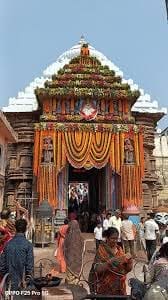
According to Hindu Puranic beliefs, the marriage of Lord Krishna and Goddess Rukmini is famous by the name Rukmini Haran Ekadashi. The celebration of this Puranic event is observed every year on the eleventh day of the bright fortnight of the Vaishakha month at the Krishna temple gudi. The Rukmini marriage festival is also celebrated with great grandeur at the Puri Shri Mandir.