

-
×
 Tulasi Kanthi Mala
₹ 439.00
Tulasi Kanthi Mala
₹ 439.00

Articles
Karkata Sankranti and Dakshinayana Bandapana in the Srimandir

17
Jul
Jul
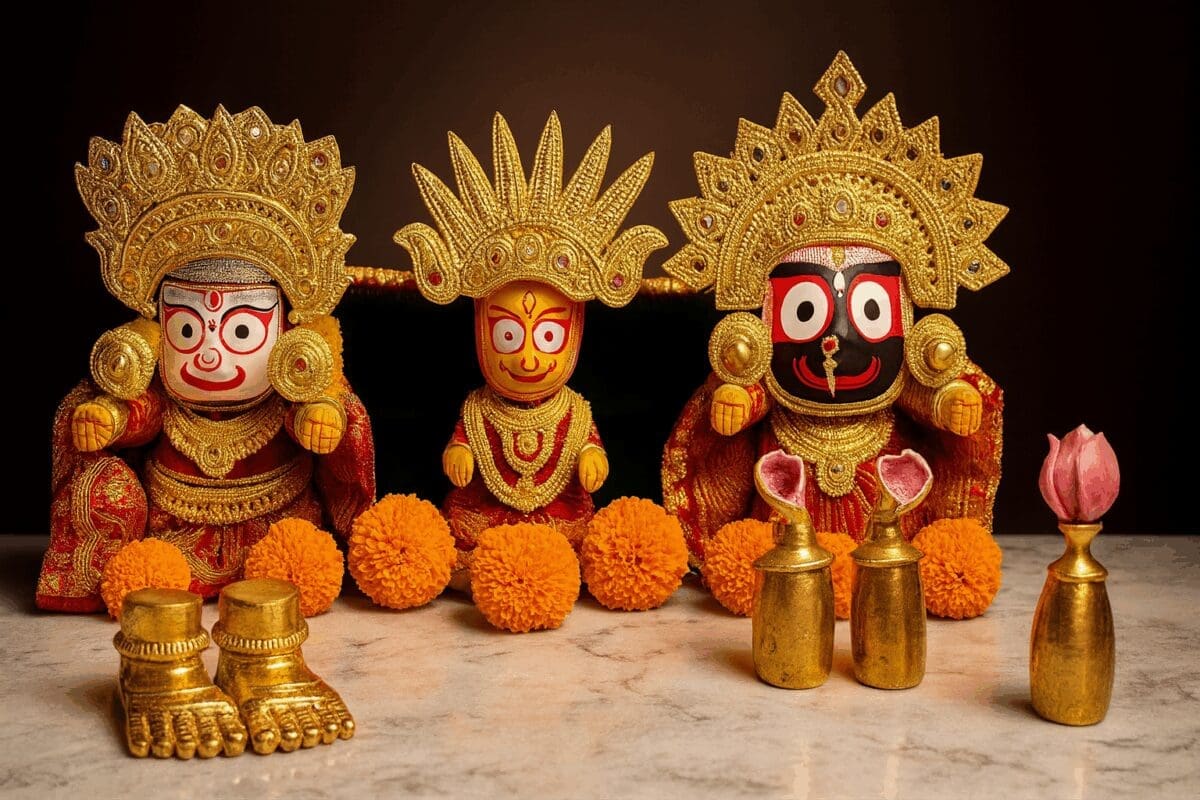
On the day of Karkata Sankranti, after the Sakala Dhupa (morning offering) and the Bhoga Mandapa Dhupa (offering at the Hall of Offerings) of the deities are completed, the Mailama (removal of old clothes and flowers) is performed, water is sprinkled inside, and the Mahasnana (great ceremonial bath) takes place. The deities on the three altars are then adorned with Boirani robes. The Pujapanda, Pati Mahapatra, and Mudirastha (types of priests/servitors) ascend the Simhasana (divine throne) and apply sandalwood paste all over the deities’ bodies. After this, the Pushpalaka (servitor in charge of attire) completes the Besha (adornment) and descends from the throne.
Then, water is sprinkled again, and the Dwiprahara Dhupa (mid-day offering) begins. Accompanied by bells, umbrellas, and trumpets, the chief servitors of the kitchen (Talichha and Pradhani) bring the offerings from the kitchen to the divine presence. Once the food is offered, the Mudirastha applies the prasad (consecrated food) to the bodies of the deities. Three Pujapandas sit for worship behind a screen (tera). From the specially prepared Balibhata (rice for offerings), one Pujapanda, along with a Patri and a Suarabadu (other servitors), comes outside to make the Anna Bali (a rice offering to spirits) around the temple. Once the worship inside is finished, the screen is removed, and the Aarati (lamp-waving ceremony) is performed. After the offerings are taken out and water is sprinkled, the Pujapanda, Pati Mahapatra, and Mudirastha perform the Bandapana (ceremonial veneration).
If this Sankranti falls while the deities are on their chariots (during Ratha Yatra), these same rituals are performed on the chariots. However, instead of cooked rice, the bali offering is made with uncooked rice and black gram (biri). Dry food items are offered to the deities. If the Sankranti occurs when the deities are in the Gundicha Temple, the rituals are performed there in the same manner as in the Srimandir.
Karkata Sankranti / Dakshinayana Sankranti
From this day, the sun begins its southward journey (Dakshinayana), and as a result, the intensity of the sun’s rays decreases. On this day in the Srimandir, the Dakshinayana Bandapana is performed for the Chaturdhamurti (the four divine forms).
Another significance of this day is that in every Odia household, an image of Alakshmi, the elder sister of Goddess Lakshmi, is drawn on the kitchen door and worshipped with incense and food offerings. Generally, since kitchen doors face south, her image is drawn there, or she is worshipped symbolically using an areca nut (gua). On this day, Sankhudi Bhoga (cooked food offerings) are made to Alakshmi.
After the worship of Alakshmi on Dakshinayana Sankranti is complete, the Chaturmasya Guruvara Brata (the four-month-long Thursday fast for Goddess Lakshmi) begins. In the land of Utkala (Odisha), there are many folk tales and stories about Alakshmi.
Immediately after Dakshinayana Sankranti, various festivals and celebrations begin in the towns and villages of Odisha. This is why a beautiful proverb is popular:
(“Aaila Dakhini Nani, sabu paraba sangare gheni.”)
Meaning: “The southern sister has arrived, bringing all the festivals with her.”
Celebrate Karkata Sankranti. Embrace Odia traditions and divine blessings.