Articles
|| Bata Osha or Danda Pahara Osha ||
Dec
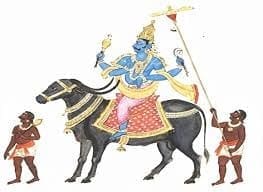
This festival is observed on the Dwitiya Tithi (second day) of the Krishna Paksha (waning phase of the moon) in the month of Pausha. This Osha (fast) is observed in honor of Lord Yamaraja (the God of Death). Mothers fast at night to pray for the longevity of their sons. They sweep the street (Danda) with a Bajramuli plant and gently brush/sweep their sons with it. The Vajra (thunderbolt) is the invincible weapon of Lord Indra.
There is a saying that mothers, wishing for the long life of their children, sweep the area around the Osha Mandap (altar) with Bajramuli and then brush their children with it. According to folklore, Yama, the God of Death, is extremely stern and painful. He assigns punishments after death based on a being’s deeds. These punishments include throwing souls into cauldrons of hot oil, pouring hot oil into eyes and ears, or hanging unchaste women on Simili (silk-cotton) trees while they are tormented by scorpions, crabs, and snakes. Bata Osha or Danda Pahara Osha was created to protect against these torments and to appease Lord Yama.
Since this is an agriculture-based festival, offerings (Naivedya) prepared from new paddy are made. These include Manda Pitha (steamed rice cakes), Mudhi (puffed rice), Khai (popped rice), Mua (sweetened puffed rice balls), Chuda (flattened rice), bananas, radish, sugarcane, starfruit, sweet potato, husk, and bran. A pit is dug on the village street or in a forest area. An image of Yama is established using vermilion (Sindoor) in a vessel. Mothers sit around it holding baskets placed over Bajramuli plants, covered with a cloth. A Brahmin performs the worship of Lord Yama with Sodashopachara (sixteen rituals). Afterward, the mothers remember Yama and pray for the long life of their children.
|| Mythological Legend ||
King Sudarshan and Queen Lilavati of the Kosala Kingdom were benevolent and loved their subjects, but they were deeply saddened as they had no sons. Wise Brahmins and astrologers advised them that if they observed Danda Pahara or Bata Osha to satisfy Lord Yama, they would be blessed with a son. The Queen received Prasad from other women in the kingdom who were observing the fast, and subsequently, she conceived and gave birth to a fine son named Virasena.
However, after gaining the son, the Queen stopped observing Lord Yama’s Bata Osha. As a result, Yama abducted Virasena. He told his own mother to kill the boy and cook him for a meal, and then Yama went for a bath. Meanwhile, Yama’s mother taught Virasena a trick: she told him to insert two small sticks into his nose to induce sneezing during the Puja. Virasena did as instructed and sneezed. At that moment, Yama’s mother blessed him, saying “Achhamara” (May you be immortal/live long). Because of this blessing, Yama could not kill him. He returned Virasena to his home, warning the boy’s mother that if she did not perform Bata Osha, he would take the boy away again.
The family was overjoyed to have Virasena back. When asked why he had been taken, he explained that Yama had abducted him because the Queen had forgotten to perform Bata Osha. Finally, in the royal palace, the mother observed Lord Yama’s Bata Osha, swept the street, and prayed for her son’s long life.
Rules of the Puja: All Prasad (offerings) must be taken to the Puja Mandap. It is believed that Yama becomes displeased if one keeps the puja items at home out of greed. At the end of the worship, it is mandatory to distribute all the Prasad among children, the elderly, and family members. 🙏❤️