












Articles
The Sacred Conch Abode of Lord Jagannath

Sep
Introduction: Beyond the Waves and Spires
Puri. The very name evokes a kaleidoscope of powerful imagery: the rhythmic crash of waves on its golden shores, the vibrant chaos of the Bada Danda during Rath Yatra, the majestic silhouette of the Srimandir against the eastern sky. For millions, it is the ultimate destination of faith, the earthly abode of the Lord of the Universe, Mahaprabhu Jagannath. But what if the sanctity of Puri extends beyond its magnificent temple and its sacred rituals? What if the very land upon which you walk is a divine, living form, meticulously designed by the cosmos itself?
Welcome to the profound concept of Puri as Sankha Kshetra—the sacred field shaped like a conch shell. This is not merely a poetic metaphor; it is a fundamental truth of this holy land, a spiritual geography that maps the flow of divine energy and reveals a hidden layer of meaning to every temple, every tank, and every grain of sand. To embark on a pilgrimage to Puri without understanding its form as a Sankha is to see the body but miss the soul. Join us as we delve into this mystical blueprint and discover why Lord Jagannath chose a conch-shaped city as His eternal home.
The Essence of a ‘Kshetra’: A Field of Consciousness

Before we can comprehend the Sankha (conch), we must first understand the Kshetra (field). In Sanatana Dharma, a ‘Kshetra’ is far more than a geographical location. It is a consecrated space, a zone where the veil between the material and the divine is exceptionally thin. It is a field of heightened spiritual energy, a powerhouse of consciousness where spiritual practices yield manifold results and liberation becomes more accessible.
Think of it as a divine energy grid. While God is omnipresent, in a Kshetra, that presence is intensely concentrated and palpable. Scriptures describe various types of Kshetras dedicated to different deities—Shaiva Kshetras for Lord Shiva (like Kashi), Shakti Kshetras for the Divine Mother (like Kamakhya), and Vaishnava Kshetras for Lord Vishnu.
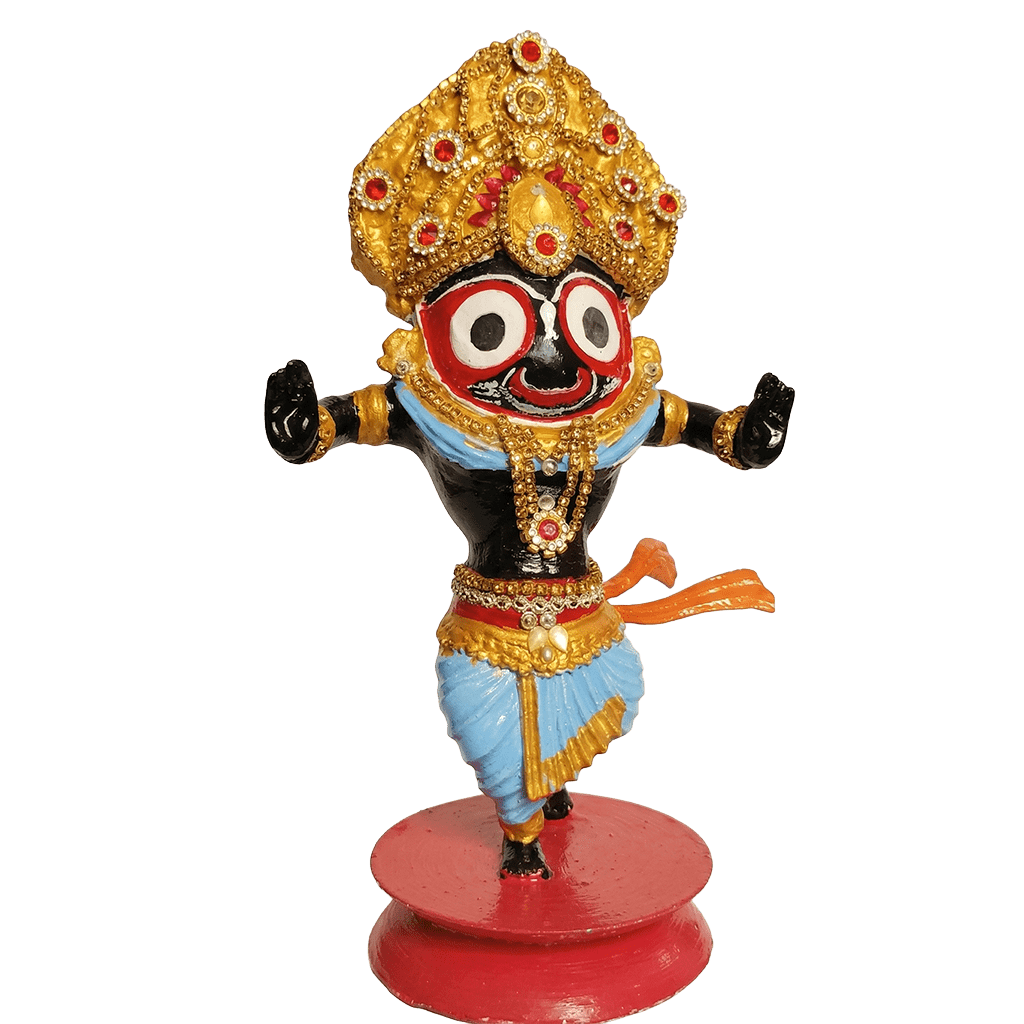
Among all these, Puri stands supreme. It is revered as Purushottama Kshetra, the abode of the “Supreme Being,” Lord Jagannath, who is the source of all avatars. The spiritual potency of this land is considered absolute. Ancient texts, including the Skanda Purana, proclaim that the divine energies of all other holy sites in India converge here. The very design of this supreme Kshetra, therefore, could not be arbitrary. It had to be a form that was cosmically significant, pure, and resonant with the energy of its presiding deity—the form of a divine conch.
The Divine Blueprint: Why a Conch Shell?

The Sankha, or conch shell, is one of the most potent and sacred symbols in Hinduism. It is not merely a ritual object but a representation of the very origin of existence.
- The Primal Sound (Pranava): When a conch is blown, it produces a deep, resonant sound that is believed to be a reflection of ‘Om’ (), the primordial sound of creation. It is the sound that emerged from the void, initiating the process of cosmic manifestation. For a city to be shaped like a conch is to declare that it is a place of eternal creation, purity, and divine vibration.
- The Abode of Divinity: The scriptures state, “shankha-madhye sthitam toyam… ganga jalena samam,” meaning the water held within a conch is as pure as the water of the Ganga. The conch is a symbol of absolute purity. Furthermore, it is the abode of Goddess Lakshmi, the consort of Lord Vishnu, symbolizing prosperity, fortune, and auspiciousness.
- Lord Vishnu’s Emblem: The conch, specifically the Panchajanya, is one of the four primary emblems of Lord Vishnu. He holds it in his upper left hand, representing his power to sustain the universe and his role as the source of Dharma. As Lord Jagannath is the highest manifestation of Vishnu, it is only fitting that His abode on Earth mirrors His divine instrument. It signifies that the city itself is an extension of His being.
Thus, Puri’s geography as a Sankha Kshetra is a terrestrial manifestation of these cosmic principles. It is a city designed to perpetually resonate with the sound of creation, to be a container of supreme purity, and to stand as a testament to the presence of Lord Vishnu on Earth.
Mapping the Sacred Conch: The Spiritual Geography of Puri

The Skanda Purana and other ancient texts provide a detailed map of this divine conch, which stretches over five kroshas (approximately 16 kilometers). Let’s trace its sacred anatomy, placing the key spiritual landmarks within its form.
The Center (Nabhi or Navel):
At the absolute heart, the navel of the conch, lies the magnificent Srimandir, the temple of Lord Jagannath. This is the epicenter of all spiritual energy. Just as the navel connects a child to its mother in the womb, the Srimandir is the point of connection between the earthly realm and the cosmic source. The Ratna Singhasan (the bejeweled throne) upon which the deities reside is the nucleus of this entire spiritual field. Close to this central region lies the Narendra Tank, a vast sacred pond associated with the famous Chandan Yatra festival. Its position near the navel further anchors the spiritual core of the Kshetra.
The Head/Apex (Shirsha):
The top or the spiral tip of the conch is believed to be in the western part of the city. This area is guarded by Lokanath Temple, a revered shrine dedicated to Lord Shiva. Here, Lord Shiva acts as the guardian of the divine realm of Lord Jagannath. It is a powerful statement about the harmony between Vaishnavism and Shaivism within the Jagannath Dharma.
The Mouth/Opening:
The opening of the conch shell, where the sacred sound emanates, is located near the sea. This area is known as Chakra Tirtha, a sacred spot near the beach marked by a temple. It symbolizes the point from which the divine grace and blessings of the Kshetra flow out into the world.
The Lower End:
The bottom part of the conch extends towards the sea, culminating at Swargadwar (‘Gateway to Heaven’). This is the sacred cremation ground of Puri. It is profoundly significant that the place of final passage is located within the divine conch. It is believed that being cremated at Swargadwar, within the purifying form of the Sankha Kshetra, grants immediate liberation or moksha.
The Protective Circles: Shiva and Shakti as Guardians
A Kshetra of such immense power requires celestial protection. The Sankha Kshetra is shielded by concentric rings of divine guardians.
- The Inner Ring (Pancha Pandavas): The core area around the Srimandir is protected by five forms of Lord Shiva, known collectively as the Pancha Pandavas or Pancha Mahadevas. These are Lokanath, Jameshwar, Kapalamochana, Markandeshwara, and Nilakantheshwara. They stand as eternal sentinels, ensuring the sanctity of the innermost sanctum. A pilgrim’s journey is often considered complete only after paying respects to these five divine protectors.
- The Outer Ring (Ashta Chandis): Guarding the outer periphery of the Sankha Kshetra are eight goddesses, or the Ashta Chandis. These powerful forms of the Divine Mother—Vimala, Mangala, Sarvamangala, Ardhashini, Alamba, Dakshinakali, Marichika, and Harachandi—act as a formidable fortress of Shakti energy, protecting the holy city from all negative influences. The temple of Goddess Vimala, located right within the Srimandir complex, is one of the most important Shakti Pithas in India, underscoring her role as the ultimate guardian of the Lord.
The Pancha Tirthas: Five Sacred Waters within the Conch
No pilgrimage in Puri is complete without a ritual bath in the Pancha Tirthas, the five sacred bodies of water that are integral to the Sankha Kshetra’s energy grid. Each is strategically located and carries unique spiritual merit.
- Indradyumna Tank: Located near the Gundicha Temple, this tank is associated with King Indradyumna, the legendary builder of the first Jagannath temple. A dip here is said to bestow the blessings of having performed thousands of horse sacrifices.
- Markandeya Tank: Situated beside the Markandeshwara Temple, this is where the sage Markandeya was saved by Lord Shiva. A holy bath here is believed to grant the boon of a long and righteous life.
- Narendra Tank: The site of the Lord’s boating festival, a dip in its sacred waters is considered highly meritorious.
- Swetaganga Tank: Located to the south of the Srimandir, this tank is said to have originated from the nail of Lord Vishnu. Bathing here is believed to absolve one of sins.
- The Mahodadhi (The Great Ocean): The sea itself is considered the final and most important Tirtha. Its vastness and eternal rhythm are seen as a direct manifestation of the Lord’s infinite nature. A pilgrimage begins and ends with a prayerful dip in the Mahodadhi.
Conclusion: Walking the Divine Form
To know Puri as Sankha Kshetra is to transform your perception of this holy city. It is no longer a collection of destinations but a single, unified, living spiritual organism. Every step you take is a step upon a divine body. Your parikrama (circumambulation) of the city is not just a walk, but a tracing of the sacred spirals of the cosmic conch.
The next time you stand on the shores of Puri, listen closely. Beyond the sound of the waves, you might just hear the faint, eternal echo of the Pranava—the primal sound emanating from the heart of the Sankha Kshetra. The next time you walk down the Bada Danda, feel the ground beneath your feet not as mere earth, but as the sacred substance of Lord Vishnu’s divine emblem.
To experience Puri is to experience Lord Jagannath. And to experience it as Sankha Kshetra is to understand that you are not just visiting His home; you are being held within His divine, protective, and liberating embrace.
Jai Jagannath! 🐚🙏