












Articles
Raksha Bandhan: Puranic Origins & Sacred Stories
Aug
Today’s Mythological Story
The Scriptural Background of Raksha Bandhan
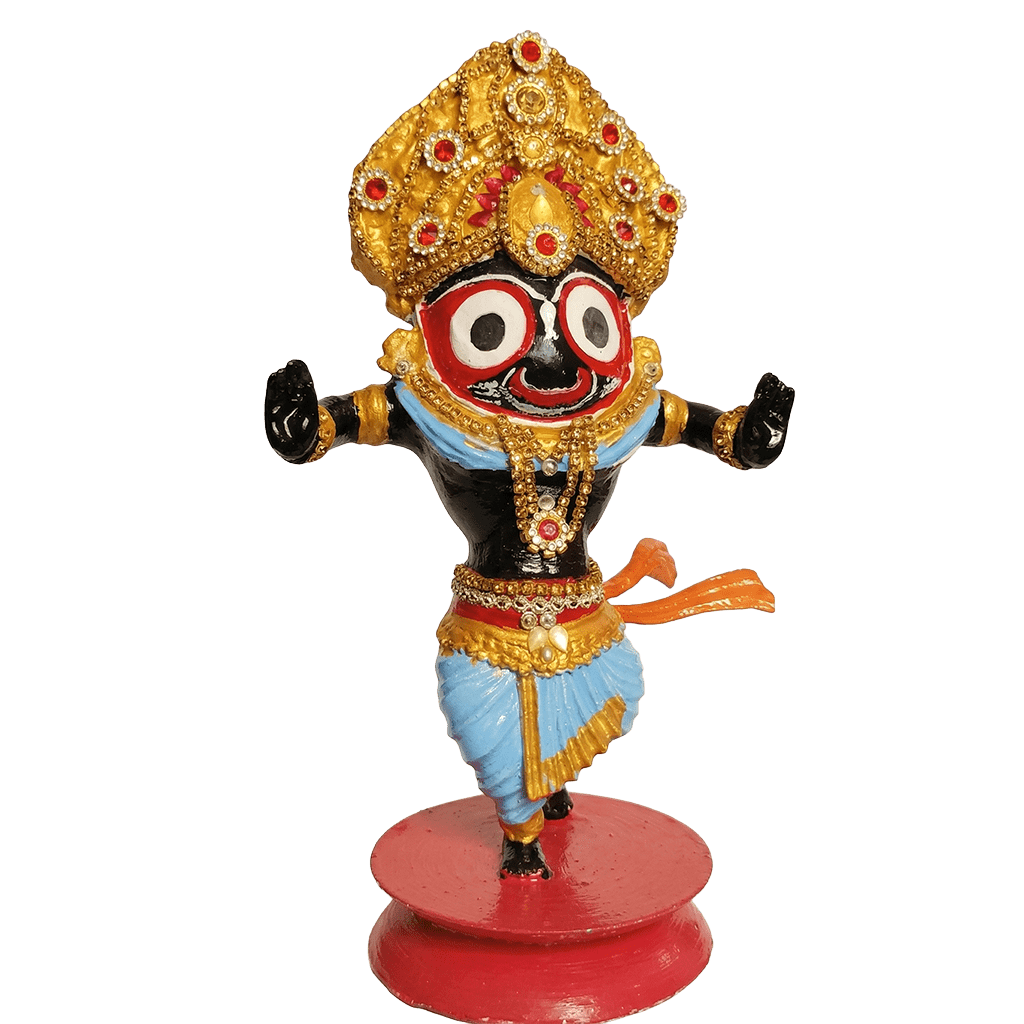
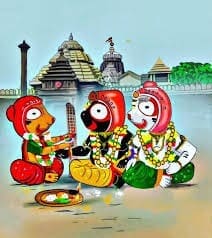
Raksha Bandhan is observed on the extremely sacred day of Shravan Purnima. It is the birthday of Halayudha, Lord Sri Balaram. This full moon day is also known as Gahma Purnima, Jhulan Purnima, and Rakhi Purnima. Along with other festivities, the reason this day is recognized as a pan-Indian festival is because of Raksha Bandhan, the sacred bond of protection between a sister and a brother. This holy festival has a strong, rich tradition and background.
It is mentioned in the scriptures, “Nasti Ganga samam nasti swasta sama manya.” Meaning, there is no one more respectable and affectionate than a sister. In Raksha Bandhan, the brother takes a vow to protect his sister. In this regard, there are many interesting mythological and historical facts, which are presented below.
-
Mother Kunti, the mother of the Pandavas, tied a rakhi on Lord Sri Krishna’s hand, praying for the protection of her sons from the atrocities of the Kauravas.
-
In the Dwapara Yuga, Kansa used to send many demons to destroy Sri Krishna. The Gopanganas (cowherd women of Gopa), wishing for the well-being of their beloved Kanha and to protect him from the clutches of these demons, tied rakhis on his hand.
-
Rajput women would tie rakhis on the hands of Muslim kings to protect their honor. The Mughal emperor Akbar held the festival of Raksha Bandhan in high esteem.
There are two powerful legends in the Puranas about the festival of Raksha Bandhan.
According to the Vishnu Purana, in the Satya Yuga, Lord Vishnu took the Vamana avatar (dwarf incarnation) to humble the pride of the demon king Bali. By donating three paces of land, Bali surrendered his everything to the Lord and became very humble. Pleased with Bali’s such surrender and commitment to his word, the Lord said, “Bali, I have become indebted to you. Therefore, I will give you a divine city where you can live in happiness.” After this, the Lord placed his foot on Bali’s head and pushed him down to Patala (the netherworld). Among the seven netherworlds—Atala, Vitala, Sutala, Talatala, Mahatala, Rasatala, and Patala—the excellent Sutala became Bali’s abode. At Bali’s request, the benevolent Lord became the doorkeeper at Bali’s city, and the Sudarshana Chakra was appointed for his protection. Receiving Vishnu’s blessings, Bali entered the netherworld and transformed it into a heaven.
When Lord Vishnu remained in the city of Patala as Bali’s doorkeeper, Goddess Lakshmi in Vaikuntha became distressed. She questioned Narada about Sri Vishnu’s whereabouts and learned that He was serving as a doorkeeper in Bali’s city. In this Raksha Bandhan legend, Mother Lakshmi went to Bali’s city, tied a rakhi on King Bali’s hand, established a brotherly relationship, and asked for Vishnu’s release in return. Bali agreed, and she brought Vishnu back to Vaikuntha. The festival of Raksha Bandhan is said to have originated from this event. Hence, the following mantra is recited during Raksha Bandhan:
Yena baddho Baliraja danavendro mahabalaha
Tena twam anubandhami rakshe ma chala ma chala.
The second legend is found in the Srimad Bhagavatam and the Mahabharata. The daughter of the king of Vidarbha was Rukmini, an incarnation of Lakshmi. She was completely devoted to Sri Krishna, the lord of Dwarka. While she wished to marry the lord of Dwarka, her brother Rukmi, who was hostile towards Krishna, had arranged her marriage with Shishupala, the king of Chedi. As events unfolded, Sri Krishna abducted and married Rukmini. Shishupala, who had arrived as the groom, returned in disappointment. In this, Shishupala felt greatly insulted. He vowed to take revenge on Sri Krishna for this. He looked for opportunities and insulted Krishna at various times. Actually, Shishupala was Sri Krishna’s cousin (son of his paternal aunt). Krishna had told him that He would forgive one hundred of his offenses, but the day it crossed one hundred, that would be his end.
In Hastinapura, Dharmaraj Yudhishthira was performing the Rajasuya Yajna. Along with other kings of Aryavarta, Shishupala was also invited and had come there. Sri Krishna was the chief guest of honor at the Rajasuya Yajna. Upon arriving there, Shishupala severely berated Krishna in front of everyone. While Arjuna and Bhima were ready to kill Shishupala, Sri Krishna pacified them. By then, the time for Shishupala’s end had come. Sri Krishna sent his Sudarshana Chakra at great speed towards Shishupala and beheaded him. While dispatching the chakra, its sharp edge grazed one of his fingers, which got cut and started bleeding. Everyone became anxious. Panchala Nandini (daughter of Panchala) Draupadi immediately tore a piece of cloth from the end of her sari and tied it on her Sakha (friend) Sri Krishna’s wound.
At this moment, Sri Krishna said to Draupadi, “Krishnaa, I am now indebted to you. I will repay this debt at the right time.” That right time came during Draupadi’s Vastraharana (the incident of her disrobing). She made a desperate plea to Sri Krishna to save her honor, and Sri Krishna provided an endless supply of cloth from the void, protecting her.
The relationship between Sri Krishna and Draupadi was that of a brother and sister. They used to call each other ‘Sakha’ (male friend/brother) and ‘Sakhi’ (female friend/sister). In the Raksha Bandhan tradition, the cloth Draupadi tied on Sri Krishna’s little finger became a testament to the unbreakable bond between a brother and sister.
Om Shri Krishnaya Namah 🙏
Tie a sacred thread inspired by timeless Puranic legends.